1 Thessalonians 4
God Lavayiyat Aṅ Puhuvasiwni · Tap a verse to see its cross-references.
A Life that Pleases God
1Taay, itahtupkomu, umuy hin hinwise’, God unaṅwveyaniqat itam pay umumi tutaptota. Nihqe ōviy itam Itahtutuyqawhqay Jesus aw yank̇ahk̇aṅw, umumi pas paṅqaqwani: Uma hin hinwisqey pan suyhtsepṅwat aw hoytoynayani. 2Pi itam Tutuyqawhqat Jesus ahpiy umumi hin tutaptotaqat uma navoti’yuṅwa. 3Pi yan hapi God umuṅem tunatyawta: Uma qahovársqatsit yesniqata, pu uma tokot sokoptotaniqey qe’yaniqata. 4Pu uma nānap aṅ umuhtokoy aw tuyqawvaye’, put qa hovalayat, hihtay’yuṅwni. 5Uma qa nuvöiwyuṅwni, aṅ qatuptsiwni’yuṅqam God qa tuwi’yuṅqam pan hinwisqat qa pan’i. 6Noqw qa hak it ep pāvay, sen tupkoy ehpewi qaanhtini; taq Tutuyqawhqa pan hinwisqamuy sohsokmuy amumi nánaoyhtima. Pay ura itam mohtihaq umumi paṅqaqwa; nihqe pan lavayhtoti. 7Pi God itséhee’qatsit qa aw itamuy wáṅwayi, pi qahovársqatsit aw’i. 8Paniqw hapi ōviy it tutavot qahihtataqa qa sinot tutavoyat qahihtata. Pi God itamuy Qahováriwtaqat Hikwsit máqahqa hapi pas nāp itamumi pan tutapta. 9Pu uma pas nānatupkomnihqey pan nānami unaṅway’yuṅwniqat soon pas nu piw ōviy umuy āawnani. Pi pay uma nānami unaṅway’yuṅqey God ahpiy tutuqayya. 10Pu pay suyan pi uma Macedoniat ep tuptsiwni’yuṅqamuy sohsokmuy amumi unaṅway’yuṅwa. Noqw uma pas suyhtsepṅwat put aṅ öqawi’wisniqat itam umuṅem nānawakna, itahtupkomu. 11Uma pās yesniqey aṅ ö’qalyani; nāp umuhtumalay ep namitunatyawwisk̇aṅw, umuhmay akw tumalay’yuṅwni. Ura pay itam umumi pan tutaptota. 12Nen uma qa itamum tōnawtaqamuy amutpik suan hinwisni; pu qa hakiy aw hihta maqaptsi’yuṅwni.
The Lord’s Coming
13Nīk̇aṅwo itupkomu, imuy aṅ tuptsiwni’yuṅqamuy so’qamuy amumi hin hiniwhtiniqat nu umuy navotnani, taq k̇a uma ayam God qa aw yanyuṅqamuy amún qahahlayhpit akw māmaṅuy’ni. 14Itam God aw tuptsiwni’yuṅwa, Jesus mokq pam put ahoy tātaynaqata. Noqw pan hapi piw pam Jesus ahpiy imuy so’qamuy ahoy yesvanani. 15Yan hapi Tutuyqawhqa itamumi lavayhtiqw, itam tuwat umuy āawnayani: Ason Tutuyqawhqa pituqw, itam nāt aṅ yesqam pas soon so’qamuy amupyeve put ahsawvayani. 16Pi God mohpeq hoṅviayaat a’nö hiṅqawhq, God tötöqpiat töqtiqw, Tutuyqawhqa a’nö tsa’lawht pas nāp ōṅaqw hawni. Noqw pahsat pay mohti ima so’qam Christ aw tuptsiwni’yuṅqam ahoy yesvani. 17Noqw pu itam nāt yesqam pumuy amumum ōmiq yayve’, tokpelat ep Tutuyqawhqat ahsawvayani. Nen itam pahpiy haqahpiy put amum sutsep yesni. 18Noqw ōviy uma it yan lavayte’, umuhqahahlayhpiy aṅ nānami unaṅwtavi’yuṅwe’, na’qalantotani.
Did you know?
Holiness, Love, and Hope for the Dead
- This chapter notes that its readers were already showing love to all the brothers throughout Macedonia. In New Testament times Macedonia was a Roman province lying north of Greece, governed by a propraetor with the title of proconsul. Paul was summoned by a vision of the "man of Macedonia" to preach the gospel there.Sources: the Bible text itself · Macedonia
- The chapter speaks of the dead as people who sleep or have fallen asleep, and it asks the readers not to grieve like the rest, who have no hope. Because Jesus died and rose again, it says, God will bring with Jesus those who have fallen asleep in him; the dead in Christ will rise first, and then those still alive will be caught up with them in the clouds to meet the Lord in the air.Sources: the Bible text itself
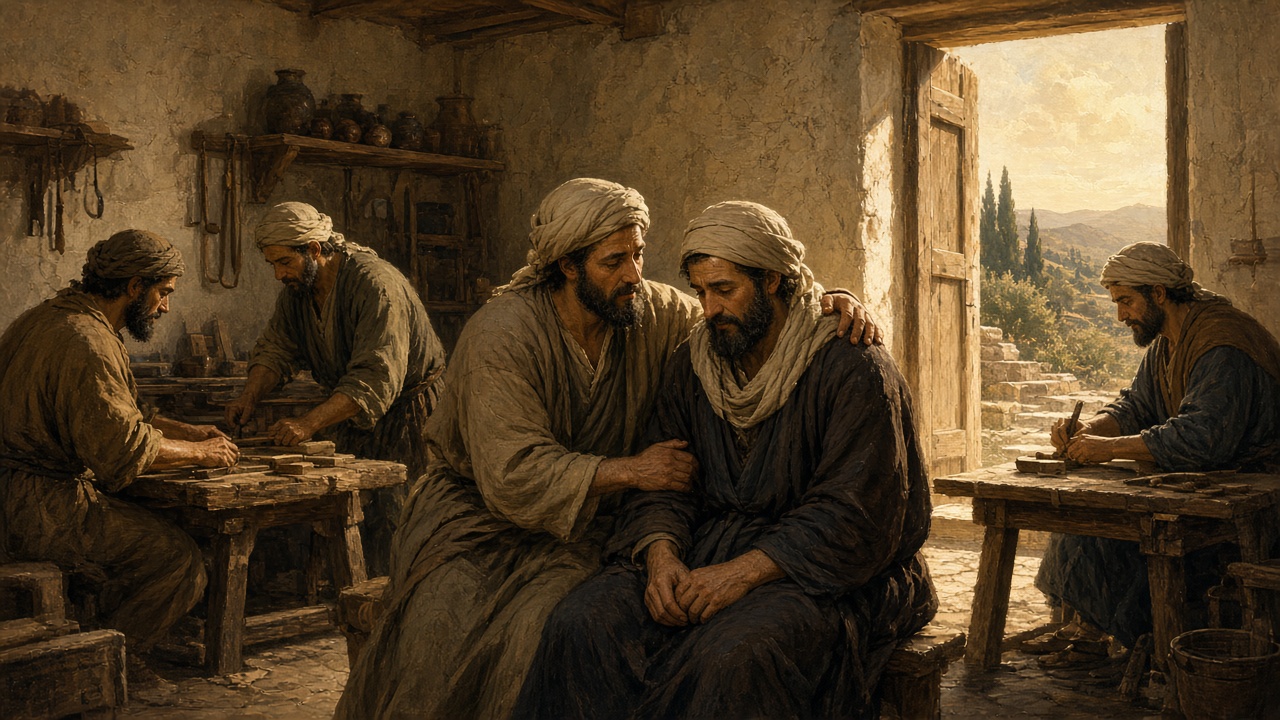
- The readers are urged to aspire to a quiet life, to attend to their own matters, and to work with their own hands, as they had already been instructed. The chapter presents this as the way to behave properly toward outsiders and to avoid being dependent on anyone.Sources: the Bible text itself
Notes written with AI assistance from open sources (Theographic Bible Metadata, CC BY-SA 4.0; Easton’s Bible Dictionary, public domain) and reviewed before publishing.
Places in this chapter
- Macedonia · 41.600, 22.540 · verse 10
Only places identified with high confidence are shown (90% or more according to the scholarly sources compiled by OpenBible). Period map: DARE (Digital Atlas of the Roman Empire), CC BY 4.0; modern map: © OpenStreetMap contributors; places: OpenBible.info (CC BY 4.0).
Credits and license for this translation
God Lavayiyat Aṅ Puhuvasiwni
New Testament in Hopi (US:hop:Hopi)
copyright © 2012 Wycliffe Bible Translators, Inc.
Language: Hopi
Translation by: Wycliffe Bible Translators, Inc.
Hopi [hop], USA
Copyright Information
© 2012, Wycliffe Bible Translators, Inc. All rights reserved.
This translation text is made available to you under the
terms of the Creative Commons License: Attribution-Noncommercial-No Derivative Works.
( http://creativecommons.org/licenses/by-nc-nd/3.0/ )
In addition, you have permission to port the text to different file formats, as long as you
do not change any of the text or punctuation of the Bible.
You may share, copy, distribute, transmit, and extract portions
or quotations from this work, provided that you include the above copyright
information:
You must give Attribution to the work.
You do not sell this work for a profit.
You do not make any derivative works that change any of the actual words or punctuation of the Scriptures.
Permissions beyond the scope of this license may be
available if you contact
us with your request.
The New Testament
in Hopi
© 2012, Wycliffe Bible Translators, Inc. All rights reserved.
This translation is made available to you under the terms of the
Creative Commons Attribution-Noncommercial-No Derivatives license 4.0.
You may share and redistribute this Bible translation or extracts from it in any format, provided that:
You include the above copyright and source information.
You do not sell this work for a profit.
You do not change any of the words or punctuation of the Scriptures.
Pictures included with Scriptures and other documents on this site are licensed just for use with those Scriptures and documents.
For other uses, please contact the respective copyright owners.
2014-04-25
Source: http://ebible.org/hopNT/ · eBible.org