Revelation 7
Parmeswar ke naawa poestak · Tap a verse to see its cross-references.
Ketana manai Parmeswar ke tjienha paaiga
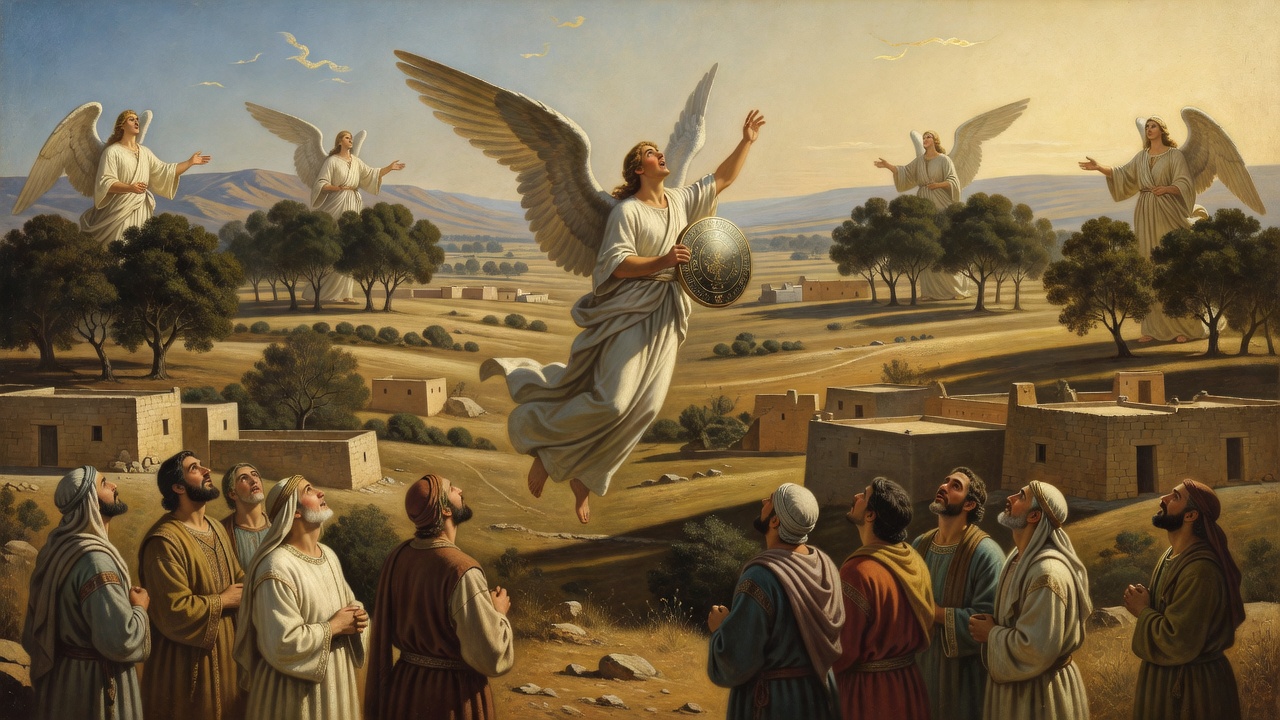
1Ekare baad ham dekhlie kie dhartie ke tjaaro kona par ek ek parie thara hai. Oesab tjaaro kona ke hauwa rokat raha djeme dhartie aur samoendar par tanko hauwa na tjale. Ekko per ke patta tahaat na hielat raha. 2Tab ham ekgo parie oeppar djaat dekhlie djaaha se soeroedj oege hai. Oe djienda Parmeswar ke tjienha apane sanghe leis raha. Tab oe soeroe karies djor se tjaaro parie log se batiaai ke. Oe tjaaro ke hoekoem raha dhartie aur samoendar ke barbaad kare ke. Bakie oe bolies: 3„Agor! Doenia, samoendar aur per ke abbe naksaan na kariehe! Hamlogke tjaahie pahiele Parmeswar ke goelaam log ke moerie ke maathe par tjienha lagaawe ke.”
4Tab ham soenlie ketana manai ke ie tjienha mielal. Oesab ek sau tjawaalies hadjaar (144.000) logan raha. Oesab Israel ke baara koel me ke raha, aur oe koel ke naam
Joeda
Roeben
Gad
Aasar
Naftaalie
Maanase
Siemeon
Lewie
Iesaakar
Seboelon
Josaf aur
Benjaamen hai.
Oe manai log baara baara hadjaar har ek koel me ke raha.
Ek djhoend manai
9Ekare baad ham ka dekhlie? Ham ek djhoend manai dekhlie. Oelog har ek djaatie, koel, des aur bhaasa me ke raha. Oesabhan Parmeswar ke gaddie aur bhera ke Battja ke aage thara raha aur oeddjar kapra pahienies raha. Etana dher manai raha kie koi na gien sakat raha. Oesab narjar ke daarhie leike hielaawat raha Parmeswar ke aadar kare khaatien. 10Aur oelog djor se bolies:
Parmeswar gaddie par baithal hai!
Oe aur bhera ke Battja hamlogke batjaawe Waala hai!
11Sab parie log aur tjaubiesgo barkwan aur bhie tjaaro djienda swarag waalan gaddie ke aas-paas thara raha. Tab oesabhan Parmeswar ke aage djamien par gierke bhie oke poedje lagal. Oesab bolies:
12Ha, aisane hai.
Aap sada khaatien baraai, soekh, gjaan, dhanbaad, aadar, aur saktie miele aur aap hoekoem dewe ke laaik baato!
Aisane to hai!
13Tab ek barkwa hamse poetjhies: „Oeddjar kapra pahiene waalan ke hai? Oelog kaaha se aail hai?” 14Tab ham bollie: „Saheb djie, ham na djaaniela, aap to djaane hai. Aap hamse bataai sako ho?” Tab oe bolies: „Ie manai log barka moesiebat me se niekaral hai. Oelog aapan kapra dhoike bhera ke Battja ke khoen se oeddjar karwaais hai. 15Ohie se oelog Parmeswar ke gaddie ke bietj me thara hoike raat aur dien swarag ke mahal me okar aadar kare hai. Aur Parmeswar oesabke lage rahiega aur oelogke aar kariega. 16Ab oesabke kabhie na bhoekh aur piaas lagiega, aur ghaam ke aatj oelogke bhie na lagiega. 17Bhera ke Battja Parmeswar ke gaddie ke aage thara hai, aur oesabke tjaraawe Waala rahiega. Oe oesabke paanie ke dhaara lage ledjaaiga sada khaatien djieje ke. Aur Parmeswar aise kar deiga kie ab se oelogke kabhie na rowe ke parie.”
Did you know?
The sealed tribes and the great multitude
- Revelation 7 numbers the sealed as 144,000, twelve thousand from each of the tribes of Israel named in the chapter. Israel was another name for Jacob, the second-born of the twin sons of Isaac and Rebekah; Easton's Bible Dictionary (1897) explains Jacob's name as someone who follows on another's heels, or a supplanter.Sources: the Bible text itself · Jacob (Israel)
- Although Reuben was the eldest son of Jacob and Leah, the list of the sealed begins with Judah and then names Reuben. The list also includes both Joseph and Manasseh; Manasseh was Joseph's elder son, and Jacob adopted him and his brother Ephraim as his own sons.Sources: the Bible text itself · Reuben · Manasseh (son of Joseph)
- After the sealing, the vision shows a multitude too large to count, from every nation, tribe, people, and tongue, standing before the throne and the Lamb, wearing white robes and holding palm branches. One of the elders says they have come out of the great tribulation and have washed their robes and made them white in the blood of the Lamb.Sources: the Bible text itself
Notes written with AI assistance from open sources (Theographic Bible Metadata, CC BY-SA 4.0; Easton’s Bible Dictionary, public domain) and reviewed before publishing.
Credits and license for this translation
Parmeswar ke naawa poestak
New Testament in Hindustani, Caribbean (NS:hns:Hindustani, Caribbean)
copyright © 2010 Wycliffe Bible Translators, Inc.
Language: Hindustani, Caribbean
Translation by: Wycliffe Bible Translators, Inc.
Hindustani, Caribbean [hns], Suriname
Copyright Information
© 2010, Wycliffe Bible Translators, Inc. All rights reserved.
This translation text is made available to you under the
terms of the Creative Commons License: Attribution-Noncommercial-No Derivative Works.
( http://creativecommons.org/licenses/by-nc-nd/3.0/ )
In addition, you have permission to port the text to different file formats, as long as you
do not change any of the text or punctuation of the Bible.
You may share, copy, distribute, transmit, and extract portions
or quotations from this work, provided that you include the above copyright
information:
You must give Attribution to the work.
You do not sell this work for a profit.
You do not make any derivative works that change any of the actual words or punctuation of the Scriptures.
Permissions beyond the scope of this license may be
available if you contact
us with your request.
The New Testament
in Hindustani, Caribbean
© 2010, Wycliffe Bible Translators, Inc. All rights reserved.
This translation is made available to you under the terms of the
Creative Commons Attribution-Noncommercial-No Derivatives license 4.0.
You may share and redistribute this Bible translation or extracts from it in any format, provided that:
You include the above copyright and source information.
You do not sell this work for a profit.
You do not change any of the words or punctuation of the Scriptures.
Pictures included with Scriptures and other documents on this site are licensed just for use with those Scriptures and documents.
For other uses, please contact the respective copyright owners.
2014-04-25
Source: http://ebible.org/hnsNT/ · eBible.org