Matthew 6
Parmeswar ke naawa poestak · Tap a verse to see its cross-references.
Daan kare
1Jaad kar kie toelog bhalaai na kariehe ek doesare ke dekhaawe khaatien. Djab toe aise kariehe tab toelogke aapan swarag ke Pieta lage ienaam na mielie. 2Toelog koi ke bhalaai karke na djaihe tjaaro or bole djaise dekhaawe waalan kare hai. Oelog partjaar ke ghar me aur rasta par djaaike ie sab kare hai manai ke aadar paawe khaatien. Ham toelogse satj boliela kie ie rakam se oelog aapan ienaam paai tjoekal hai. 3Bakie djab toelog ek doesare ke koetjh sahaaita kariehe tab tor baawa haath ke na tjaahie djaane ke kie tor dahiena haath ka kare hai. 4Ie rakam se tor daan tjhiepal rahie. Tor swarag ke Pieta sab tjhiepal tjiedj dekhe hai, aur oe toke ienaam deiga.
Praatna kare
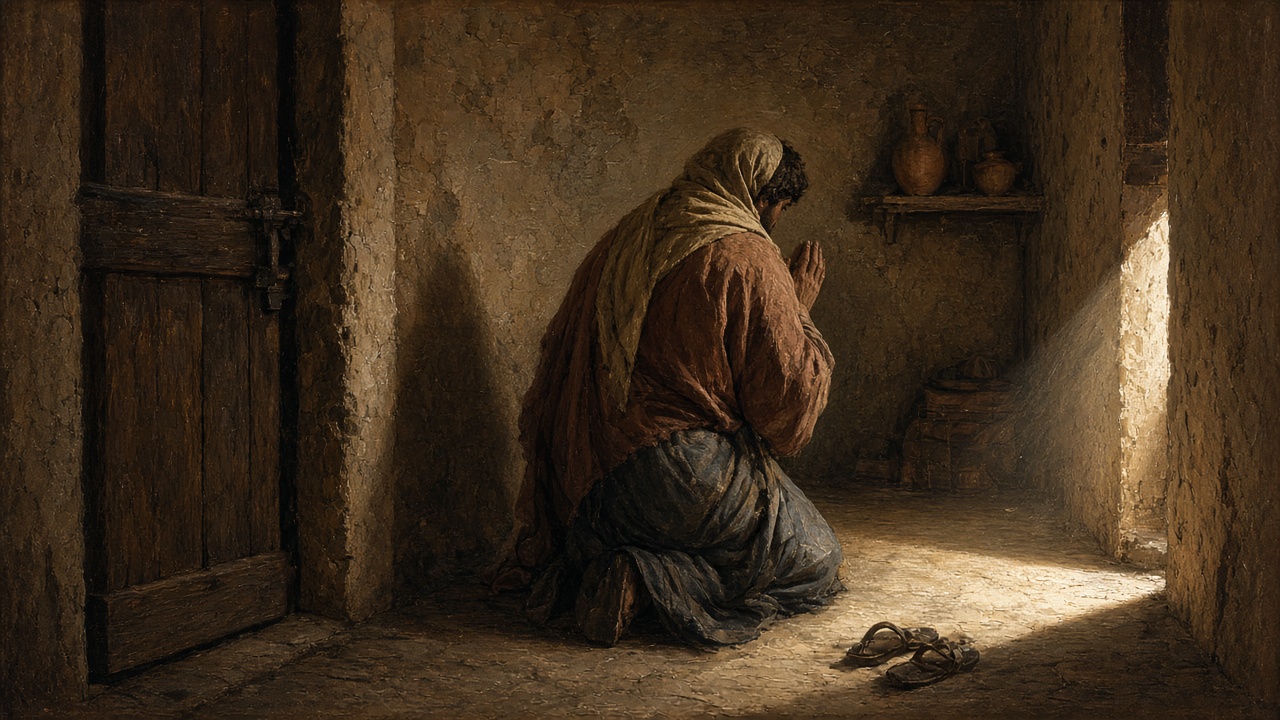
5Naklie dharmie logan praatna kare hai doesare ke dekhaawe khaatien. Bakie toelog aise na kariehe. Oesabke attjha lage hai partjaar ke ghar me aur sahar ke kona kona me thara hoike praatna kare ke. Ham toelogse satj boliela kie oelog aapan ienaam paai tjoekal hai. 6Bakie djab toelog praatna kariehe tab aapan kamra me djaaike kamaarie band kar deihe. Tab hoewa par praatna kariehe aapan swarag ke Pieta se. Oe sab tjhiepal tjiedj dekhe hai, aur oe toke ienaam deiga.
7Be-bieswaasie logan dher dher baat bolke praatna kare hai, bakie toelog aise na kariehe. Oelog sotje hai kie djab derie talak praatna kariega, tab Parmeswar oelogke praatna soeniega. 8Toelog aise na kariehe. Toelogke maange se pahiele Pieta Parmeswar djaane hai kie toelogke kaun tjiedj djaroerie hai. 9Toelog ie rakam se praatna kariehe:
Hamlogke swarag ke Pieta,
sab koi aapke naam pawietr maane,
10aapke raadj aawe,
aur djaise tor hiettjha swarag me poera howe hai, oisane dhartie par bhie howe.
11Hamlogke aadj ke khaana deihe.
12Djaise hamlog aapan kasoerwaar waalan ke maaf kariela, oisane aap hamlogke kasoer maaf kar deihe.
13Hamlogke laalietj me na paran de aur boeraai me se batjaaw.
[Aap raadj tjalaawe hai aur aapke saktie aur mahiemma hai sada ke lieje.
Aisahie to hai.]
14Djab toe doesare ke maaf kariehe, tab tor swarag ke Pieta toke bhie tjhama kariega. 15Bakie djab toe ek doesar ke tjhama na kariehe tab Pieta Parmeswar toke tjhama bhie na kariega.
Rodja kie to bhoekha rahe
16Bolies: „Djab toelog rodja kie to bhoekha rahiehe, tab aapan tjehera na oedaas kariehe djaise koi koi kare hai. Oelog oe dien na sapare hai aur oedaas hoike doesare ke dekhaawe hai kie oelog rodja kie to bhoekha hai. Bakie ham toelogse satj boliela kie oelog aapan ienaam paai tjoekal hai. 17Djab toelog rodja kie to bhoekha rahiehe, tab aapan moerie par tel lagaaw aur moeh dhow djaise toe hardam kare hai. 18Ie rakam se manai log na dekhie kie toelog rodja kie to bhoekha baate, bakie toelogke swarag ke Pieta dekhiega. Oe sab tjhiepal tjiedj dekhe hai, aur oe toelogke ienaam deiga.”
Sattja dhan-daulat
19Oe bolies: „Toelog doenia me dhan na bator. Hoewa dewka pare hai aur moertjaai dja hai aur tjor ghoeske tjoraai lewe hai. 20Bakie toelog swarag ke dhan bator. Hoewa par koetjh me kierwa na pare hai, koetjh na moertja hai aur tjor na ghoes sakie. 21Djaaha tor dhan hai, hoewa tor man bhie rahie.
22Ek iensaan ke aakhie djaise okar andar ke tjieraag hai. Djab oe safa tjiedj maange hai dekhe, tab okar man ekdam se andjor hai. 23Bakie djab oe aapan dhiaan kharaab tjiedj par lagaawe hai, tab okar man ketana andhiaar hai.
24Koi doei maaliek ke na maan sake hai, nahie to oe ek ke djarie aur ekwa ke tjaahie. Aisane toelog aapan dhiaan Parmeswar par aur saathe saath aapan dhan-daulat par na lagaai sakiehe.”
Sotj-phiekier na kar
25Ohie se ham toelogse boliela kie toelog khaaik-paanie aur kapra-latta ke biese me sotj-phiekier na kar. Djiewan to khaaik-paanie se aur dehie kapra-latta se djaada hai. 26Tjierai log ke dekh. Oesab na bowe hai, na kaate hai, aur koetjh na batorke bakhaar me rakhe hai. Tabbo toelogke swarag ke Pieta oelogke khaaik dewe hai. Aur toelog oelogse djaada baate. 27Ke sotj-phiekier karke aapan aajoe barhaai sake hai? 28Tab toelog kaahe ke kapra-latta ke sotj-phiekier kare hai? Ghaas ke phoel ke dekh. Oesab kaam par na dja hai aur kapra na banaawe hai. 29Aur ham toelogse boliela kie raadja Saalomo tjaahe etana dhanie raha, tabbo okar kapra ghaas ke phoel se soendar na raha. 30Djab Parmeswar ghaas ke etana soendar se banaawe hai, tjaahe aadj hai aur biehaan kaatke djaraai dewal dja hai, tab oe toelogke aur soendar na pahienaai sake hai? Dje ie baat na bieswaas kare hai, oe kam-bieswaasie hai.
31Be-bieswaasie logan ie sab tjiedj ke biese me sotj-phiekier kare hai. Bakie toelogke swarag ke Pieta djaane hai kie toelogke kaun tjiedj djaroerie hai. Ohie se toelog sotj-phiekier na kar aur na bol kie: ‘Hamlog ka khaabe aur piebe? Aur kaun tjiedj hamlog pahienab?’ 33Toelog pahiela dardja par aapan dhiaan Parmeswar ke raadj par lagaaw. Tab djaun djaroerie hai, ie sab toelogke miel djaaiga. 34Ohie se toelog biehaan ke tjienta aadj na kar. Aadj ke moesiebat aadj ke lieje bahoet hai. Biehaan to dekhal djaai.
Did you know?
Secret righteousness and trust
- This chapter is part of the Sermon on the Mount. An event listing dates that sermon to AD 28 and records it as lasting one day.Sources: Sermon on the Mount · the Bible text itself
- Jesus says not to sound a trumpet in the synagogues and streets when giving to the needy, as the hypocrites do in order to be honored. He also warns against praying on street corners to be seen and against fasting with a disfigured face; instead, he describes praying in an inner room with the door shut, and fasting with an anointed head and a washed face.Sources: the Bible text itself
- Jesus says that not even Solomon in all his glory was adorned like one of the lilies of the field. A dictionary entry explains that his Hebrew name, Shelomoh, means “Peaceful,” that he was David’s son by Bathsheba, and that Nathan called him Jedidiah, “beloved of the Lord”; his reign is recorded in 1 Kings 1–11 and 2 Chronicles 1–9.Sources: the Bible text itself · Solomon
Notes written with AI assistance from open sources (Theographic Bible Metadata, CC BY-SA 4.0; Easton’s Bible Dictionary, public domain) and reviewed before publishing.
Credits and license for this translation
Parmeswar ke naawa poestak
New Testament in Hindustani, Caribbean (NS:hns:Hindustani, Caribbean)
copyright © 2010 Wycliffe Bible Translators, Inc.
Language: Hindustani, Caribbean
Translation by: Wycliffe Bible Translators, Inc.
Hindustani, Caribbean [hns], Suriname
Copyright Information
© 2010, Wycliffe Bible Translators, Inc. All rights reserved.
This translation text is made available to you under the
terms of the Creative Commons License: Attribution-Noncommercial-No Derivative Works.
( http://creativecommons.org/licenses/by-nc-nd/3.0/ )
In addition, you have permission to port the text to different file formats, as long as you
do not change any of the text or punctuation of the Bible.
You may share, copy, distribute, transmit, and extract portions
or quotations from this work, provided that you include the above copyright
information:
You must give Attribution to the work.
You do not sell this work for a profit.
You do not make any derivative works that change any of the actual words or punctuation of the Scriptures.
Permissions beyond the scope of this license may be
available if you contact
us with your request.
The New Testament
in Hindustani, Caribbean
© 2010, Wycliffe Bible Translators, Inc. All rights reserved.
This translation is made available to you under the terms of the
Creative Commons Attribution-Noncommercial-No Derivatives license 4.0.
You may share and redistribute this Bible translation or extracts from it in any format, provided that:
You include the above copyright and source information.
You do not sell this work for a profit.
You do not change any of the words or punctuation of the Scriptures.
Pictures included with Scriptures and other documents on this site are licensed just for use with those Scriptures and documents.
For other uses, please contact the respective copyright owners.
2014-04-25
Source: http://ebible.org/hnsNT/ · eBible.org