John 10
Parmeswar ke naawa poestak · Tap a verse to see its cross-references.
Attjha bhera ke tjaraawe Waala
1Oe bhie bolies: „Thiek se soen. Djab koi ek bhera ke pen me dwaar alang se na dja hai bakie tjaharke bhiettar dja hai, tab oe ekgo tjor kie to daakoe hai. 2Bakie dje dwaar lage se bhiettar dja hai, ohie bhera tjaraawe waala hai. 3Aur rakhwaala kamaarie okar khaatien khole hai. Tab bhera logan okar aawaadj pahietjaane hai aur oe aapan ek ek bhera ke naam bolaaike bahare ledja hai. 4Tab oe aage aage tjale hai, aur sab okar aawaadj soenke okar pietjhe aawe hai. 5Bakie oesab ek andjaan aadmie ke pietjhe kabhie na tjalie. Oelog okar aawaadj na tjienhe hai, ohie se oesab bhaag djaai.”
6Aisahie Jiesoe manai log se ie matlab ke kaahaanie bataais, bakie oesab na samdjhies. 7Ohie se oe phor-phorke samdjhaawe lagal.
Bhera ke pen ke dwaar
Oe bolies: „Hamaar baat bieswaas kar, ham satj boliela. Ham bhera ke pen ke dwaar ghat baatie. 8Djaun log hamse aage aail partjaar kare, oesab djaise tjor aur daakoe raha. Bakie hamaar bhera oelogke baat na soenies. 9Ham bhera ke pen ke dwaar ghat baatie. Dje hamaar dwaara bhiettar djaai, oe batj djaai. Oe bhiettar aur bahare djaai sakiega tjare khaatien. 10Tjor khaalie aawe hai tjorie kare, djaan maare aur naas kare khaatien. Bakie ham ailie hai aapan waalan ke soekhie djiewan se djaada dewe khaatien.
11Ham attjha tjaraawe Waala baatie. Aisan tjaraawe waala aapan djaan dei dewe hai aapan bhera log ke batjaawe khaatien. 12Bakie ek kamkarta doesar rakam ke hai. Djab oe ser aawat dekhie tab oe bhera ke tjhorke bhaag djaai. Oesab to okar na hai. Tab ser aaike ekgo ke maarke aur ekwan ke bhagaai dei. 13Kamkarta khaalie paisa khaatien kaam kare hai aur oke bhera ke haat na lage hai. 14Ham attjha tjaraawe Waala baatie. Djaise ham aapan Baap ke djaaniela aur oe hamke djaane hai, aisane ham aur hamaar waalan apane apane ke djaane hai aur ham oelog khaatien aapan djaan debe.
16Hamke doesar bhera bhie hai aur oesab doesar pen me rahe hai. Hamke tjaahie ohoelogke tjaraawe ke. Oelog hamaar aawaadj pahietjaanke hamaar baat soeniega. Tab sab ek djhoend hoiga, aur ham oelogke ekahie tjaraawe Waala rahabe. 17Ham tajaar baatie aapan djaan dewe khaatien djeme ham phien se lei sakie. Ohie se Pieta Parmeswar hamme tjaahe hai. 18Koi na hamaar djaan leiga, bakie ham apane debe. Hamme saktie hai aapan djaan dewe ke aur phien se lewe ke. Hamaar Baap aise bolies hai.”
19Tab ie sab baat soenke dharam ke barkwan me phien ektaai na raha. 20Oesab me dher manai bolies kie: „Toelog kaahe ke okar partjaar soene hai? Oke to bhoet pakaries hai aur oe pagala hai!” 21Bakie doesar manai bolies: „Na, djekare oeppar bhoet hai, oe aise na batia hai. Ekgo bhoet andha ke aakhie thoro attjha kar sake hai?”
Bieswaas aur be-bieswaas
22Jeroesaalem me Naawa-mahal ke tiewhaar manaawe ke tem aai gail raha. Thandha ke tem raha. 23Jiesoe Parmeswar ke mahal ke angana me Saalomo naam ke tjhaawal rasta par iedhar se oedhar aawat djaat raha.
24Tab dharam ke barkwan oke gher leis aur poetjhe lagal: „Toe kab lek hamlogse kholke na bataihe kie toe ke baate? Hamlogse sattje bataaw kie toe Parmeswar ke Kriest baate kie na.” 25Tab oe bolies: „Ham toelogse bataai tjoekalie, bakie toelog na maange hai bieswaas kare. Ham aapan Baap ke naam se atjambho kaam kariela, aur aisane dekha hai kie ham Ke baatie. 26Bakie toelog hamaar bhera ke djhoend me ke na baate, ohie se toelog na bieswaas kare hai. 27Hamaar bhera hamaar aawaadj pahietjaane hai. Ham oelogke djaaniela aur oesab hamare paatjhe tjale hai. 28Koi na oelogke hamare lage se hataai paai, bakie ham oelogke hardam khaatien amar djiewan debe Parmeswar lage djeme oelog ose alag na karal djaai. 29Hamaar Baap oelogke hamme deis hai, aur oe sab se barka hai. Ohie se koi na hamaar waalan ke okar haath me se tjhien paai. 30Ham aur hamaar Baap ek baatie.”
31Tab dharam ke barkwan phien se ieta laawe lagal oke maar dhaare khaatien. 32Tab oe bolies: „Ham aapan Baap ke baat par dher bhala kaam karke dekhailie. Toelog kaun kaam khaatien maange hai hamme maar dhaare?” 33Tab oelog bolies: „Tor bhala kaam khaatien hamlog na maangiela toke maar dhaare. Bakie toe iensaan baate aur tabbo apane ke Parmeswar se baraabar karke oke bedjatie kare hai.” 34Tab oe bolies: „Parmeswar ke poestak me liekhal hai kie: 35‘Ham boliela kie toelog ieswar baate.’ Oe aapan kamkartan ke aise bolaawe hai djaun se oe aapan baat bataais hai. Aur okar baat me to ab talak hoekoem hai. 36Aur djab ham boliela kie ham okar Beta baatie, tab toelog kaahe ke bole hai kie ham okar bedjatie kariela? Oe hamme alag karke doenia me pathaais hai. 37Djab ham aapan Baap ke kaam na kariela tab hamare me na bieswaas kar. 38Bakie djab ham kariela aur toelog tabbo hamare me na bieswaas kare hai, tab bieswaas kar kie hamaar atjambho kaam Parmeswar ke saktie se karal dja hai. Tab toelog djaan djaihe kie Baap hamare me samaail hai aur ham okare me.”
39Tab ie baat par oesab phien se kausies karies oke pakare ke, bakie oe oesabke haath me se batj gail.
40Tab oe phien Jordaan nadie ke habara gail djaaha Johaanas pahiele dopoe karat raha, aur koetjh dien talak hoewa rahie gail. 41Dher manai okare lage aail aur apane me bole lagal: „Johaanas ekko barka kaam na karies, bakie okar sab baat Jiesoe ke biese me satj hai.” 42Aur hoewa par dher manai log Jiesoe me bieswaas kare lagal.
Did you know?
The Good Shepherd
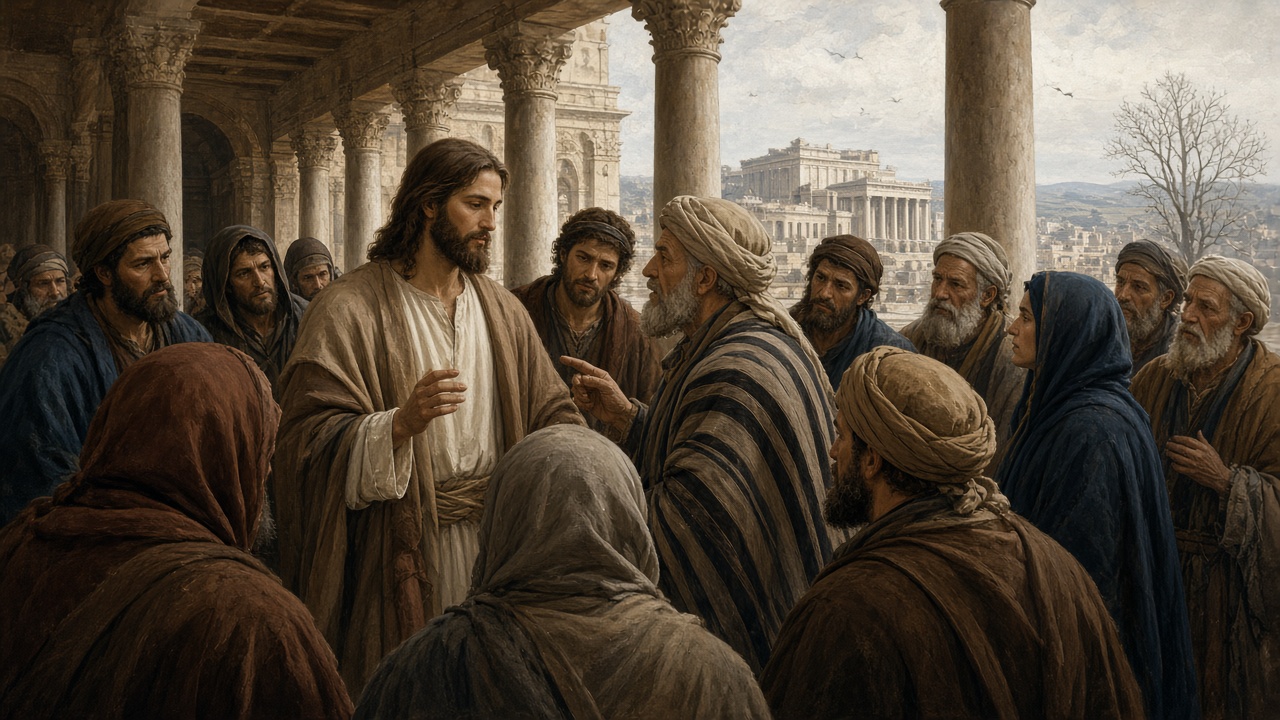
- During the Feast of Dedication in Jerusalem it was winter, and Jesus was walking in the temple courts in Solomon's Colonnade. The name Jerusalem, in a dual form, means "possession of peace" or "foundation of peace"; that form probably refers to the mountains of Zion and Moriah, or, as some suppose, to the upper and lower city. Solomon's Hebrew name, Shelomoh, means "peaceful."Sources: the Bible text itself · Jerusalem · Solomon
- A chronology of Gospel events dates the Good Shepherd teaching to AD 29, and dates a time of teaching and healing from Perea to Jerusalem to AD 30.Sources: The Good Shepherd Teaching · Teaching and Healing in Perea to Jerusalem
- Jesus then went back across the Jordan to the place where John had first been baptizing, and many people there believed in him. John was of priestly descent: his father, Zacharias, was a priest of the course of Abia, and his mother, Elisabeth, was of the daughters of Aaron. His birth, six months before that of Jesus, was foretold by an angel; those who came said that John never performed a sign, yet everything he had said about Jesus was true.Sources: the Bible text itself · John the Baptist
Notes written with AI assistance from open sources (Theographic Bible Metadata, CC BY-SA 4.0; Easton’s Bible Dictionary, public domain) and reviewed before publishing.
Places in this chapter
- Jerusalem · 31.777, 35.234 · verse 22
- Solomon’s Portico · Today: in Jerusalem · 31.777, 35.234 · verse 23
- Jordan · Today: Jordan River · 31.761, 35.558 · verse 40
Only places identified with high confidence are shown (90% or more according to the scholarly sources compiled by OpenBible). Period map: DARE (Digital Atlas of the Roman Empire), CC BY 4.0; modern map: © OpenStreetMap contributors; places: OpenBible.info (CC BY 4.0).
Credits and license for this translation
Parmeswar ke naawa poestak
New Testament in Hindustani, Caribbean (NS:hns:Hindustani, Caribbean)
copyright © 2010 Wycliffe Bible Translators, Inc.
Language: Hindustani, Caribbean
Translation by: Wycliffe Bible Translators, Inc.
Hindustani, Caribbean [hns], Suriname
Copyright Information
© 2010, Wycliffe Bible Translators, Inc. All rights reserved.
This translation text is made available to you under the
terms of the Creative Commons License: Attribution-Noncommercial-No Derivative Works.
( http://creativecommons.org/licenses/by-nc-nd/3.0/ )
In addition, you have permission to port the text to different file formats, as long as you
do not change any of the text or punctuation of the Bible.
You may share, copy, distribute, transmit, and extract portions
or quotations from this work, provided that you include the above copyright
information:
You must give Attribution to the work.
You do not sell this work for a profit.
You do not make any derivative works that change any of the actual words or punctuation of the Scriptures.
Permissions beyond the scope of this license may be
available if you contact
us with your request.
The New Testament
in Hindustani, Caribbean
© 2010, Wycliffe Bible Translators, Inc. All rights reserved.
This translation is made available to you under the terms of the
Creative Commons Attribution-Noncommercial-No Derivatives license 4.0.
You may share and redistribute this Bible translation or extracts from it in any format, provided that:
You include the above copyright and source information.
You do not sell this work for a profit.
You do not change any of the words or punctuation of the Scriptures.
Pictures included with Scriptures and other documents on this site are licensed just for use with those Scriptures and documents.
For other uses, please contact the respective copyright owners.
2014-04-25
Source: http://ebible.org/hnsNT/ · eBible.org