Acts 2
Parmeswar ke naawa poestak · Tap a verse to see its cross-references.
Pawietr Aatma kaise barsaawal gail
1Djab Penkstar ke tiewhaar soeroe bhail, tab sab pathaawal waalan aur doesar tjela log saamiel raha. 2Bas atjakke me swarag me se koetjh djaise bahoet djabar hauwa ke aawaadj soenaail. Aur ghar aawaadj se bhar gail. 3Tab koetjh djaise toekkara toekkara aagie dekhaail. Oe batke har ek ke oeppar phail gail. 4Aur oesab Pawietr Aatma se bhar gail aur sab rakam ke bhaasa batiaai lagal djaise Aatma deis batiaai ke.
5Oe same par dher bhaktie Israel logan doenia ke kona kona se Jeroesaalem me aail raha Penkstar ke tiewhaar manaawe khaatien. 6Tab djab aawaadj soenaail, tab oesab oe ghar lage djoet gail. Aur djab soenies kie Jiesoe ke tjela log har ek bhaasa me batiaat raha, tab oesab bahoet tjakkariaai gail 7aur bole lagal kie: „Soen, oe manai to Gaalielea diehaat ke hai. 8Tab oesab kaise hamlogke har ek bhaasa batiaai paawe hai? 9Hamlog tjaahe sab rakam des ke hai, tabbo oesabke baat samadjh paaila. Hamlog Partsia, Media, Elaam aur Mesopotaamia des se ailie baatie. Bhie Joedea, Kaapaadosia, Pontas, Aasia, 10Friegia aur Pamfielia diehaat, Egypte aur Liebia des, Sierene sahar ke aas-paas, Kreta aur Aaraabia des se ailie hai, aur Roma sahar waalan hia bhie hai. Hamlogan Israel ke djaatie baatie aur doesar djaat me ke Parmeswar ke aadar kare waalan bhie hai. 11Ie Gaalielea diehaat waalan har ek bhaasa me Parmeswar ke barka kaam ke biese me batia hai, aur sab koi oelogke baat samdjhe hai!”
12Manai log etana atjambho hoike na djaane kie ka sotje, aur bole lagal: „Ekar matlab ka hai?” 13Bakie koi koi tiebolie maarke bolies: „Oelog bahoet wien pies hai!”
Petras ke partjaar
14Bas Petras gjaara pathaawal waalan sanghe oethke djor se batiaai lagal. Bolies: „Sab des ke aur Jeroesaalem ke Israel ke bhaai logan, dhiaan lagaaike soen. 15Ie manai log koetjh na pies hai, ab to sabere nau badjal hai. 16Djaun hia bhail hai Parmeswar ke sanesia Jowel agwe se bolies raha kie:
17‘Parmeswar bole hai:
Ie djoeg ke ant me ham aapan Pawietr Aatma sab iensaan ke oeppar barsaai debe. Tab toelogke beta aur betie hamaar sanes bataaiga aur ham toelogke naudjawaan ke har ek rakam djaage ke sapana dekhaabe aur poeranian soetle me sapana dekhiega.
18Oe tem me ham bhie aapan sab se nietja goelaam aur goelaam aurat ke oeppar aapan Pawietr Aatma barsaai debe. Tab oesab hamaar sanesian hoi djaaiga.
19Ham aasmaan me atjambho kaam aur dhartie par tjienha dekhaabe djaise khoen, aagie aur djabar-djas waala dhoewa.
20Prabhoe ke biesaal dien se pahiele ghaam andhiaar aur tjaan laal hoi djaai djaise khoen.
21Bakie dje Prabhoe ke naam bolaaike sahaaita maangie, oe batj djaai.’ ”
22Oe bolies: „Israel waalan, soen. Toelog thiek se djaane hai kie Parmeswar Naasaaret sahar ke Jiesoe ke pathaais raha. Oe okar dwaara dher maahaan atjambho kaam aur tjienha toelogke des me karwaais. 23Oe agwe se djaanat raha aur okar bietjaar raha kie Jiesoe toelogke haath me saupal djaat aur kie toelog oke be-bieswaasie log ke dwaara kroes par marwaai dharte. 24Bakie Parmeswar oke djie oethaais hai. Oe to maut ke bandhan toeries hai. Na hoi sakat kie maut Jiesoe ke dher dien aapan bas me pakarat. 25Daawied agwe se okar biese me bolies raha:
‘Ham raat aur dien Prabhoe ke jaad kariela. Oe hardam hamaar saath rahe hai djeme hamaar bieswaas tjhota na howe.
26Ohie se ham khoesiaalie se bharosa kariela kie tjaahe ham mar djaab, tabbo Parmeswar hamaar dehie barhia se rakhiega.
27Ham okar pawietr Waala baatie, ohie se oe hamme maral manai ke djagaha me na tjhoriega aur hamaar dehie na saran deiga.
28Oe hamme rasta dekhaais sattja djiewan paawe khaatien, aur ham sada ke lieje bahoet khoesiaalie se okar sanghe rahab.’ ”
29Oe bolies: „Bhaai logan, toelog to djaane hai kie hamlogke baap-daada Daawied mar gail aur okar mattie paral. Okar kabar abbe talak ie sahar me hai. 30Oe Parmeswar ke ekgo sanesia raha aur oe djaanat raha kie Parmeswar oke kaun tjiedj kasam khaaike waada karies raha. Oe bolies raha kie: ‘Ham tor ek aulaad tor gaddie par baithaabe Israel ke djaat ke oeppar raadj tjalaawe khaatien.’ 31Daawied agahie se dekhat raha ka hoiga. Aur djab oe bolies ‘Parmeswar hamme maral manai ke djagaha me na tjhor deiga,’ aur bhie ‘Oe hamaar dehie na saran deiga,’ tab oe Kriest ke djie oethe ke biese me batiaat raha.
32Oe baat Jiesoe ke biese me raha. Parmeswar oke djie oethaais hai aur hamlog ekare biese me gawaahie deila. 33Pieta Parmeswar oke sab se oetja dardja par aapan dahiena bagal baithaais hai. Tab oe aapan waada Pawietr Aatma ke biese me poera karies hai. Aur ab toelog dekh aur soen sake hai kie Jiesoe oe Aatma hamlogke oeppar barsaais hai. 34Daawied oeppar na gail hai. Bakie oe bolies kie:
‘Prabhoe Parmeswar hamaar Prabhoe se bataais hai:
35Dja, toe hamaar dahiena bagal baith djab talak ham tor doesman log ke tore gor ke nietje na dharwaabe.’
Djab oe ie baat bolies, tab oe apane biese me na batiaat raha, bakie Jiesoe Kriest ke biese me. 36Ohie se ab sab Israel djaatie ke thiek se jaad kare ke tjaahie kie Parmeswar ie Jiesoe ke sab koi ke Prabhoe aur bhie aapan Kriest banaais hai. Aur toelog oke kroes par marwaai dharle hai.”
37Bas djab oesab ie baat soenies, tab oesab diel bhar se djaan gail kie: „Ie baat satj hai aur hamlog ek kharaab kaam karlie hai!” Aur oesab Petras aur ekwan pathaawal waalan se poetjhies: „Bhaai logan, ab hamlog ka karie?” 38Tab Petras bolies: „Toelog aapan paap pastaaw aur ek naawa djiewan soeroe kar. Tab har ek apane ke Jiesoe Kriest ke naam me dopoe karwaai aur Parmeswar toelogke paap ke tjhama deiga. Tab oe aapan Pawietr Aatma toelogke oeppar barsaaiga. 39Ie okar waada hai, aur ie waada toelogke aur toelogke larkan khaatien hai, aur bhie sab doesar des ke djaatie log khaatien. Hamlogke Prabhoe Parmeswar to ohoesab me se bahoet manai log ke bolaaiga.”
40Petras dher doesar baat se gawaahie dewat raha aur aapan soene waalan ke samdjhaawat raha. Oe bienaai karke oesabse bolies kie: „Apane ke ie tem ke manai ke kharaab tjaal-tjalan se batjaaw, nahie to toelog bhie sadja paihe.”
Pahiela bieswaasie ke djiewan
41Tab djetana djane oe dien Petras ke partjaar me bieswaas kare lagal, oesab apane ke dopoe karwaais. Lagbhag tien hadjaar manai raha. 42Oesab pathaawal waalan ke siektjha par thiek se dhiaan lagaawat raha, oelog me bahoet soemmat raha, oesab hardam mielke bret toerat raha aur praatna karat raha. 43Sab Jeroesaalem ke manai djab pathaawal waalan ke dher atjambho kaam aur tjienha dekhies, tab oesabke diel me ieddjat barhal. 44Bieswaasie log me bahoet ekta raha aur oelog aapan sab tjiedj apane me baatke kaam me laawat raha. 45Aur kabhie kabhie koi koetjh betjat raha aur dje ke djaroerat raha, oelogke oe paisa baat dewat raha. 46Oelog rodj ek bietjaar se Parmeswar ke mahal ke angana me ekattha howat raha. Aur aapan ghare mielke oesab bret toerat raha aur khoesiaalie se bhodjan karat raha. 47Oesab rodj Parmeswar ke baraai karat raha aur sab Israel djaatie ke ieddjat bieswaasie log khaatien auro barhte gail. Aur rodj Prabhoe djaada manai ke paap me se batjaais. Aise auro manai log bieswaas kare lagal.
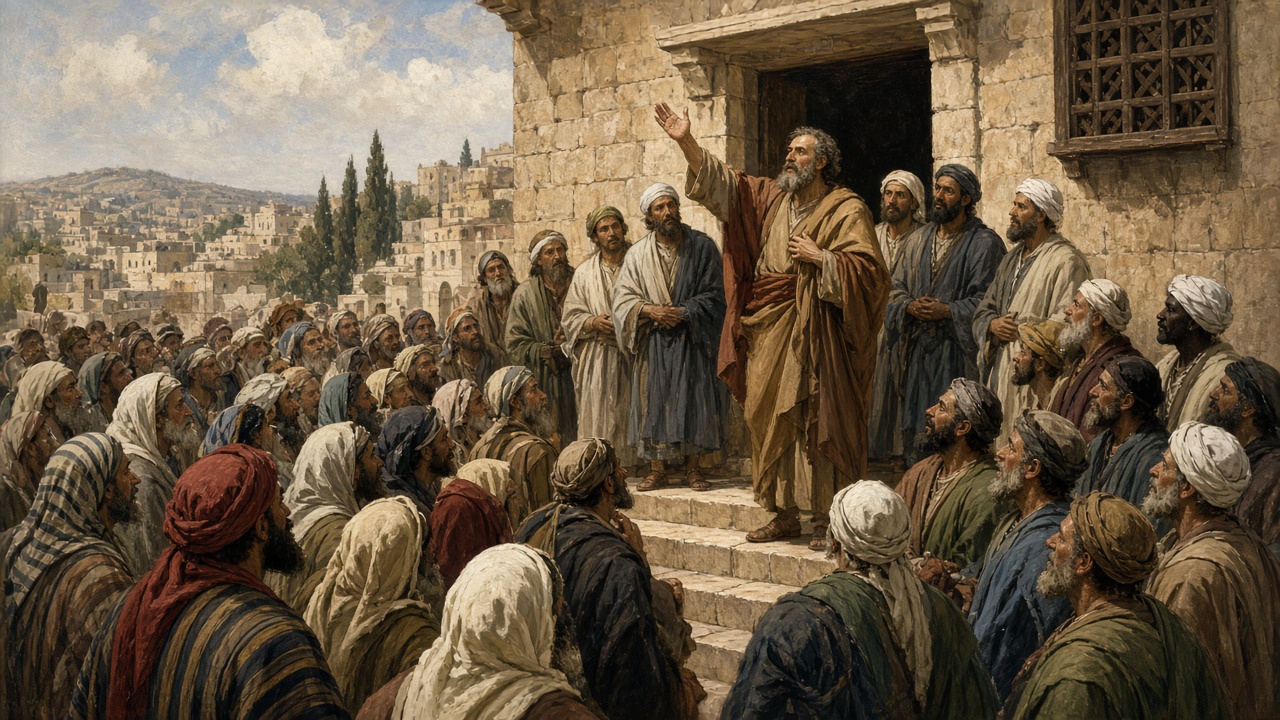
Did you know?
The Spirit Comes at Pentecost
- God-fearing Jews from every nation under heaven were already living in Jerusalem when a sound like a mighty rushing wind came from heaven and filled the house, and the speakers began to declare God’s wonders in other languages. In this chapter, “Asia” is the Roman province of Proconsular Asia, in the western part of Asia Minor, whose capital was Ephesus—not the continent of that name. Pontus, along the southern coast of the Euxine Sea, was a Roman province in the apostles’ time and a resort of many Jews of the Dispersion; Cappadocia was the easternmost and largest province of Asia Minor.Sources: the Bible text itself · Asia · Pontus · Cappadocia
- The crowd was amazed that the speakers were Galileans. The one who stood with the Eleven and addressed them was Simon Peter, originally called Simon—that is, Simeon, meaning “hearing”—a fisherman from Bethsaida, on the western coast of the Sea of Galilee, whom his younger brother Andrew first brought to Jesus.Sources: the Bible text itself · Simon Peter
- Peter said this was what the prophet Joel had spoken. Joel, the second of the twelve minor prophets, was the son of Pethuel, and his personal history is known only from his book. Peter also quoted David, the eighth and youngest son of Jesse of Bethlehem, and told the crowd that this patriarch had died and been buried, and that his tomb was still with them in Jerusalem.Sources: the Bible text itself · Joel · David
Notes written with AI assistance from open sources (Theographic Bible Metadata, CC BY-SA 4.0; Easton’s Bible Dictionary, public domain) and reviewed before publishing.
Places in this chapter
- Jerusalem · 31.777, 35.234 · verses 5, 14
- Galilee · 32.760, 35.527 · verse 7
- Asia · 38.400, 28.300 · verse 9
- Cappadocia · 38.671, 34.839 · verse 9
- Judea · Today: Judea 1 · 31.777, 35.234 · verses 9, 14
- Mesopotamia · Today: Aram-naharaim · 36.864, 39.033 · verse 9
- Pontus · 40.680, 37.830 · verse 9
- Cyrene · 32.821, 21.851 · verse 10
- Egypt · 30.129, 31.308 · verse 10
- Libya · 32.821, 21.851 · verse 10
- Pamphylia · 37.000, 31.000 · verse 10
- Phrygia · 39.000, 31.000 · verse 10
- Rome · 41.892, 12.485 · verse 10
- Nazareth · 32.702, 35.298 · verse 22
Only places identified with high confidence are shown (90% or more according to the scholarly sources compiled by OpenBible). Period map: DARE (Digital Atlas of the Roman Empire), CC BY 4.0; modern map: © OpenStreetMap contributors; places: OpenBible.info (CC BY 4.0).
Credits and license for this translation
Parmeswar ke naawa poestak
New Testament in Hindustani, Caribbean (NS:hns:Hindustani, Caribbean)
copyright © 2010 Wycliffe Bible Translators, Inc.
Language: Hindustani, Caribbean
Translation by: Wycliffe Bible Translators, Inc.
Hindustani, Caribbean [hns], Suriname
Copyright Information
© 2010, Wycliffe Bible Translators, Inc. All rights reserved.
This translation text is made available to you under the
terms of the Creative Commons License: Attribution-Noncommercial-No Derivative Works.
( http://creativecommons.org/licenses/by-nc-nd/3.0/ )
In addition, you have permission to port the text to different file formats, as long as you
do not change any of the text or punctuation of the Bible.
You may share, copy, distribute, transmit, and extract portions
or quotations from this work, provided that you include the above copyright
information:
You must give Attribution to the work.
You do not sell this work for a profit.
You do not make any derivative works that change any of the actual words or punctuation of the Scriptures.
Permissions beyond the scope of this license may be
available if you contact
us with your request.
The New Testament
in Hindustani, Caribbean
© 2010, Wycliffe Bible Translators, Inc. All rights reserved.
This translation is made available to you under the terms of the
Creative Commons Attribution-Noncommercial-No Derivatives license 4.0.
You may share and redistribute this Bible translation or extracts from it in any format, provided that:
You include the above copyright and source information.
You do not sell this work for a profit.
You do not change any of the words or punctuation of the Scriptures.
Pictures included with Scriptures and other documents on this site are licensed just for use with those Scriptures and documents.
For other uses, please contact the respective copyright owners.
2014-04-25
Source: http://ebible.org/hnsNT/ · eBible.org