Psalms 74
Tuivang Holy Bible · Tap a verse to see its cross-references.
1Aw Khawsa, kawtih kumqui dyna nani qoek khqi? Ikawtih na qamno a sainaak awhkaw tuukhqik khan awh nak kaw a so aih. 2Ak kqym awhkaw thlang nak thlaihkhqi, namah ing tlan hyk ti, nang a qo ak pang thlangkhqi na awmnaak Zion tlang ce poek cang lah thoeih ti. 3Vawhkaw kumqui dy ak plawcikhqi, na hun ciim awh na qaalkhqi ing a hawlaw vawhkaw seetnaak boeih benna nak kaw hawi lah. 4Nang ing kaimih na ning hqumnaak hun awh na qaalkhqi ing khy am kqang unawh; a mimah ang dyih hun simhatnaak ce ling uhy. 5Kqawng thing ak ding khyng ce hqaica ing a hlam sih amyihna awm uhy. 6Kut ing ami suk biit biit ik-oeihkhqi boeih hqaica ing deh pheng uhy. 7Na hun ciim ce dawi unawh tluk sak uhy; Nang ming a awmnaak hun ce tyih awm sak uhy. 8Ak kawk khuiawh, “A cuna nawi hoem u sih!” ti uhy. Qam khui awhkaw Khawsa bawknaak imkhqi boeih ce dawi uhy. 9Kawpoek kyi hatnaak kaimih a venawh ikawmyih awm am awm hy; tawnghakhqi awm am awm voel hawh nawh, handy nu vemyihna a awm khing kaw tice u ingawm am sim hy. 10Aw Khawsa, handy awh nu na qaalkhqi ing anik kqawn set kaw? anik qaalnaak ing nang ming ce kqawn seet hly let hawh unawh nu? 11Ikawtih nak tang kut ben ce nak dawh tlaih? Na hibai ak khui awhkawng na kut ce soeng nawhtaw cekkhqi ce him hlah. 12Cehlai, Aw Khawsa nang taw ak kqym awhkawng kai a sangpahrang na awm hyk ti; nang ing khawmdek awh hulnaak hawlaw hyk ti. 13Nang ing ni tuicunli ce nak thaawmnaak ing pek a bo nawh, tui khuiawh ak awm qaihkhqui a lukhqi ce kqek pe sak hyk ti. 14Nang ing ni Leviathan a lukhqi ve vyk pe kqek kqek nawh qamkoh awhkaw qamsa ham buh na be hyk ti. 15Nang ing ni tui bym ingkaw lawngca tuikhqi phyt sak nawh; lawngnu tuipakhqi awm kak sak qup qup hyk ti. 16Khawkdai ve nang a koena awm nawh, khawmthan awm nang a koe ni; nang ing khawmik ingkaw pihla ce sai hyk ti. 17Nang ing ni khawmdek awhkaw a qi a mawngkhqi boeih na syn hy; khawhqai ingkaw chikca awm sai hyk ti. 18Aw Bawipa, na qaal ing ikawmyihna ani thenaak tice sim loet lah, thlakqawkhqi ing nang ming ami seet ami bat ce. 19Na kqukkqu a hqingnaak ce qam sak tlungkhqi venawh koeh pe; namah a khawdeng khuikha thlangkhqi a hqingnaak kumqui dyna koeh hilh. 20Na paipi ce sim lah, kawtih khawboe seetnaak ing qam khui awhkaw thannaak boeih ce sing hawh hy. 21Ak khuikha thlangkhqi ak kawboet ce sing hawh hy, khawdengkhqi ingkaw ak voethlauhkhqi ing nang ming ce kyihcah lah u seh. 22Aw Khawsa, hang dyi nawhtaw na ik-oeih sai ce hul lah; thlakqawkhqi ing a poepa na ani thenaak ce sim loet lah. 23Na qaalkhqi a tym awi ce ang ngai ngak kana koeh awm, a boet kana ak khy ak kqang na qaalkhqi ak awi ce.
Did you know?
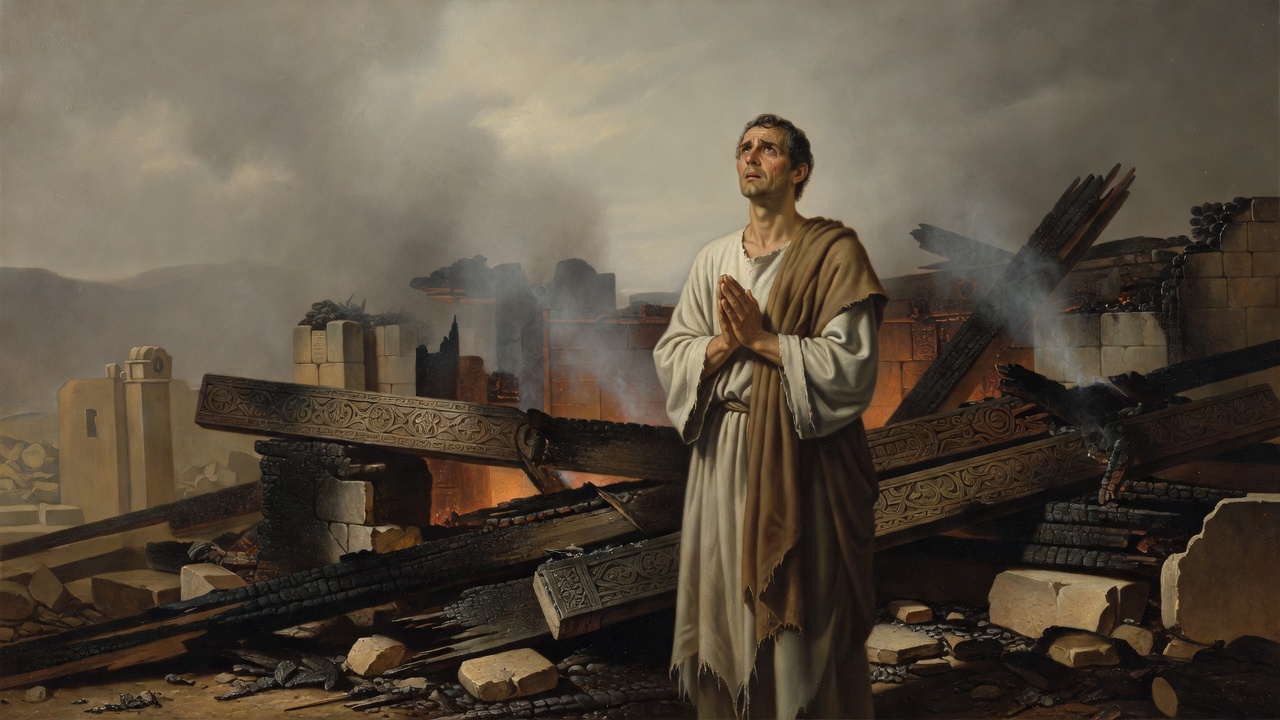
Lament over the Destroyed Sanctuary
- Psalms 73 through 83 are attributed to Asaph, a Levite musician and leader of David's choir. Because Psalm 74 laments the burning and total destruction of the sanctuary, many scholars connect it with the later "sons of Asaph," a guild of poets and singers who preserved his tradition.Sources: Asaph (Levite) · the Bible text itself
- The psalm appeals to God to remember Mount Zion, a prominent hill in Jerusalem where David established his citadel and where the sanctuary stood as the dwelling place of God's name.Sources: Mount Zion · the Bible text itself
- The destruction of the sanctuary is vividly described using the metaphor of woodcutters felling trees, as invaders smashed the intricate carved woodwork with axes and picks before burning the holy place to the ground.Sources: the Bible text itself
Notes written with AI assistance from open sources (Theographic Bible Metadata, CC BY-SA 4.0; Easton’s Bible Dictionary, public domain) and reviewed before publishing.
Places in this chapter
- Mount Zion · 31.772, 35.229 · verse 2
Only places identified with high confidence are shown (90% or more according to the scholarly sources compiled by OpenBible). Period map: DARE (Digital Atlas of the Roman Empire), CC BY 4.0; modern map: © OpenStreetMap contributors; places: OpenBible.info (CC BY 4.0).
Credits and license for this translation
Tuivang Holy Bible
The Holy Bible in the Tuivang dialect of the Matu Chin language of Myanmar (Burma)
Copyright © 2020 Batupei Christian Fellowtship
Language: Tuivang (Chin, Matu)
Dialect: Tuivang
Copyright applies only in Myanmar. Outside Myanmar, this work is in the Public Domain.
This translation is made available to you under the terms of the
Creative Commons Attribution Share-Alike license 4.0.
You have permission to share and redistribute this Bible translation in any format and to make reasonable revisions and adaptations of this translation, provided that:
You include the above copyright and source information.
If you make any changes to the text, you must indicate that you did so in a way that makes it clear that the original licensor is not necessarily endorsing your changes.
If you redistribute this text, you must distribute your contributions under the same license as the original.
Pictures included with Scriptures and other documents on this site are licensed just for use with those Scriptures and documents.
For other uses, please contact the respective copyright owners.
Note that in addition to the rules above, revising and adapting God's Word involves a great responsibility to be true to God's Word. See Revelation 22:18-19.
2026-07-26
Source: http://ebible.org/hltthb/ · eBible.org