Psalms 28
Tuivang Holy Bible · Tap a verse to see its cross-references.
1Aw Bawipa ka lungnu, namah ni ka nik khy; am hlat kaana koeh ni awm taak. Nang ing am na ning ngainaak awhtaw lawk-kqawng khuiawh ak tlakhqi amyihna ni ka awm hly. 2Nam qeennaak huh aham ni doet nyng, na hun caih soeih benna ka kut qawi ka soeng law awh qeennaak thoeh doena kak khynaak awi ve ngai law lah. 3Thlak chekhqi, ik-oeih amak leek ak sai thlangkhqi mi koeh nik dawh sih qen, cekkhqi ing a pilnamkhqi venawh zeelnaak awi taw kqawn kaa lawt hlai uhy, ak kawlung khui awhtaw ak che khqoet ni a awm. 4Ak che ik-oeih ami sainaak amyihna thung pek khqi tloep lawt lah; a mimah ing ak tyng na amah a kut sainaak ce thung pe lah. 5Bawipa a bibinaakkhqi ingkaw a kut saikhqi ce kaw na awm a maming ngaih dawngawh, cekkhqi ce khqai poet poet kawmsaw ityk awh awm am thawh khqi voel tikaw. 6Qeennaak ka thoehnaak khqi ve a ning zaak peek a dawngawh, Bawipa venawh zoeksangnaak awm seh nyng. 7Bawipa taw kak thaawmnaak ingkaw ka phuhqa na awm hy; kak kawlung ing amah ce ka ypnaak a dawngawh ni bawm hy. Kak kaw zeel soeih nawh amah venawh zeelnaak awi kqawn doena laa sa vang. 8Bawipa taw ak thlangkhqi ham thaawmnaak na awm nawh, amah ing a caksak thlangkhqi ham hulnaak vawngcak na awm hy. 9Nak thlangkhqi ce hul nawhtaw na qo ak pangkhqi ce zosennaak pe lah; a mingmih a tuudoenkung na awm nawh kumqui dyna khai khqi loet lah.
Did you know?
A Plea for Mercy and a Song of Trust
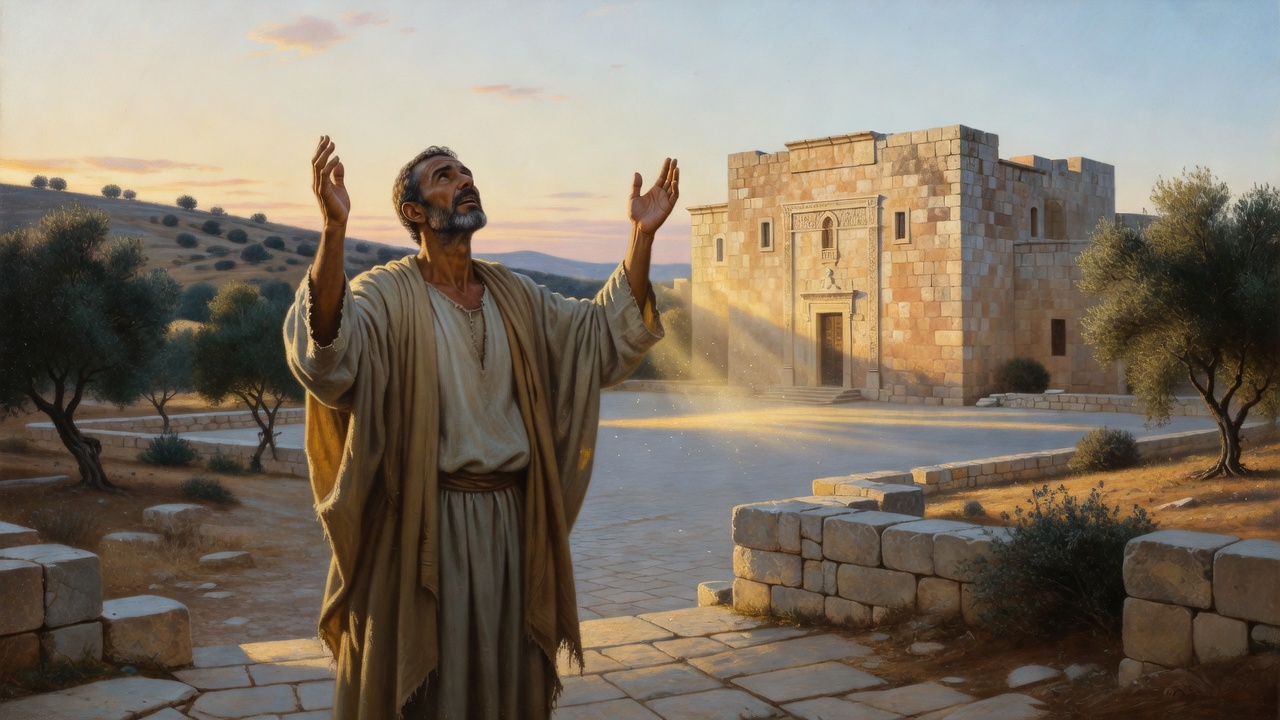
- Lifting up hands toward the sanctuary was a customary ancient posture of earnest prayer in Israel, visibly demonstrating supplication, humility, and full dependence on God.Sources: the Bible text itself
- The psalm transitions dramatically from a desperate plea for deliverance from death and judgment alongside the wicked to joyful thanksgiving, concluding with pastoral imagery where God is asked to shepherd and carry His people forever.Sources: the Bible text itself
Notes written with AI assistance from open sources (Theographic Bible Metadata, CC BY-SA 4.0; Easton’s Bible Dictionary, public domain) and reviewed before publishing.
Places in this chapter
- Most Holy Place · Today: on Mount Moriah · 31.778, 35.236 · verse 2
Only places identified with high confidence are shown (90% or more according to the scholarly sources compiled by OpenBible). Period map: DARE (Digital Atlas of the Roman Empire), CC BY 4.0; modern map: © OpenStreetMap contributors; places: OpenBible.info (CC BY 4.0).
Credits and license for this translation
Tuivang Holy Bible
The Holy Bible in the Tuivang dialect of the Matu Chin language of Myanmar (Burma)
Copyright © 2020 Batupei Christian Fellowtship
Language: Tuivang (Chin, Matu)
Dialect: Tuivang
Copyright applies only in Myanmar. Outside Myanmar, this work is in the Public Domain.
This translation is made available to you under the terms of the
Creative Commons Attribution Share-Alike license 4.0.
You have permission to share and redistribute this Bible translation in any format and to make reasonable revisions and adaptations of this translation, provided that:
You include the above copyright and source information.
If you make any changes to the text, you must indicate that you did so in a way that makes it clear that the original licensor is not necessarily endorsing your changes.
If you redistribute this text, you must distribute your contributions under the same license as the original.
Pictures included with Scriptures and other documents on this site are licensed just for use with those Scriptures and documents.
For other uses, please contact the respective copyright owners.
Note that in addition to the rules above, revising and adapting God's Word involves a great responsibility to be true to God's Word. See Revelation 22:18-19.
2026-07-26
Source: http://ebible.org/hltthb/ · eBible.org