Psalms 129
Tuivang Holy Bible · Tap a verse to see its cross-references.
1Ka naasen awhkawng cekkhqi ing ni husit hawh uhy, tina – Israelkhqi ing amik kqawnnaak taw – 2cekkhqi ing ka naasen awhkawng ni husit hlai uhy, amni noeng khawi uhy. 3Lai ak nawkkhqi ing kam tingkawng awh lai nawk unawh, a qytnaak a ngaw sim hqa hy. 4Cehlai Bawipa taw dyng hy; anih ing thlakchekhqi a qui ce boet law nawh ni loet sak hy. 5Zion ak sawhnaak thlangkhqi boeih taw chah doena hlat u seh. 6Iptih na sai ak cawt, a tai hlan awh ak zai nawn amyihna awm u seh; 7cemyih cetaw ak aatkung ing a kut awh ap pawm nawh, ak cawikung ingawm a ban awh ak be na ap tawm bai hy. 8Ce a hun awh ak cet saqui ing, “Bawipa a zoseennaak nak khan awh awm seh; Bawipang ming ing zoseennaak ni pe nyng,” am tina kawn.
Did you know?
Endurance in Affliction and the Fate of Zion’s Foes
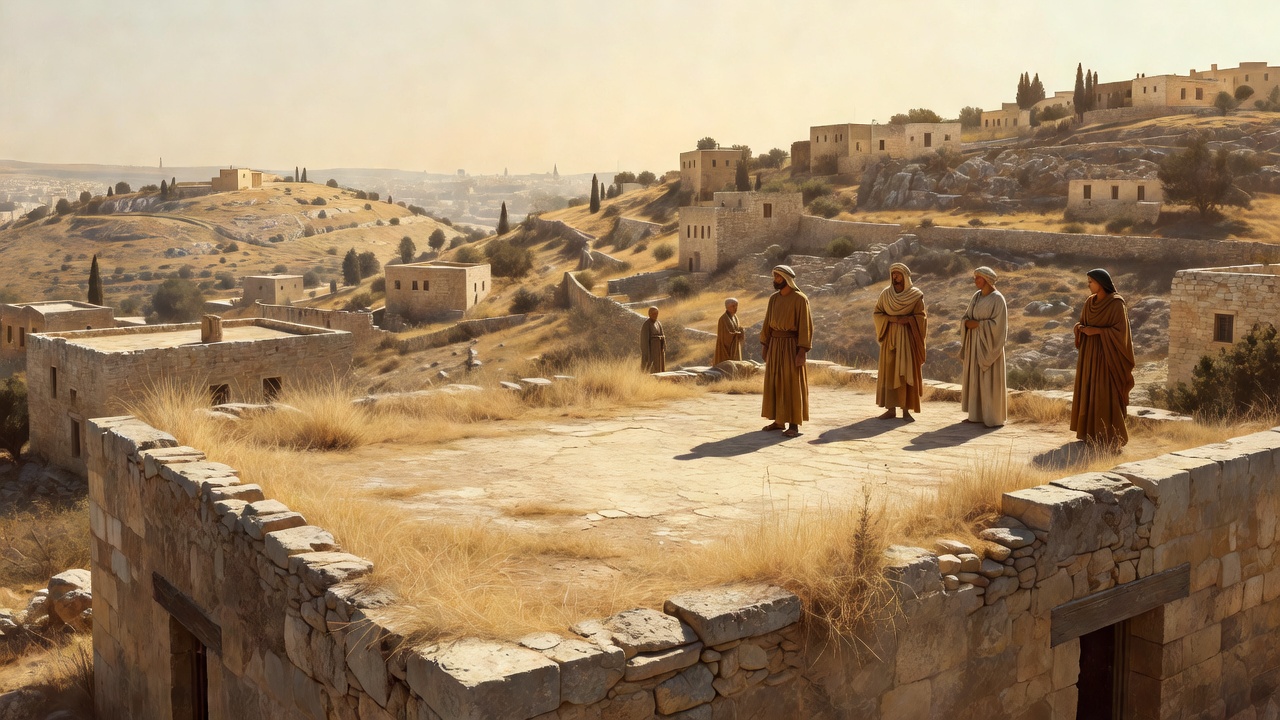
- The imagery of grass growing on rooftops reflects ancient construction, where flat roofs were often covered with packed earth. Seeds might sprout there after rains, but because the soil layer was shallow and exposed to the sun, the grass withered before it could mature or produce a harvest.Sources: the Bible text itself
- The phrase spoken by passersby in verse 8 mirrors the traditional agricultural greetings exchanged in ancient Israel, where travelers routinely blessed reapers and laborers working in the fields.Sources: the Bible text itself
- Zion was the prominent hill in Jerusalem where King David built his citadel, and in biblical poetry it often stands as a representation of God’s dwelling place and His people.Sources: the Bible text itself · Zion
Notes written with AI assistance from open sources (Theographic Bible Metadata, CC BY-SA 4.0; Easton’s Bible Dictionary, public domain) and reviewed before publishing.
Places in this chapter
Only places identified with high confidence are shown (90% or more according to the scholarly sources compiled by OpenBible). Period map: DARE (Digital Atlas of the Roman Empire), CC BY 4.0; modern map: © OpenStreetMap contributors; places: OpenBible.info (CC BY 4.0).
Credits and license for this translation
Tuivang Holy Bible
The Holy Bible in the Tuivang dialect of the Matu Chin language of Myanmar (Burma)
Copyright © 2020 Batupei Christian Fellowtship
Language: Tuivang (Chin, Matu)
Dialect: Tuivang
Copyright applies only in Myanmar. Outside Myanmar, this work is in the Public Domain.
This translation is made available to you under the terms of the
Creative Commons Attribution Share-Alike license 4.0.
You have permission to share and redistribute this Bible translation in any format and to make reasonable revisions and adaptations of this translation, provided that:
You include the above copyright and source information.
If you make any changes to the text, you must indicate that you did so in a way that makes it clear that the original licensor is not necessarily endorsing your changes.
If you redistribute this text, you must distribute your contributions under the same license as the original.
Pictures included with Scriptures and other documents on this site are licensed just for use with those Scriptures and documents.
For other uses, please contact the respective copyright owners.
Note that in addition to the rules above, revising and adapting God's Word involves a great responsibility to be true to God's Word. See Revelation 22:18-19.
2026-07-26
Source: http://ebible.org/hltthb/ · eBible.org