Psalms 102
Tuivang Holy Bible · Tap a verse to see its cross-references.
1Aw Bawipa, kak cykcahnaak awi ve ngai law lah; bawm aham kang kqang awi ve na ven pha seh. 2Ka khuikha awh ve na haai koeh thuh. Kai benna nang haa keng law nawhtaw; ka nik khy awh ang tawnna nim hlat lah. 3Ka hqing khui khawnghikhqi ve maikhu amyihna ding bang nawh; ka quhkhqi ve maialh amyihna alh hy. 4Kak kawlung ve koh aai nawh qam amyihna reu hy; buh ai aham awm hilh qu hawh nyng. 5Kang ko awh ka quh ingkaw ka vyn hqawng ni ak awm hqoeng hawh. 6Qamkoh awhkaw bukbu amyihna ngawi hqoeng nyng saw, ak plawci anglakawhkaw bukbu amyihna awm hqoeng nyng. 7Ihmyh lonai na awm nyng saw; iptih khanna amah doeng ak ngawi hqoeng pha amyihna awm nyng. 8Khawnghi zung ka qaalkhqi ing nik kqawnset unawh, kai anik huhqytkhqi ing kang ming ve kqawn setnaak na hawna uhy. 9Maivytkhqi ce buh na ai nyng saw ka awk hly kawi awm mikphli tuikhqi ing kqit uhy, 10nak kaw a so aih awh, ni lo hqoet nawh nik khawng hyk ti. 11Ka hqingnaak khawnghikhqi ve khawmy benna kaw khawngkawn amyihna awm nawh; qam amyihna reu hy. 12Cehlai, Bawipa, nang taw kumqui dy boei ngawihdoelh awh ngawi hyk ti; nang ming awm cadil naa dyna cak hy. 13Nang tho kawm tiksaw Zion ce qeen kawp ti, anih a venawh zeelnaak tym qoe hawh ni; a tym a taak ce pha law hawh hy. 14Na ceityihkhqi ing anih a lung ce lungna unawh; a dekvai ing cekkhqi ce am thin tlawh sak hy. 15Phynlumkhqi ing Bawipang ming kqih kawm usaw, khawmdek awhkaw sangpahrangkhqi boeih ing na boeimangnaak ce kqihchah kawm uh. 16Ikawtih Bawipa ing Zion ce sa tlaih kawmsaw a boeimangnaak ing dang tlaih kaw. 17Khawdeng ak voethlauhkhqi ak cykcahnaak ce hlat pe kaw; cekkhqi a qeen thoehnaak ce am huhsit pek khqi tikaw. 18Ve ve ak law hly kawi cadil naakhqi ham qee na awm seh; saina ak awm hlankhqi ing Bawipa ce kyihcah na seh. 19Bawipa ing a hun ciim sang soeih awhkawng nuk toek hy, khan nakawng khawmdek ve nuk toek hy, 20thawng ak tlakhqi a ko kqangnaak awi ce ngai peek aham ingkaw thih aham ami palh sak thlangkhqi ce loet sak aham.” 21Bawipang ming ce Zion awh kqawn na awm kawmsaw am kyihnaak ce Jerusalem awh awm kaw, 22thlangkhqi ingkaw qamkhqi ing Bawipa bawk aham cawn kawm uh. 23Khaw ka sak pyngthym mai awh kak tha ni boek pe nawh; ka hqinglung ni tawi pe sak hy. 24Cedawngawh kai ing, Aw ka Khawsa, ka hqing huili awh koeh ni lo valh; nang a kumkhqi taw cadil naa dyna ak awm ni. 25Ak cykca awh nang ing khawmdek pengnelhnaak sai tiksaw, khankhqi ce na kut ing sai na awm hy. 26Ceekhqi taw qeng hlai voei uh, nang taw awm poe kawp ti; cekkhqi taw hi amyihna se kawm uh. Bainaak amyihna thaw kawm tiksaw lawha boeih kaw. 27Cehlai nang taw amah toeng na awm poe kawp ti, nang a kumkhqi ingtaw a dytnaak awm am ti kaw. 28A tyihzawihkhqi a cakhqi ce na haiawh awm kawm usaw; a cadilkhqi awm na haiawh cak poe hawh kawm uh.”
Did you know?
A Prayer of the Afflicted and the Hope of Zion
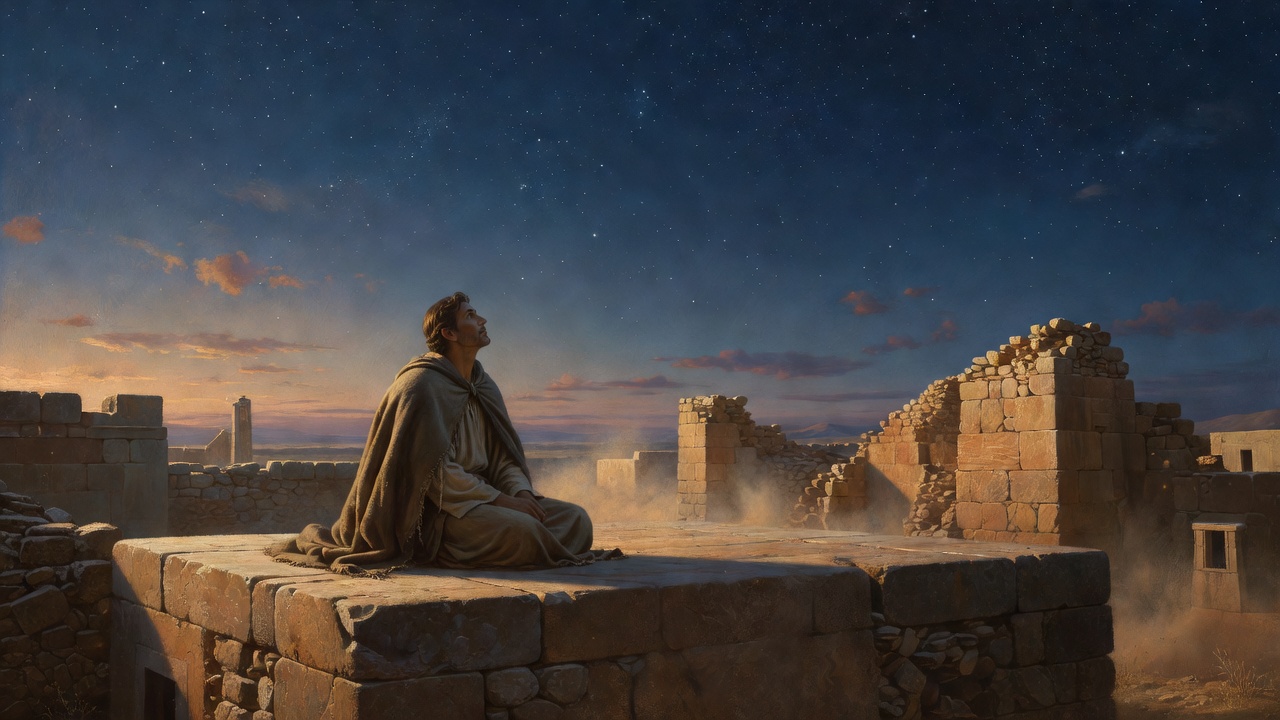
- Psalm 102 begins with a unique heading describing a prayer of an afflicted person pouring out a lament before the LORD. While the psalmist depicts deep personal suffering and solitary distress, the petition expands into a communal hope for God to have compassion on Zion and rebuild Jerusalem.Sources: the Bible text itself · Zion · Jerusalem
- The psalm explicitly states that this testimony of God delivering the destitute and prisoners should be written down for a future generation. To emphasize divine permanence in contrast to human transience, the author describes the heavens and earth as garments that will wear out and be changed, while God remains eternal.Sources: the Bible text itself
Notes written with AI assistance from open sources (Theographic Bible Metadata, CC BY-SA 4.0; Easton’s Bible Dictionary, public domain) and reviewed before publishing.
Places in this chapter
Only places identified with high confidence are shown (90% or more according to the scholarly sources compiled by OpenBible). Period map: DARE (Digital Atlas of the Roman Empire), CC BY 4.0; modern map: © OpenStreetMap contributors; places: OpenBible.info (CC BY 4.0).
Credits and license for this translation
Tuivang Holy Bible
The Holy Bible in the Tuivang dialect of the Matu Chin language of Myanmar (Burma)
Copyright © 2020 Batupei Christian Fellowtship
Language: Tuivang (Chin, Matu)
Dialect: Tuivang
Copyright applies only in Myanmar. Outside Myanmar, this work is in the Public Domain.
This translation is made available to you under the terms of the
Creative Commons Attribution Share-Alike license 4.0.
You have permission to share and redistribute this Bible translation in any format and to make reasonable revisions and adaptations of this translation, provided that:
You include the above copyright and source information.
If you make any changes to the text, you must indicate that you did so in a way that makes it clear that the original licensor is not necessarily endorsing your changes.
If you redistribute this text, you must distribute your contributions under the same license as the original.
Pictures included with Scriptures and other documents on this site are licensed just for use with those Scriptures and documents.
For other uses, please contact the respective copyright owners.
Note that in addition to the rules above, revising and adapting God's Word involves a great responsibility to be true to God's Word. See Revelation 22:18-19.
2026-07-26
Source: http://ebible.org/hltthb/ · eBible.org