Psalms 131
Baibal Olcim · Tap a verse to see its cross-references.
Camoe Bangla Kopoek
David kah Tangtlaeng Laa
1BOEIPA aw ka lungbuei sang pawt tih ka mik khaw a pomsang moenih. Te dongah kamah lakah aka tanglue rhoek neh a rhaisang taengah khaw ka pongpa pawh.
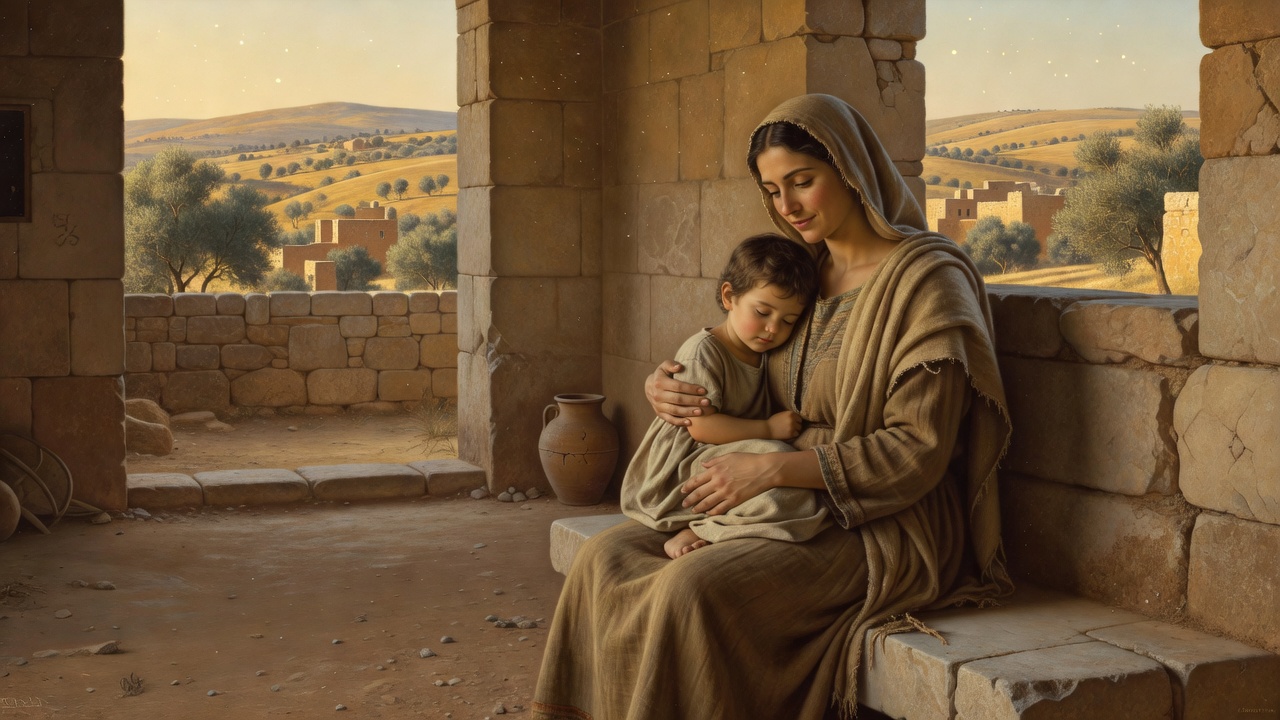
2Tedae ka hinglu khaw hal tih ka kuemsuem coeng. A manu taengkah suk aka toeng bangla ka khuikah ka hinglu khaw a toeng coeng.
3Aw Israel, tahae lamkah kumhal duela BOEIPA te ngaiuep lah.
Did you know?
A Song of Humility and Contentment
- Psalm 131 is titled a 'song of ascents' attributed to David, making it part of the collection of short pilgrimage songs in the Psalter that emphasize quiet trust over pride and ambition.Sources: the Bible text itself
- The psalm uses the vivid domestic image of a weaned child resting peacefully with its mother to illustrate a soul that has learned contentment, stillness, and calm dependency rather than striving for matters too great for it.Sources: the Bible text itself
Notes written with AI assistance from open sources (Theographic Bible Metadata, CC BY-SA 4.0; Easton’s Bible Dictionary, public domain) and reviewed before publishing.
Places in this chapter
- Jerusalem · 31.777, 35.234 · verse 1
Only places identified with high confidence are shown (90% or more according to the scholarly sources compiled by OpenBible). Period map: DARE (Digital Atlas of the Roman Empire), CC BY 4.0; modern map: © OpenStreetMap contributors; places: OpenBible.info (CC BY 4.0).
Credits and license for this translation
Baibal Olcim
The Holy Bible in the Matupi Chin language of Mynmar. Matupi Chin Standard Bible
Public Domain
Language: Matupi Chin (Chin, Matu)
Published in Mynmar, which is not a signatory to international copyright treaties. Copyright may apply locally in Mynmar, where this is released under a Creative Commons Attribution Share-Alike 4.0 license.
2026-09-21
Source: http://ebible.org/hltmcsb/ · eBible.org