Proverbs 30
Baibal Olcim · Tap a verse to see its cross-references.
Agur kah Olka
Pathen aka Ngoe
1Jakeh capa Agur kah ol he, Ithiel hlang, Ithiel neh Ukal taengah olphong olrhuh la om.
2Kai he hlang lakah ka kotalh ngawn cakhaw, hlang loh kai taengah yakmingnah khueh pawh.
3Cueihnah ka cang pawt dae, a cim mingnah te ka ming.
4Ulae vaan la aka luei tih aka rhum? A kutnarhum dongah khohli aka buem te ulae? Himbai dongah tui aka cun te ulae? Diklai khobawt boeih aka thoh te ulae? A ming ta melae, a capa ming ta balae? na ming atah. 5Pathen kah olthui boeih tah cilpoe la om. Amah dongah aka ying rhoek ham tah photling la a om pah. 6A ol te thap boeh, namah te n'tluung vetih na laithae phoe ve. 7Namah taeng lamkah te panit ni kam bih. Ka duek hlanah kai taengah hloh boeh. 8A poeyoek neh laithae ol tah kai taeng lamloh hla saeh. Kai taengah he khodaeng khaw, khuehtawn khaw m'pae boeh. Ka buhvae dongkah buhham mah kai n'cah mai. 9Ka kum vaengah tah ka basa vetih, “BOEIPA te unim,” vik ka ti tholh ve. Ka khawk vaengah ka huen vetih ka Pathen ming te ka pha tholh ve. 10A boei taeng, a boei taengah sal te thet pah boeh. Namah te thae m'phoei thil vetih, na boe ve. 11A napa kah cadilcahma aka tap loh a manu te khaw a uem noek moenih. 12A khawt te sil pawt dae, amah mikhmuh neh aka cim cadilcahma, 13A mik neh mat pomsang uh tih, a mikkhu aka huel cadilcahma, 14A no te cunghang bangla, a pumcu te tumcaca bangla, diklai mangdaeng neh khodaeng hlang aka yoop cadilcahma,
Yutho Pali
15Vawt canu rhoi loh, “M'pae, m'pae,” a ti. Pathum khaw cung rhoi pawh. Pali khaw, “Rhoeh coeng,” ti rhoi pawh. 16Saelkhui neh caya kah a bung, tui aka hah pawh diklai, rhoeh aka ti tlaih pawh hmai pawn ni. 17A napa aka tamdaeng tih, a manu kah boengainah dongah aka hnoelrhoeng kah a mik tah, soklong vangak loh a koeih vetih atha ca loh a caak ni.
Khobae Rhambae Pali
18Amih pathum mah kai ham tah khobaerhambae coeng dae, a pili phoeikah amih pali he khaw ka ming thai moenih. 19Vaan ah atha kah longpuei, lungpang dongah rhul kah longpuei, tuitun tuilung kah sangpho longpuei, hula taengkah tongpa longpuei he ni. 20Samphaih nu kah a khosing tah, a caak neh a ka a huih tih, “boethae ka saii pawh,” a ti.
Ueh Tloel Pali
21Diklai aka tlai sak pathum neh diklai loh a phueih thai pawh pali tah, 22Sal te tloep a manghai vaengah, aka ang te buh a hah vaengah, 23Rhukom te tloep a hmuhuet vaengah, imom loh a boeinu a pang vaengah,
Ngaihmang Pali
24Amih pali he diklai hmankah a yit koek la om dae cueih rhoela cueih uh. 25Lunghi he a pilnam khaw tlung pawt dae, khohal ah amamih caak te a soepsoei coeng. 26Saphih khaw a pilnam te pilnu pawt dae, thaelpang khuiah a im a khueh. 27Kaisih te manghai tal dae a pum la huek khong uh. 28Imrhai loh kut neh na tuuk mai tih, amah tah manghai kah bawkim ah na om van bal.
Danngaih Pali
29Khokan aka yanghoep pathum neh a caeh aka thuem pali tah amih ni. 30Sathueng tah Rhamsa boeih lakah tlung tih, a mikhmuh kah boeih tah mael tak pawh. 31A cinghen aka caplawh maaetal neh manghai amah taengah aka bop rhoek. 32Dangrhoek ham vaengah na tahah tih na mangtaeng akhaw na ka te na kut neh buem. 33Suktui a ken vaengah suknaeng la poeh. Hnarhong a pai vaengah thii long. Thintoek a phul vaengah tuituknah la coeng.
Did you know?
The Sayings of Agur
- Proverbs 30 is attributed to Agur son of Jakeh, who addressed his sayings to Ithiel and Ucal. Beyond what is recorded in this chapter, nothing further is known about Agur or his father.Sources: Agur · Jakeh · Ucal · the Bible text itself
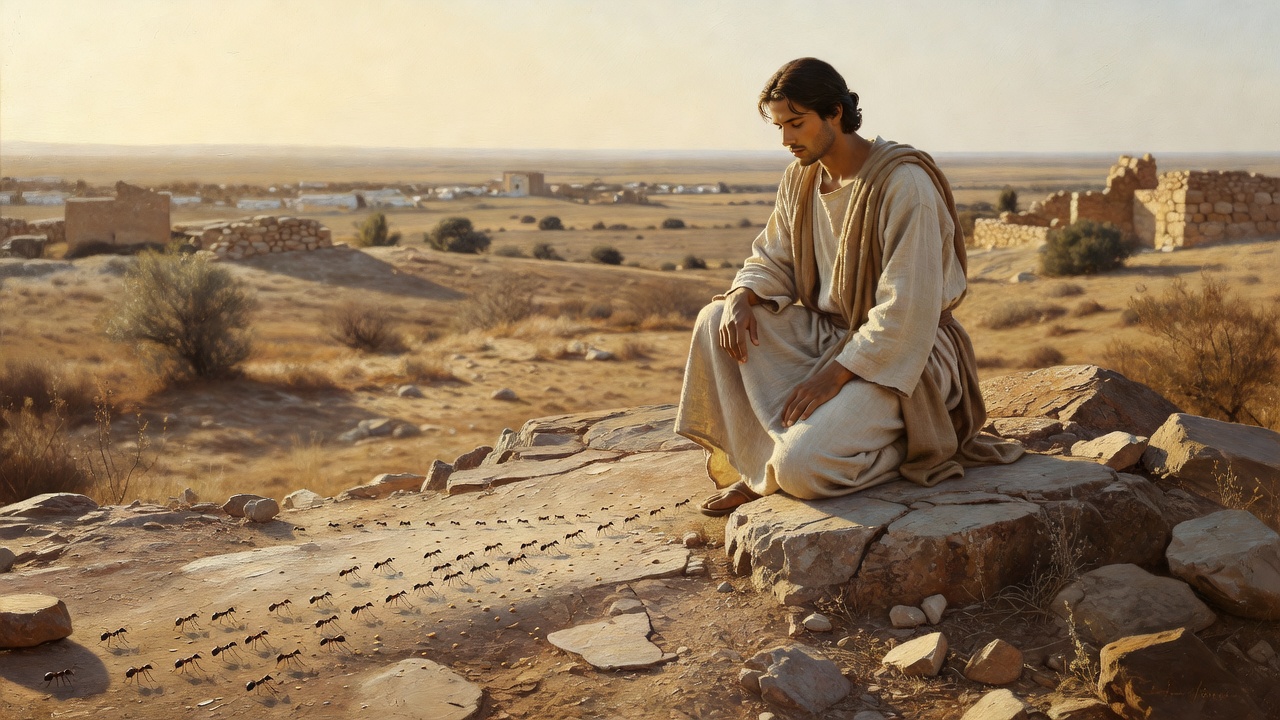
- The chapter frequently uses a graded numerical pattern ('three things... four that...') to group observations about nature and human behavior. Agur applies this structure to marvels of creation, social disruptions, stately walkers, and four small creatures that display remarkable wisdom: ants, rock badgers, locusts, and lizards.Sources: the Bible text itself
- Agur makes a specific two-part request, asking to be granted neither poverty nor riches, but only his daily portion of food. He explains that having too much might lead someone to disown the Lord, while falling into poverty might tempt a person to steal.Sources: the Bible text itself
Notes written with AI assistance from open sources (Theographic Bible Metadata, CC BY-SA 4.0; Easton’s Bible Dictionary, public domain) and reviewed before publishing.
Credits and license for this translation
Baibal Olcim
The Holy Bible in the Matupi Chin language of Mynmar. Matupi Chin Standard Bible
Public Domain
Language: Matupi Chin (Chin, Matu)
Published in Mynmar, which is not a signatory to international copyright treaties. Copyright may apply locally in Mynmar, where this is released under a Creative Commons Attribution Share-Alike 4.0 license.
2026-09-21
Source: http://ebible.org/hltmcsb/ · eBible.org