Malachi 1
Baibal Olcim · Tap a verse to see its cross-references.
About this book
About Malachi
- Easton's Bible Dictionary (1897) presents Malachi, a name meaning "messenger" or "angel," as the last of the minor prophets and the writer of the last book of the Old Testament canon. Nothing is known of him beyond what is contained in his book of prophecies.Sources: Easton: Malachi · Malachi
- Some have supposed that the name is simply a title for a messenger of Jehovah, not a proper name. Easton's Bible Dictionary (1897) concludes, however, that there is reason to regard Malachi as the prophet's ordinary name.Sources: Easton: Malachi · Malachi
- Easton's Bible Dictionary (1897) dates the prophecies to about 420 B.C., after Nehemiah's second return from Persia, or possibly before that return. Because Ezra does not mention him and he does not mention the restoration of the temple, the dictionary infers that he prophesied after Haggai and Zechariah.Sources: Easton: Malachi
- Easton's Bible Dictionary (1897) treats Malachi as a contemporary of Nehemiah, comparing Malachi 2:8 with Nehemiah 13:15 and Malachi 2:10-16 with Nehemiah 13:23. It also notes that the temple services were still in existence, citing Malachi 1:10, 3:1 and 3:10.Sources: Easton: Malachi
Notes written with AI assistance from open sources (Theographic Bible Metadata, CC BY-SA 4.0; Easton’s Bible Dictionary, public domain) and reviewed before publishing.
Israel ham BOEIPA kah Lungnah
1Malakhi kut lamkah Israel ham BOEIPA olrhuh ol,
2BOEIPA loh, “Nangmih kan lungnah,” a ti. Tedae, “Kaimih metlam nan lungnah? Esau tah Jakob manuca moenih a?” na ti uh. He tah BOEIPA kah olphong ni. Jakob he ka lungnah ngawn ta. 3Esau pataeng ka hmuhuet vaengah tah a tlang tlang te khopong la, a rho te khosoek pongui la ka poeh sak.
4Edom loh, “N'laih coeng dae m'mael vetih imrhong khaw koep n'thoh bitni,” ti saeh. Caempuei BOEIPA loh he ni a thui. Amih loh thoh uh cakhaw ka koengloeng pah ni. Amih te halangnah khorhi la a khue uh vetih pilnam te BOEIPA loh kumhal duela kosi a hong thil ni. 5Na mik loh a hmuh vetih, “Israel khorhi voel duela BOEIPA len pai,” na ti uh ni.
Altha Khosoih
6Capa loh a napa, sal loh a boei a thangpom. Kai he pa la ka om atah kai thangpomnah tah melae? Kai boei atah kai taengah rhimomnah te melae? Caempuei BOEIPA he ni a thui. Nangmih khosoih loh ka ming na sawtsit lalah,
“Na ming te metlam kan sawtsit?” na ti uh.
7Ka hmueihtuk dongah aka mop loh buh a nok lalah, “Ba nen lae nang kan nok? Amah longni BOEIPA kah caboei a sawtsit,” na ti uh.
8Mikdael te nawn ham na mop uh vaengah a thae moenih a? Khokhaem neh aka ngoi na mop vaengah a thae moenih a? Na rhalboei taengah te te khuen uh mai lah, nangmih te m'moeithen aya? Na maelhmai te a dangrhoek aya? Caempuei BOEIPA loh he ni a thui. 9Te dongah Pathen mikhmuh ah kothae uh mai laeh. Te daengah ni mamih n'rhen eh. Nangmih kut lamkah aka thoeng nen he nangmih kah maelhmai te a doe aya? Caempuei BOEIPA loh he ni a thui.
10Nangmih kongah unim thohkhaih aka khai lah ve. Te dongah ka hmueihtuk na sae sak uh pawh. Lunglilungla la, kai ham tah nangmih taengah ngaihnah tal coeng. Caempuei BOEIPA loh he ni a thui. Te dongah na kut lamkah khocang khaw ka doe mahpawh. 11Khomik kah khocuk lamloh a khuirhai duela namtom lakli ah ka ming len. Hlupnah hmuen takuem ah ka ming neh khocang cilh khaw na tawn uh. Namtom taengah ka ming he len pai tila Caempuei BOEIPA loh a thui.
12Tedae, “Ka Boeipa kah caboei te amah loh a nok, a thaih neh a buh khaw a sit om ,” na ti uh nen te na poeih uh. 13“Te te ngakyal la phen hmut te,” na ti uh. Caempuei BOEIPA loh a thui coeng. A huen phoeiah khokhaem neh aka ngoi ni na khuen tih khocang la na khuen uh. BOEIPA loh, “Nangmih kut lamkah te ka doe aya?” a ti.
14A tuping khuiah a tal a om lalah aka rhaithi hlang tah thae a phoei thil coeng. A caeng dae ka Boeipa ham tah a po a rhak ni a nawn. Caempuei BOEIPA loh, “Kai tah manghai puei la ka om tih ka ming he namtom taengah a rhimom,” a ti.
Did you know?
Honoring God and Defective Offerings
- The name Malachi means messenger or angel. While some have suggested it was a title rather than a proper name, scholars and traditions widely treat it as the prophet's personal name, placing his ministry during the period of Nehemiah, after Haggai and Zechariah.Sources: Malachi
- The opening dispute recalls the twin brothers Jacob and Esau, the ancestors of Israel and Edom. The text contrasts God's covenant love for Israel with the judgment and desolation coming upon the mountainous region of Edom.Sources: Esau (Edom) · Jacob (Israel) · Edom · the Bible text itself
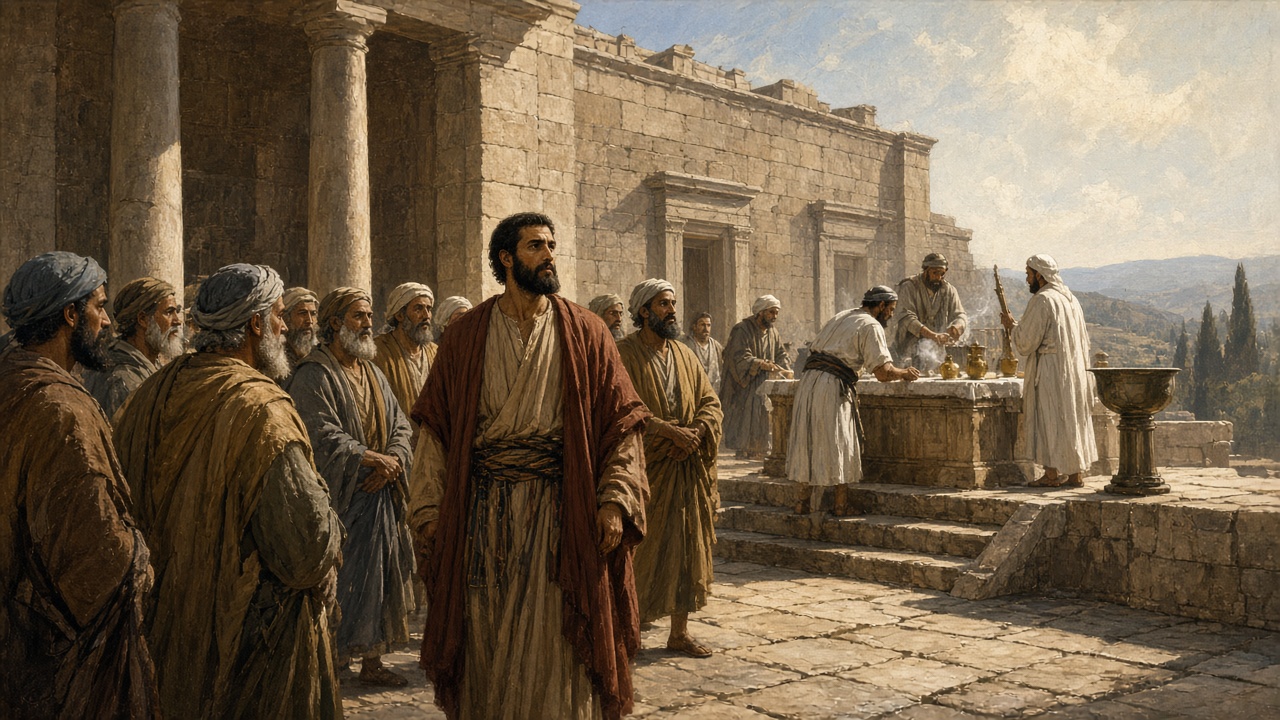
- The priests are rebuked for offering blind, lame, and diseased animals on the altar rather than unblemished livestock. Malachi exposes their disrespect by asking whether a civil governor would accept such inferior gifts.Sources: the Bible text itself
Notes written with AI assistance from open sources (Theographic Bible Metadata, CC BY-SA 4.0; Easton’s Bible Dictionary, public domain) and reviewed before publishing.
Places in this chapter
- Edom · 30.746, 35.604 · verse 4
Only places identified with high confidence are shown (90% or more according to the scholarly sources compiled by OpenBible). Period map: DARE (Digital Atlas of the Roman Empire), CC BY 4.0; modern map: © OpenStreetMap contributors; places: OpenBible.info (CC BY 4.0).
Credits and license for this translation
Baibal Olcim
The Holy Bible in the Matupi Chin language of Mynmar. Matupi Chin Standard Bible
Public Domain
Language: Matupi Chin (Chin, Matu)
Published in Mynmar, which is not a signatory to international copyright treaties. Copyright may apply locally in Mynmar, where this is released under a Creative Commons Attribution Share-Alike 4.0 license.
2026-09-21
Source: http://ebible.org/hltmcsb/ · eBible.org