Joshua 1
Baibal Olcim · Tap a verse to see its cross-references.
About this book
About Joshua
- Easton's Bible Dictionary (1897) explains Joshua's name as "Jehovah is his help" or "Jehovah the Saviour." He was the son of Nun, of the tribe of Ephraim, born in Egypt, and Moses' successor as leader of Israel; the wars of conquest he carried on are recorded in the book that bears his name. That entry does not name the book's author or give a date for its writing.Sources: Easton: Joshua · Joshua
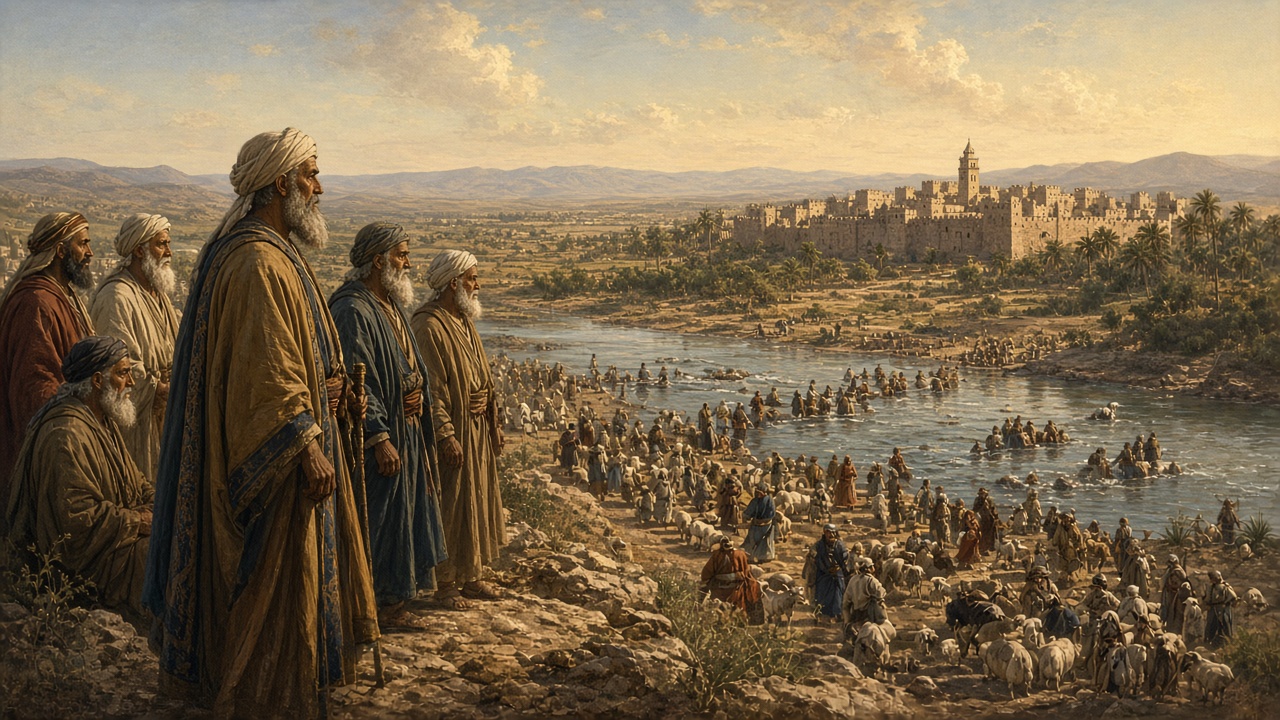
- When Joshua took command, the people were encamped at Shittim. They crossed the Jordan and camped at Gilgal, where, Easton says, he circumcised the people and kept the Passover. Jericho, a fortified city among palm trees about five miles west of the Jordan, is described as Canaan's strongest fortress and the key to western Palestine; Ai, east of Bethel, was the second Canaanite city taken, after an initial defeat.Sources: Easton: Joshua · Jericho · Ai
- Easton's Bible Dictionary (1897) says Joshua conquered six nations and thirty-one kings, then divided the land among the tribes, with Timnath-serah in Mount Ephraim assigned to himself. East of the Jordan, Gilead is described as a mountainous region held by the tribes of Gad and Reuben and the southern part of Manasseh.Sources: Easton: Joshua · Gilead
- Quoting Edersheim, the dictionary says Joshua's name was changed from Oshea, "help," to Jehoshua, "Jehovah is help," and notes that he is called Jesus in Acts 7:45 and Hebrews 4:8. It states that he died at the age of one hundred and ten, twenty-five years after crossing the Jordan, and was buried in his own city of Timnath-serah; of his father Nun, nothing more is recorded than that he was Joshua's father.Sources: Easton: Joshua · Joshua · Nun
- Before leading the conquest, Joshua commanded Israel's host against the Amalekites at Rephidim, served as Moses' minister, and was one of twelve sent to explore Canaan; only he and Caleb brought back an encouraging report. As Easton sketches the book, it runs from the crossing of the Jordan and the taking of Jericho through years of war to the division of the land and Joshua's last address.Sources: Easton: Joshua
Notes written with AI assistance from open sources (Theographic Bible Metadata, CC BY-SA 4.0; Easton’s Bible Dictionary, public domain) and reviewed before publishing.
Joshua kah Thalohnah
1BOEIPA kah sal Moses a duek phoeiah Moses aka bong Joshua, Nun capa te BOEIPA loh a voek tih, 2“Ka sal Moses duek coeng. Te dongah thoo lamtah namah neh pilnam pum loh Jordan he kat lamtah kai loh Israel ca rhoek taengah ka paek khohmuen la kun lah.
3Moses taengah ka thui vanbangla na khopha loh a cawt hmuen boeih te nangmih kam paek bitni. 4Khosoek lamkah Lebanon tuiva puei duela, Khitti khohmuen pum Perath tuiva khotlak tuili puei due pataeng nang khorhi la coeng ni.
5Na hingnah a tue khui boeih na hmai ah hlang loh m'pai thil thai mahpawh. Moses taengkah ka om bangla nang taengah ka om van ni. Nang te kang rhael pawt vetih nang kan hnoo mahpawh. 6Amih taengah paek ham a napa rhoek taengah ka caeng tangtae khohmuen te pilnam nang loh na pang sak coeng dongah thaahuel lamtah namning sak.
7Ka sal Moses loh nang ng'uen olkhueng te boeih ngaithuen tih saii hamla thaahuel lamtah nam khak ning sak. Anih taeng lamloh banvoei bantang la taengphael boeh. Te daengah ni na caeh nah takuem ah lungming la na om uh eh. 8Olkhueng cabu he na ka dong lamloh na hlong mahpawh. Khoyin khothaih na thuep daengah ni a khuikah a daek bangla boeih saii ham na ngaithuen eh. Te vaengah na longpuei thaihtak vetih lungming la na om uh ni.
9Nang kang uen moenih a? Thaahuel lamtah namning sak. Na caeh nah takuem ah BOEIPA na Pathen loh nang taengla a om coeng dongah na sarhing sak boeh, rhihyawp boeh,” a ti nah.
Pilnam a Rhuengphong sak
10Te dongah pilnam kah rhoiboei rhoek te Joshua loh a uen tih, 11“Rhaehhmuen khui la cet uh laeh. Pilnam te uen uh lamtah thui pah. Na lampu ham te sikim uh laeh. Hnin thum dongah ngawn tah Jordan te m'poeng uh pawn ni. BOEIPA na Pathen loh nang pang sak ham m'paek khohmuen te pang hamla paan uh laeh,” a ti nah.
12Tedae Reuben koca, Gad koca neh Masnasseh koca hlangvang te Joshua loh a voek tih, 13“BOEIPA kah sal Moses loh nangmih taengah n'uen olka te poek lah. Nangmih duem sak ham te BOEIPA na Pathen loh a thui tih khohmuen he nangmih taengah m'paek coeng. 14Huta camoe neh na boiva tah Moses loh nangmih taengah m'paek Jordan rhalvangan kah khohmuen ah om uh mai saeh. Tedae nangmih tatthai hlangrhalh boeih long tah na manuca rhoek kah a hmai ah caem la cet uh lamtah na manuca rhoek te BOEIPA loh nangmih bangla a duem sak due amih te bom uh. 15BOEIPA na Pathen loh amih a paek khohmuen te amih long khaw pang uh van saeh. Te phoeiah namih kah rho khohmuen la bal uh lamtah BOEIPA kah sal Moses loh khocuk Jordan rhalvangan ah nangmih m'paek te huul uh van,” a ti nah.
16Te dongah Joshua te a doo uh tih, “Kaimih nang uen boeih te ka saii uh vetih kaimih nan tueih nah boeih la ka cet uh ni.
17Moses ol te boeih ka ngai uh bangla nang ol te ka ngai uh van ni. Moses taengkah a om bangla BOEIPA na Pathen loh nang taengah om van saeh.
18Nang kah olthui aka koek tih nang kah olka nan uen te pakhat kangna khaw aka hnatun pawt hlang boeih tah duek pai saeh. Tedae thaahuel lamtah namning sak,” a ti nah uh.
Did you know?
Joshua Assumes Leadership
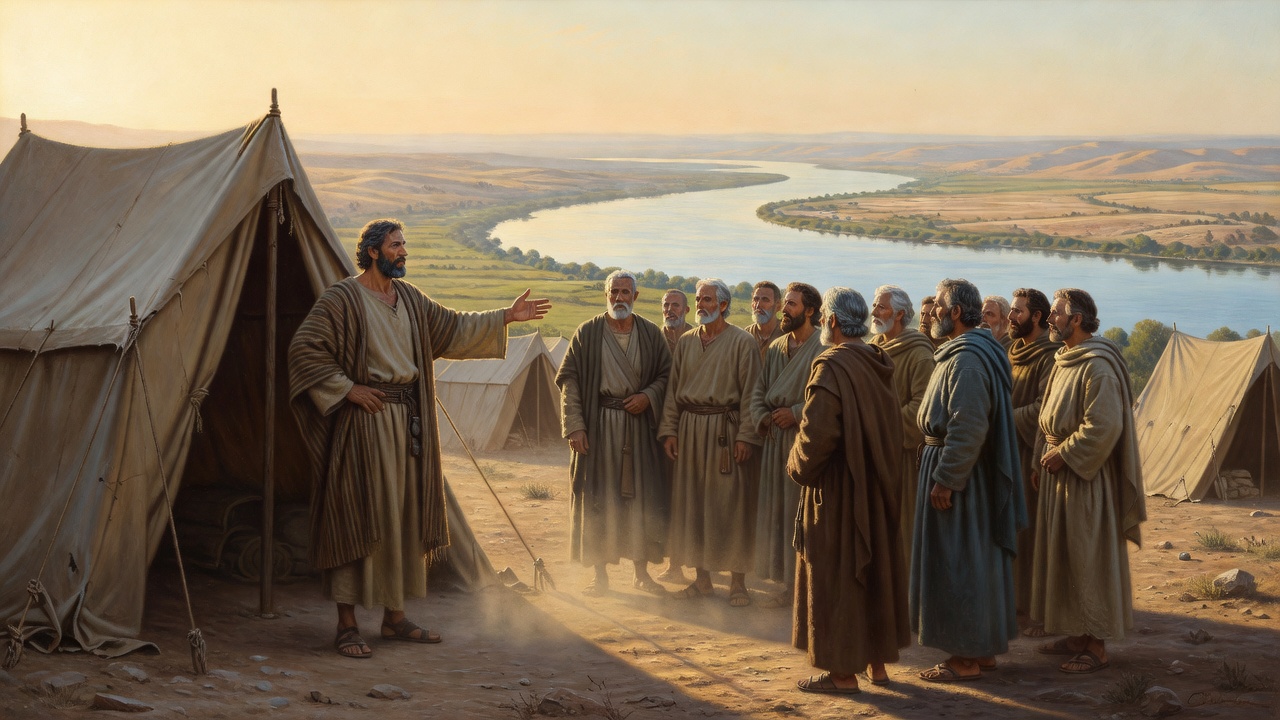
- Joshua, the son of Nun from the tribe of Ephraim, served as Moses' assistant and military commander before being commissioned to succeed him as leader of Israel. His name means "Jehovah is his help" or "Jehovah the Saviour."Sources: Joshua · the Bible text itself
- The territory outlined in God's commission to Joshua stretches from the southern wilderness and the Lebanon mountain range in the north to the Euphrates (called "the great river") in the east and the Mediterranean ("the Great Sea") to the west.Sources: the Bible text itself · Lebanon · Euphrates · Great Sea
- The tribes of Reuben, Gad, and the half-tribe of Manasseh had already received territory east of the Jordan River under Moses. However, their armed warriors were required to cross over ahead of the other tribes to assist them until the entire land was secured.Sources: the Bible text itself · Manasseh (son of Joseph)
Notes written with AI assistance from open sources (Theographic Bible Metadata, CC BY-SA 4.0; Easton’s Bible Dictionary, public domain) and reviewed before publishing.
Places in this chapter
- Jordan · Today: Jordan River · 31.761, 35.558 · verses 2, 11, 14, 15
- Euphrates · Today: Euphrates River · 31.004, 47.442 · verse 4
- Great Sea · Today: Mediterranean Sea · 31.805, 34.170 · verse 4
- Lebanon · 33.540, 35.584 · verse 4
- Negeb · 31.245, 34.841 · verse 4
- Syria · Today: Aram · 33.511, 36.306 · verse 4
Only places identified with high confidence are shown (90% or more according to the scholarly sources compiled by OpenBible). Period map: DARE (Digital Atlas of the Roman Empire), CC BY 4.0; modern map: © OpenStreetMap contributors; places: OpenBible.info (CC BY 4.0).
Credits and license for this translation
Baibal Olcim
The Holy Bible in the Matupi Chin language of Mynmar. Matupi Chin Standard Bible
Public Domain
Language: Matupi Chin (Chin, Matu)
Published in Mynmar, which is not a signatory to international copyright treaties. Copyright may apply locally in Mynmar, where this is released under a Creative Commons Attribution Share-Alike 4.0 license.
2026-09-21
Source: http://ebible.org/hltmcsb/ · eBible.org