Jonah 3
Baibal Olcim · Tap a verse to see its cross-references.
Jonah kah Olthui
1BOEIPA ol he Jonah taengah a pabae la cet tih, 2“Thoo, Nineveh khopuei len la cet lamtah nang taengah olthang ka thui te a taengah hoe pah,” a ti nah.
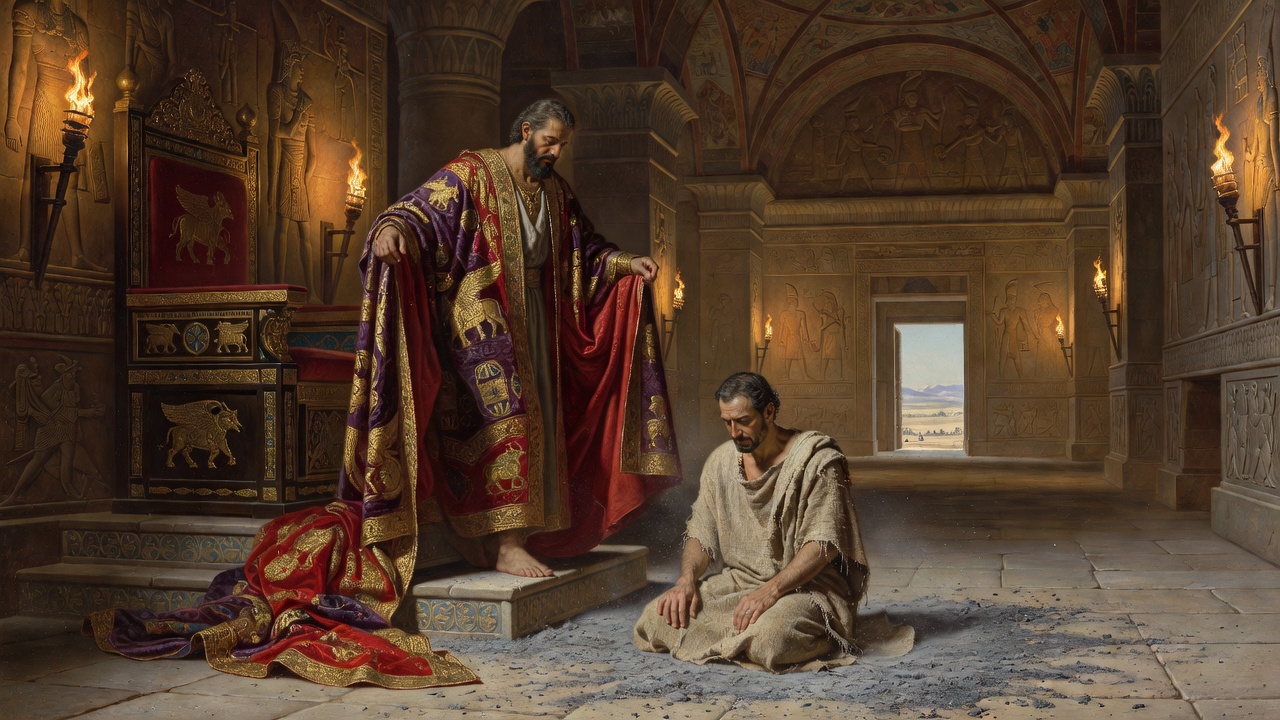
3Te dongah Jonah te thoo tih BOEIPA ol bangla Nineveh la cet. Te vaengah Nineveh tah Pathen taengah khopuei koek la om tih hnin thum caeh lo. 4Jonah te hlah tih khopuei khuiah hnin at caeh a pha neh a hoe coeng. Te vaengah, “Hnin sawmli om pueng dae Nineveh a palet coeng,” a ti. 5Te vaengah Nineveh hlang rhoek loh Pathen te a tangnah uh. Te dongah yaehnah te a hoe uh tih a len lamloh a yit duela tlamhni a bai uh. 6Ol loh Nineveh manghai taengla a pha. Te dongah a ngolkhoel lamloh thoo tih a pum dongkah a himbai te a pit. Te phoeiah tlamhni a bai tih hmaiphu lakli ah ngol. 7Te phoeiah pang tih manghai kah omih neh Nineveh ah a thui. A len rhoek taengah, “Hlang neh rhamsa khaw, saelhung neh boiva loh, caak pakhat khaw ten boel saeh lamtah bul boel saeh, tui khaw o boel saeh. 8Hlang neh rhamsa loh tlamhni bai uh saeh lamtah Pathen te thama la khue uh saeh. Hlang he amah kah boethae longpuei lamloh, a kut dongkah kuthlahnah lamloh mael saeh. 9Ulong a ming huek? Pathen he mael tih ko a hlawt khaming. A thintoek thinsa lamloh a mael daengah ni m'milh uh pawt eh?,” a ti nah.
10Amih kah boethae longpuei lamloh a mael uh dongah amih khoboe te Pathen loh a hmuh. Te dongah Pathen loh ko a hlawt tih amih soah boethae saii hamla a thui dae saii pawh.
Did you know?
Jonah's Mission to Nineveh
- Nineveh was the flourishing capital of the ancient Assyrian Empire. The biblical text portrays it as an exceedingly large city, describing it as taking a three-day journey to cross.Sources: Nineveh · the Bible text itself
- Jonah is notable among the prophets of Israel for being sent as a missionary beyond his own nation to preach in a distant, non-Israelite city.Sources: Jonah · the Bible text itself
- The royal proclamation of mourning in Nineveh extended beyond the human population to include livestock, requiring both people and beasts to fast and be covered in sackcloth.Sources: the Bible text itself
Notes written with AI assistance from open sources (Theographic Bible Metadata, CC BY-SA 4.0; Easton’s Bible Dictionary, public domain) and reviewed before publishing.
Places in this chapter
Only places identified with high confidence are shown (90% or more according to the scholarly sources compiled by OpenBible). Period map: DARE (Digital Atlas of the Roman Empire), CC BY 4.0; modern map: © OpenStreetMap contributors; places: OpenBible.info (CC BY 4.0).
Credits and license for this translation
Baibal Olcim
The Holy Bible in the Matupi Chin language of Mynmar. Matupi Chin Standard Bible
Public Domain
Language: Matupi Chin (Chin, Matu)
Published in Mynmar, which is not a signatory to international copyright treaties. Copyright may apply locally in Mynmar, where this is released under a Creative Commons Attribution Share-Alike 4.0 license.
2026-09-21
Source: http://ebible.org/hltmcsb/ · eBible.org