Job 29
Baibal Olcim · Tap a verse to see its cross-references.
Job Loh A Tang a Hul
1Job loh amah kah a pom te a cong tih, 2“Kai he hlamat kah hla bangla aka khueh tih Pathen kah khohnin bangla kai aka tuem te unim? 3Amah loh a hmaithoi te ka lu soah a thangthen tih amah kah vangnah nen ni a. hmuep ah khaw ka caeh. 4Ka cavaa tue vaengah khaw ka dap ah Pathen kah baecenol la ka om. 5Tlungthang te kai taengah om pueng tih, ka kaepvai ka ca rhoek om. 6Ka khokan te suknaeng neh a hluk tih lungpang loh kai ham situi sokca a long sak. 7Vangpuei vongka ah ka thoeng tih toltung ah ka ngolhmuen cikngae sak. 8Kai m'hmuh uh vaengah cadong rhoek te thuh uh. Patong rhoek khaw thoo uh tih pai uh. 9Mangpa rhoek loh olthui te a phah uh tih a kut te a ka dongla a khueh uh. 10Rhaengsang rhoek ol te a phah tih a lai khaw a dang dongla kap. 11Hna loh a yaak vaengah kai n'uem tih mik loh a hmuh vaengah kai n'rhalrhing sak. 12Mangdaeng loh bomnah a bih tih cadah neh a taengah aka bom aka om pawt khaw ka loeih sak. 13Hlang milh kah yoethennah te kai soah pai tih nuhmai kah lungbuei khaw ka tamhoe sak. 14Duengnah te ka bai tih hnikul bangla kai n'khuk. Ka tiktamnah he ka sammuei nah ni. 15Mikdael taengah mik la, khokhaem taengah kho la ka om. 16Kai tah khodaeng taengah a napa la ka om tih ming pawt kah tuituknah te ka khe pah. 17Boethae kah pumcu te ka thuk pah tih a no lamkah maeh te ka voeih pah. 18Te dongah, “Ka bu ah ka pal mako,” ka ti tih laivin bangla khohnin ka puh. 19Ka yung loh tui taengla a muk tih buemtui loh ka cangvuei dongah rhaeh. 20Ka thangpomnah ka taengah thai tih ka lii ka kut dongah tinghil. 21Kai taengah a hnatun uh tih a lamtawn uh dongah ka cilsuep ham kuemsuem uh. 22Ka ol hnukah talh uh voel pawt tih kai olthui he amih soah tla. 23Kai ham tah khotlan bangla a lamtawn uh tih a ka loh tlankhol bangla a ang uh. 24Amih taengah ka luem dae n'tangnah uh pawt tih ka maelhmai vangnah dongah khaw yalh uh pawh. 25Amih kah longpuei te ka coelh tih boeilu la ka ngol. Caem lakli ah manghai bangla kho ka sak tih rhahdoe cangpoem akhaw a hloep.
Did you know?
Job Recalls His Former Honor
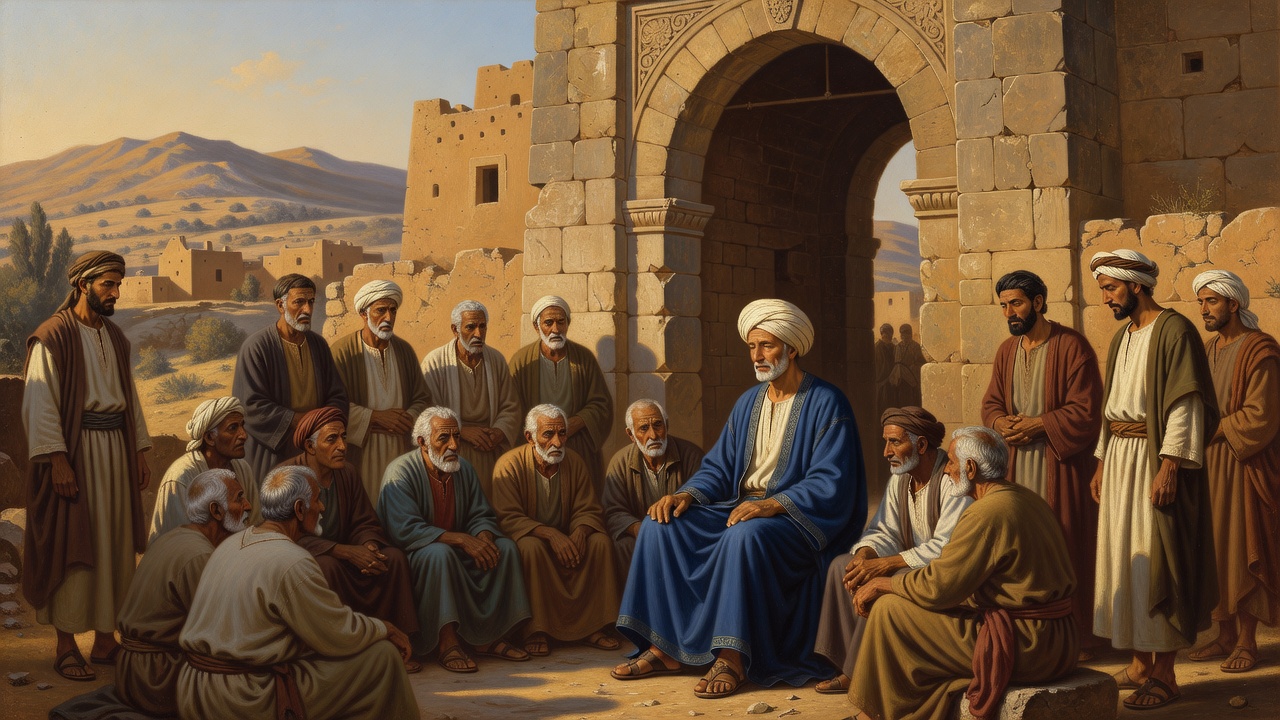
- In ancient times, the city gate and public square served as the center of community leadership, assembly, and judicial decisions. Job recalls sitting there as an honored counselor and chief, where young men stepped aside, elders stood in respect, and nobles fell silent to hear his guidance.Sources: the Bible text itself
- Job describes his former righteousness in terms of social justice and active protection of the vulnerable. He acted as an advocate and helper for the poor, the fatherless, the widow, the blind, the lame, and the stranger, while actively restraining oppressors.Sources: the Bible text itself
- Job is identified as an Arabian patriarch who resided in the land of Uz. In this chapter, he looks back with deep longing on the time before his sudden calamities, when his children were gathered around him and his household enjoyed exceptional prosperity and friendship with God.Sources: Job · the Bible text itself
Notes written with AI assistance from open sources (Theographic Bible Metadata, CC BY-SA 4.0; Easton’s Bible Dictionary, public domain) and reviewed before publishing.
Credits and license for this translation
Baibal Olcim
The Holy Bible in the Matupi Chin language of Mynmar. Matupi Chin Standard Bible
Public Domain
Language: Matupi Chin (Chin, Matu)
Published in Mynmar, which is not a signatory to international copyright treaties. Copyright may apply locally in Mynmar, where this is released under a Creative Commons Attribution Share-Alike 4.0 license.
2026-09-21
Source: http://ebible.org/hltmcsb/ · eBible.org