Job 14
Baibal Olcim · Tap a verse to see its cross-references.
1Huta kah a sak hlang he a khohnin toi tih khoponah khaw hah. 2Rhaipai bangla phuelh tih a oh uh. Khokhawn bangla yong tih pai voel pawh. 3Te soah ngawn tah na mik tueng tih kai he na taengkah laitloeknah dongla na khuen. 4Rhalawt lamloh a cuem la aka khueh te unim? Pakhat pataeng om pawh. 5A khohnin neh a hla taenah khaw namah taengah hangdang. A oltlueh te a oltlueh bangla na saii tih poe thai pawh. 6Anih lamloh vawl mangthong lamtah amah hnin at kutloh bangla a ngaingaih hil toeng saeh. 7Thing ham tah a vung akhaw ngaiuepnah om pueng. Te dongah koep mikhing vetih a dawn khaw ngoeng mahpawh. 8Diklai khuiah a yung patong mai tih laipi khuiah a ngo duek cakhaw, 9tui bo ah duei vetih thinghloe bangla a pae cawn ni. 10Tedae hlang tah duek tih rhaa uh coeng. Hlang he a pal phoeiah tah melam a om. 11Tuitunli lamkah tui khaw khawk dae tuiva loh a khah vaengah tah kak. 12Hlang khaw yalh tih thoo voel pawh. Vaan a om pawt due khaw haenghang pawh. Amih te ih kung lamloh haenghang uh mahpawh. 13Unim saelkhui ah a paek lah ve? Kai he nan khoem lah vetih na thintoek a mael duela kai nan thuh lah mako. Kai hamla oltlueh na khueh vetih kai nan poek mako. 14Hlang he duek koinih hing venim? Kamah kah caempuei hnin boeih he ka thovaelnah a pawk hil ka lamtawn bitni. 15Nan khue vaengah kai loh nang te ka doo bitni. Na kut dongkah bibi dongah na moo bitni. 16Ka khokan he na tae pawn vetih ka tholhnah khaw na dawn mahpawh. 17Ka boekoek hnocun khuiah catui a hnah thil tih kai kathaesainah na dah thil bitni. 18Tedae Tlang khaw cungku tih moelh. Lungpang pataeng a hmuen lamloh thoeih. 19Lungto khaw tui loh a hoh tih a kongnawt loh diklai laipi a yo. Te dongah hlanghing kah ngaiuepnah na pal sak. 20Anih te a yoeyah la na khulae tih a hmai a tal la a van daengah anih te na tueih. 21A ca rhoek a thangpom uh dae a ming moenih. Muei uh cakhaw amih a yakming moenih. 22Tedae a pumsa tah a taengah tih thak a khoeih tih a hinglu khaw amah hamla nguekcoi,” a ti.
Did you know?
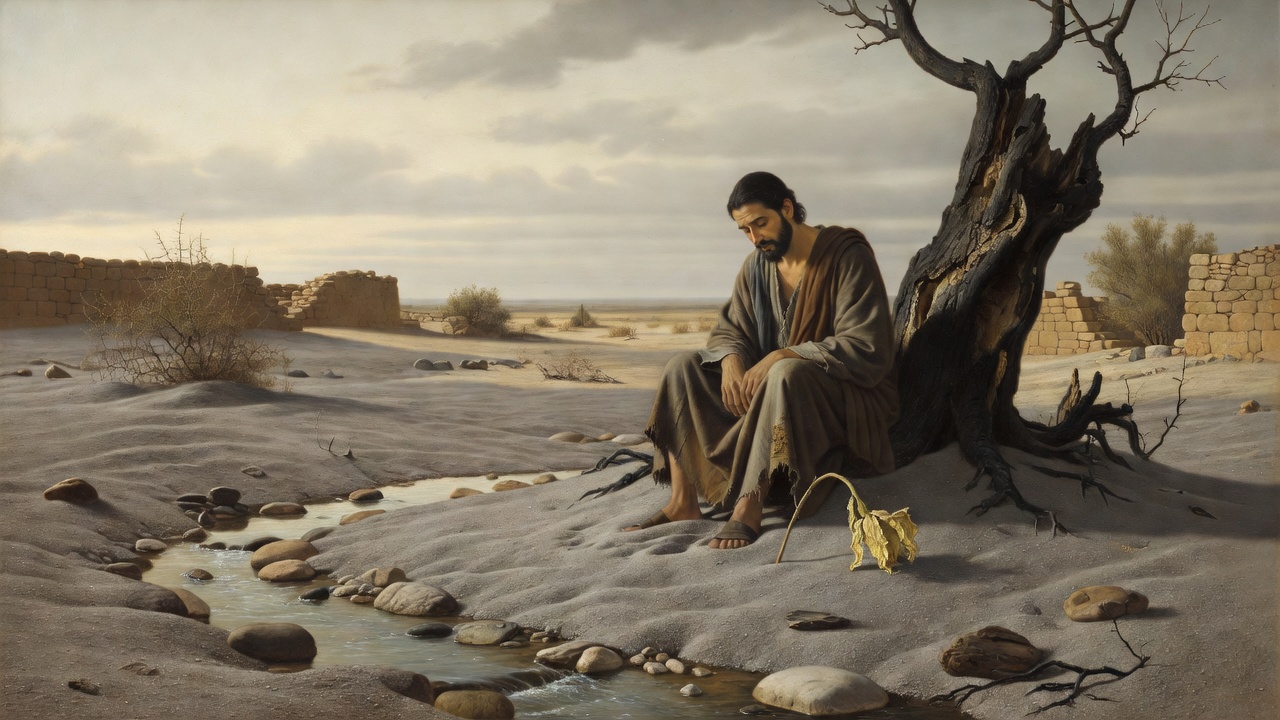
The Frailty of Life and the Hope of Renewal
- In this speech, Job contrasts the fate of mortals with that of a tree. While a felled tree can sprout new shoots at the scent of water even after its stump seems dead, a human being dies, lies down, and does not rise again to life on earth.Sources: the Bible text itself
- Job contemplates Sheol as a potential hiding place where he might be sheltered until divine anger passes, imagining a longing in which God would seal his transgressions in a bag and call upon the work of His hands.Sources: the Bible text itself
- To capture the brevity and decay of human existence, the chapter draws upon natural metaphors of erosion and transience, comparing human life to a fleeting shadow, a withered flower, and rocks worn down by water.Sources: the Bible text itself
Notes written with AI assistance from open sources (Theographic Bible Metadata, CC BY-SA 4.0; Easton’s Bible Dictionary, public domain) and reviewed before publishing.
Credits and license for this translation
Baibal Olcim
The Holy Bible in the Matupi Chin language of Mynmar. Matupi Chin Standard Bible
Public Domain
Language: Matupi Chin (Chin, Matu)
Published in Mynmar, which is not a signatory to international copyright treaties. Copyright may apply locally in Mynmar, where this is released under a Creative Commons Attribution Share-Alike 4.0 license.
2026-09-21
Source: http://ebible.org/hltmcsb/ · eBible.org