Jeremiah 47
Baibal Olcim · Tap a verse to see its cross-references.
Philisti Ham Olphong
1Gaza Pharaoh a ngawn hlanah Philisti ham BOEIPA ol te tonghma Jeremiah taengla ha pawk. 2He ni BOEIPA loh a thui. Tlangpuei lamkah tui ha phul tih soklong la poeh coeng ke. A long vaengah khohmuen neh a khopuei boeih neh a khuikah khosa te a yo ni. Te vaengah hlang te pang vetih khohmuen kah khosa khaw boeih rhung ni. 3A marhang lueng kah khomae kah rhetlonah ol ah, a leng te a lengkho hlangping hinghuennah ah, a napa rhoek te a kut a khanah lamloh a ca rhoek te hoihaeng uh thai mahpawh. 4Philisti pum rhoelrhak ham khaw, Tyre neh Sidon bom ham rhaengnaeng boeih te saii ham khohnin ha pai coeng. BOEIPA loh Kaptor sanglak kah Philisti kah a meet te a rhoelrhak coeng. 5Gaza te lungawng la om vetih Ashkelon khaw hmata ni. A tuikol kah a meet te me hil nim na hlap ve? 6Anunae BOEIPA kah cunghang aih, mevaeng hil nim na mong pawt ve? Na capang khuila kun laeh, hoep uh lamtah kuemsuem laeh. 7Metlam na mong pai eh? BOEIPA loh Ashkelon ham te te a uen tih tuipuei langkaeng ham khaw pahoi a khueh coeng.
Did you know?
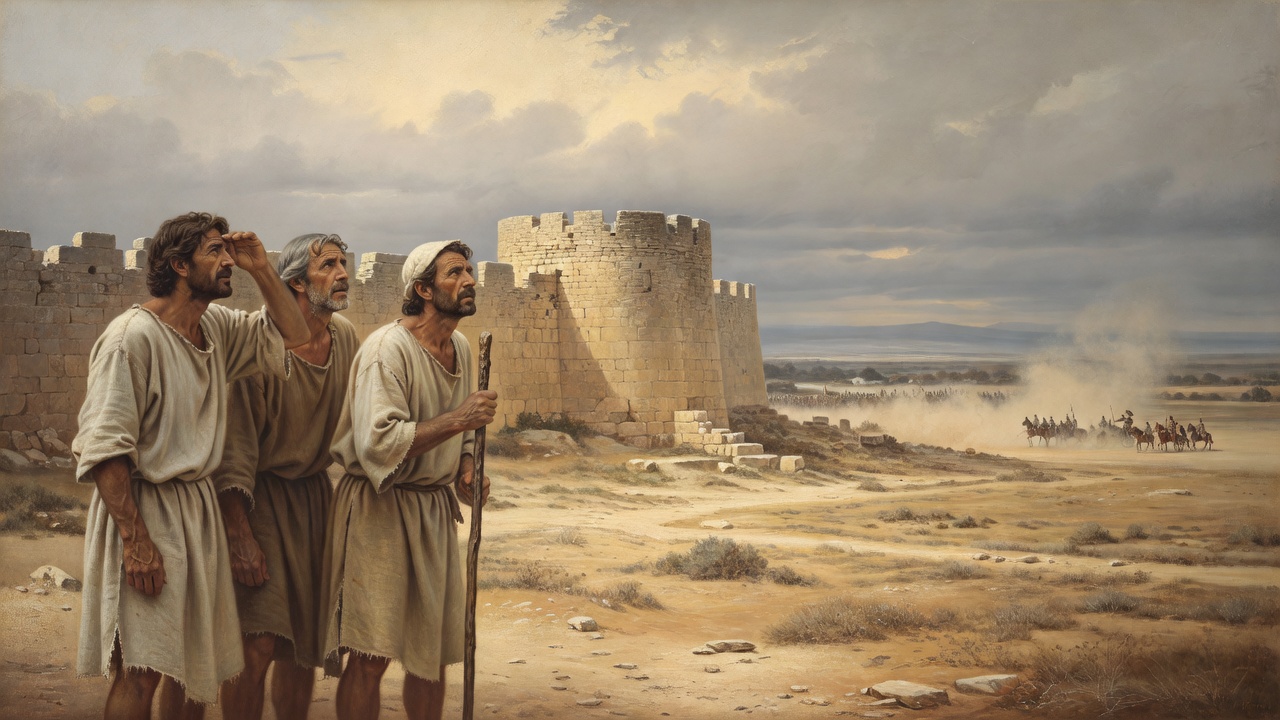
Judgment on the Philistines
- Jeremiah refers to the Philistines as the remnant from the coasts of Caphtor. Biblical traditions identify Caphtor as the place of origin of the Philistines, a location widely associated by scholars with Crete or parts of the eastern Mediterranean coast.Sources: the Bible text itself · Caphtor
- The chapter directs its warnings against Gaza and Ashkelon, two of the five prominent Philistine cities along the Mediterranean coast. Both were ancient centers known for their strategic position and trade links connecting Egypt and the surrounding regions.Sources: the Bible text itself · Gaza · Ashkelon
- The prophecy notes that the coming destruction would cut off every remaining ally from Tyre and Sidon. These two major Phoenician ports to the north were key maritime centers whose interests were closely intertwined with the coastal region.Sources: the Bible text itself · Tyre · Sidon
Notes written with AI assistance from open sources (Theographic Bible Metadata, CC BY-SA 4.0; Easton’s Bible Dictionary, public domain) and reviewed before publishing.
Places in this chapter
- Gaza · Today: Tell Harube · 31.504, 34.464 · verses 1, 5
- Sidon · Today: Sandikli archaeological site in Sidon · 33.561, 35.372 · verse 4
- Tyre · 33.271, 35.196 · verse 4
- Ashkelon · Today: Tel Ashkelon · 31.664, 34.546 · verses 5, 7
- Great Sea · Today: Mediterranean Sea · 31.805, 34.170 · verse 5
- Philistia · 31.664, 34.546 · verse 5
Only places identified with high confidence are shown (90% or more according to the scholarly sources compiled by OpenBible). Period map: DARE (Digital Atlas of the Roman Empire), CC BY 4.0; modern map: © OpenStreetMap contributors; places: OpenBible.info (CC BY 4.0).
Credits and license for this translation
Baibal Olcim
The Holy Bible in the Matupi Chin language of Mynmar. Matupi Chin Standard Bible
Public Domain
Language: Matupi Chin (Chin, Matu)
Published in Mynmar, which is not a signatory to international copyright treaties. Copyright may apply locally in Mynmar, where this is released under a Creative Commons Attribution Share-Alike 4.0 license.
2026-09-21
Source: http://ebible.org/hltmcsb/ · eBible.org