Jeremiah 3
Baibal Olcim · Tap a verse to see its cross-references.
Poehlip Thaphu
1Tongpa loh a yuu te a tueih coeng tih a taeng lamloh, “Cet laeh,” a ti nah phoeiah tah hlang tloe hut la om coeng. Te dongah anih te koep mael aya? Khohmuen te poeih rhoela poeih mahpawt nim? Tedae nang tah na hui neh muep na cukhalh mai cakhaw kai taengla ha mael laeh. BOEIPA loh olphong ni he. 2Caphoei cuk te na mik huel lamtah long taengah na yalh neh na yalh pawt te hmu. Amih te Arab bangla khosoek ah na ngol thil. Thurha nang neh boethae nang loh diklai na poeih. 3Mueitui khaw uelh vetih tlankhol khaw om tangloeng pawh. Pumyoi nu kah a tal te nang taengla pawk coeng dae hmaithae tah na aal. 4Tahae ah kang khue pawt tih a? kai taengah, “A pa nang tah ka camoe kah boeihlum ni,” tila nang khue. 5Kumhal duela la lunguen vetih a yoeyah la ka muet uh aya? Ka thui long tah na thui ngawn dae boethae ni na saii thai he.
Israel Hnuknong, Judah Hnukcol
6Manghai Josiah tue vaengah BOEIPA loh kai taengah he ni a thui. Israel hnuknong loh a saii te na hmuh nim? Tlang sang tom ah cet tih thing hing hmui tom ah hnap cukhalh. 7Te rhoek te boeih a saii hnukah kai taengah ha mael ni ka ti. Tedae ha mael pawt te a tanu Judah hlangrhong loh a hmuh khaw a hmuh coeng. 8Hnuknong Israel loh a samphaih te a kong a mai boeih ka hmuh. Anih te ka tueih coeng tih yuuhlak cabu te amah taengah ka paek coeng. A tanu Judah hnukpoh te a rhih kolla a paan dongah anih khaw cukhalh bal. 9Anih kah thurha ol te a om dongah khohmuen te a poeih. Lungto taeng neh thingngo taengah samphaih coeng. 10Te boeih nen khaw a tanu hlangrhong Judah loh a lungbuei boeih neh kai taengla ha mael pawt tih a honghi bueng la om. He tah BOEIPA kah olphong ni.
11BOEIPA loh kai taengah a thui ngawn. Israel hnuknong kah a hinglu he Judah hnukpoh lakah tang ngai. 12Cet lamtah he ol he tlangpuei ah pang puei. Hnuknong Israel te ha mael laeh,’ ti nah.
BOEIPA kah olphong ni he. Ka he ka hlangcim dongah nang te ka maelhmai kan buenglueng thil moenih. BOEIPA kah olphong ni he, kumhal duela ka lunguen mahpawh. 13Namah kathaesainah te dawk ming saw. BOEIPA na Pathen taengah boe na koek. Thing hing hmui boeih kah hlanglak taengah na khosing na yaal coeng. Kai ol te khaw na yaak uh moenih. He tah BOEIPA kah olphong ni. 14Hnukcol ca rhoek ha mael uh laeh. BOEIPA kah olphong ni. Nangmih aka yunah khaw kai ni. Nangmih te khopuei lamkah pakhat, cako pakhat lamkah panit te kan loh phoeiah nangmih te Zion la kang khuen ni. 15Nang aka dawn ham neh aka cangbam ham khaw ka lungbuei kah bangla kam paek vetih nangmih te lungming neh n'luem puei ni. 16Te khohnin ha pai vaengah tah na ping vetih diklai ah pungtai uh ni. BOEIPA kah olphong ni he. BOEIPA kah paipi thingkawng koep thui uh mahpawh. Lungbuei ah ael voel pawt vetih poek uh voel mahpawh. Thoelh uh voel pawt vetih koep saii voel mahpawh. 17Te vaeng tue ah Jerusalem te BOEIPA kah ngolkhoel a ti uh ni. A khuikah namtom boeih loh Jerusalem kah BOEIPA ming te a lamtawn uh ni. Amih kah boethae neh lungbuei thinthahnah hnuk te vai uh voel mahpawh. 18Te khohnin ah Judah imkhui neh Israel imkhui te paan uh thae vetih na pa rhoek ka phaeng khohmuen ah tlangpuei khohmuen lamloh tun ha pawk uh ni.
Oltak la Yutnah
19Kai loh ca rhoek bangla nang kang khueh vetih namtom caempuei kah a rho kirhang neh khohmuen sahnaih te nang taengah metlam kam paek eh ka ti. Kai he a pa la nang khue rhoe nang khue vetih kai hnuk lamloh na mael rhoe, na mael mahpawh ka ti. 20Tedae huta a hui taengah a hnukpoh bangla Israel imkhui loh kai taengah na hnukpoh tangkhuet. He tah BOEIPA kah olphong ni. 21Israel ca rhoek kah a rhah neh a huithuinah ol te caphoei cuk ah a yaak. Amih kah longpuei paihaeh tih a Pathen BOEIPA te a hnilh uh. 22Hnukcol koca rhoek mael uh laeh, nangmih kah hnuknong te ka hoeih sak bitni. Kaimih kah Pathen BOEIPA tah nang ham a om dongah kaimih khaw nang taengla ka pawk uh bitni he. 23Tlang neh som lamkah hlangping khaw a honghi ni. Israel kah loeihnah he mamih kah Pathen BOEIPA dongah ni a om dae. 24A pa rhoek a thatloh te yahpohnah loh mamih n'camoe lamkah ni, a boiva neh a saelhung la, a capa rhoek neh a canu rhoek la a caak coeng. 25Mamih kah yahpohnah dongah yalh uh sih lamtah mamih kah mingthae loh mamih n'khuk mai saeh. Mamih kah Pathen BOEIPA taengah mamih khaw, a pa rhoek khaw n'tholh uh coeng. Mamih n'camoe lamkah tihnin duela mamih kah Pathen BOEIPA ol te n'hnatun uh moenih.
Did you know?
A Call to Faithless Sisters to Return
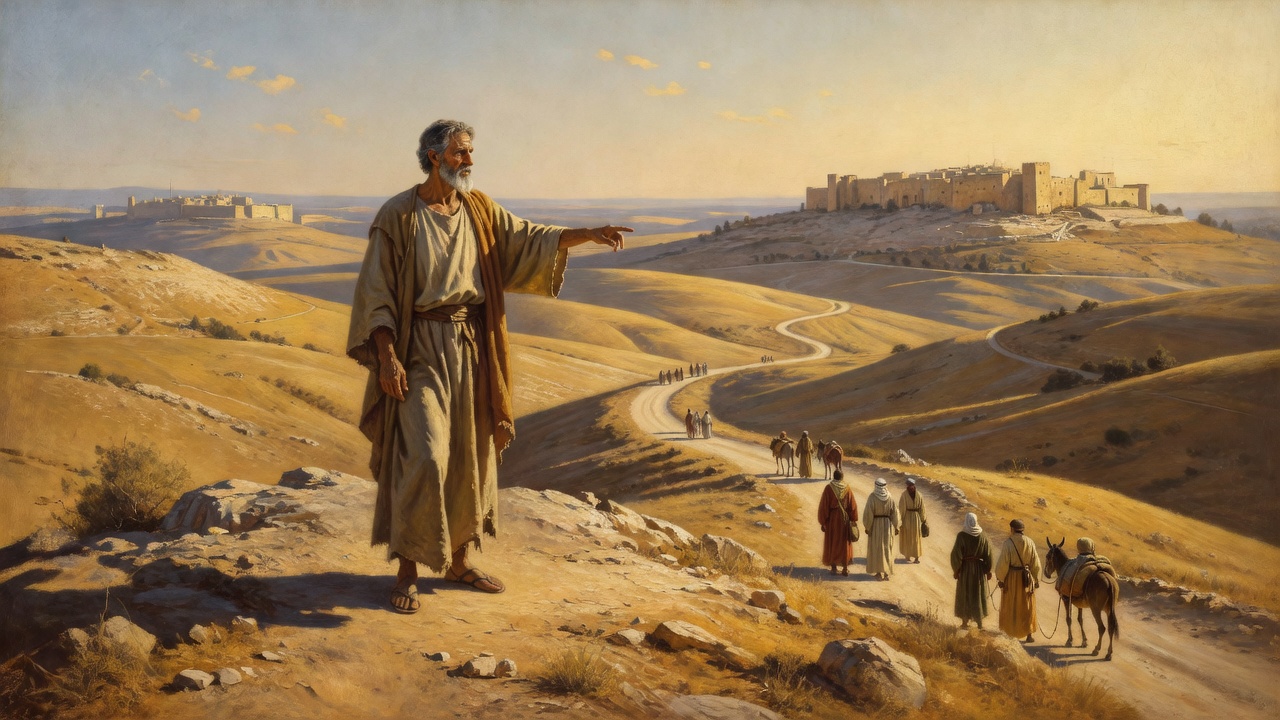
- During the reign of King Josiah of Judah, Jeremiah received prophecies comparing the northern kingdom of Israel and the southern kingdom of Judah to two sisters. Although the northern kingdom had already been sent away for its idolatry, Judah failed to learn from her sister's fate and turned back only in pretense.Sources: the Bible text itself · Josiah
- The prophet foretells a future restoration where the scattered people are brought back to Zion, the historic hill of Jerusalem. In that day, Jerusalem itself would be recognized as the Throne of the LORD, and the ark of the covenant would no longer be remembered or rebuilt.Sources: the Bible text itself · Zion · Jerusalem
- Drawing upon ancient marriage and divorce concepts, the text describes worshiping foreign gods on hills and under green trees as marital unfaithfulness. Despite this betrayal, the LORD repeatedly calls upon His faithless children to acknowledge their guilt and return to Him.Sources: the Bible text itself
Notes written with AI assistance from open sources (Theographic Bible Metadata, CC BY-SA 4.0; Easton’s Bible Dictionary, public domain) and reviewed before publishing.
Places in this chapter
Only places identified with high confidence are shown (90% or more according to the scholarly sources compiled by OpenBible). Period map: DARE (Digital Atlas of the Roman Empire), CC BY 4.0; modern map: © OpenStreetMap contributors; places: OpenBible.info (CC BY 4.0).
Credits and license for this translation
Baibal Olcim
The Holy Bible in the Matupi Chin language of Mynmar. Matupi Chin Standard Bible
Public Domain
Language: Matupi Chin (Chin, Matu)
Published in Mynmar, which is not a signatory to international copyright treaties. Copyright may apply locally in Mynmar, where this is released under a Creative Commons Attribution Share-Alike 4.0 license.
2026-09-21
Source: http://ebible.org/hltmcsb/ · eBible.org