Isaiah 5
Baibal Olcim · Tap a verse to see its cross-references.
Misurdum kah Laa
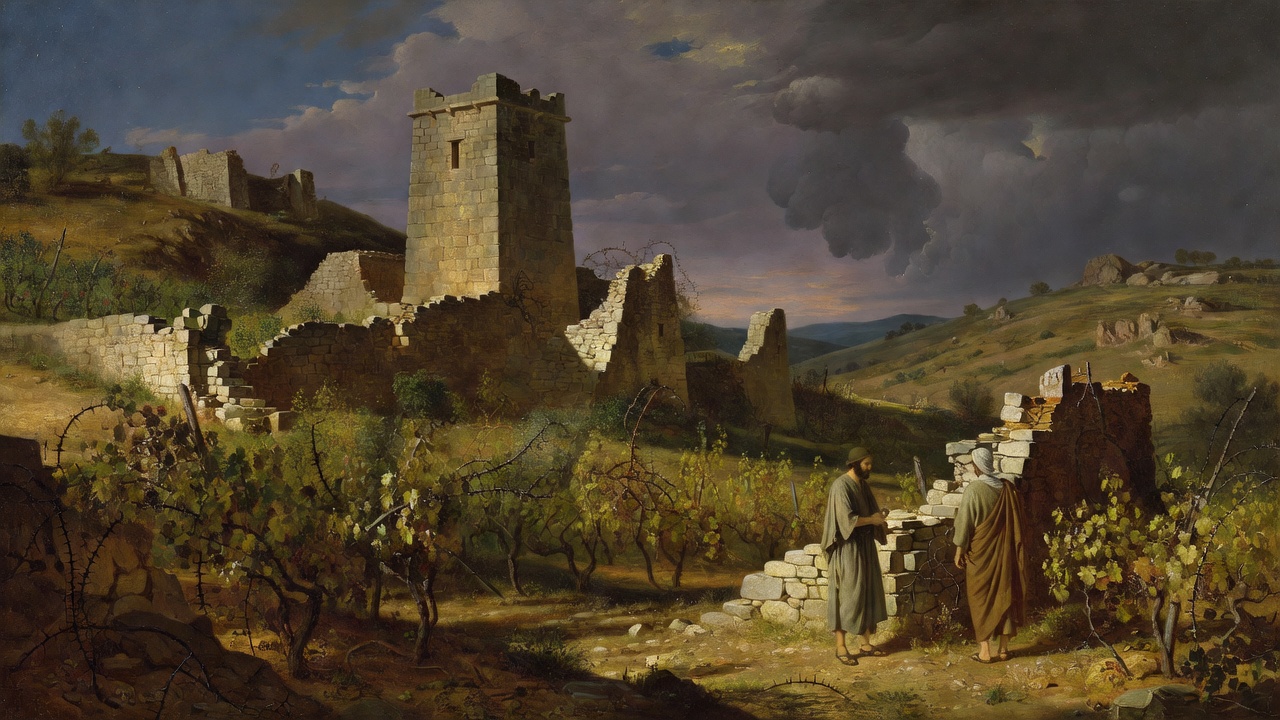
1A misurdum ham ka lungnah kamah hlo te laa la ka hlai pawn ni. Molsom dongkah laimen ca ah ka lungnah misurdum om. 2Te te a yoe tih a com phoeiah cangsawt misur te a phung. A laklung ah rhaltoengim a sak tih va-am a than pah. Misur a thaih ham te lamtawn dae a rhol la a thaih pah. 3Jerusalem khosa neh Judah hlang, tahae ah kai laklo neh ka misurdum laklo ah laitloek uh laeh. 4Ka misur ham te balae koep ka saii eh? Te ham te bi ka saii moenih a? Misur a thaih te ka lamtawn dae balae tih a rhol la a thaih? 5Ka misurdum ah ka saii te nangmih kam ming sak pawn ni. A buk te a khoe vetih cahawp hamla om pawn ni. A vongtung te a phae vetih cawtkoi hamla om pawn ni. 6Te te lobuek la ka khueh vetih bah uh mahpawh. Yawt uh voel pawt vetih lota neh hling loh a cun ni. Khomai te khaw ka uen vetih khotlan loh tlan thil mahpawh. 7Caempuei BOEIPA kah misurdum tah Israel imkhui neh a hlahmaenah thinghloe Judah hlang ni. Tiktamnah te a lamtawn dae thilongnah, duengnah yuengla pangngawlnah lat om ke.
Judah kah Tholhnah
8Anunae im neh im loh ben uh tih, lo neh lo khaw a hmuen om pawt hilah ben uh. Khohmuen laklo ah namah bueng a na om rhoe. 9Ka hna dongah caempuei BOEIPA loh im len khaw imsuep la khueh het mahpawt nim?. A len neh a len khaw khosak sak mahpawt nim? 10Misurdum rhoihma parha ah bath pakhat la cul vetih, cangti pai at khaw cangnoek pakhat la cul ni. 11Anunae mincang ah thoo tih yu a hloem uh tih, hlaemhmah kholaeh duela misurtui a hoem mai. 12Amih kah misur buhkoknah te rhotoeng, thangpa, kamrhing, phitphoet neh a thoeih thil. Tedae BOEIPA kah bisai tah paelki uh pawt tih a kut dongkah bibi hmu uh pawh. 13Te dongah a mingnah tal tih ka pilnam a poelyoe pawn ni. A thangpomnah te khokha kah a hlang la, a hlangping khaw tuihalh loh a koek pah. 14Te dongah saelkhui loh a hinglu a ka sak tih a rhi om kolla a ka a ang. Te vaengah a rhuepomnah neh a hlangping khaw, amah kah longlonah neh a khuila rholrhol suntla thuk. 15Te dongah hlang he ngam vetih tongpa khaw kunyun ni, koep aka sang kah a mik khaw kunyun uh ni. 16Tedae caempuei BOEIPA tah tiktamnah neh sang vetih, a cim Pathen tah duengnah neh ciim uh ni.
17Te vaengah tuca rhoek loh amamih kah rhamtlim bangla luem uh vetih, boei rhoek kah imrhong ah aka bakuep rhoek loh a caak uh ni.
18Anunae, thaesainah te poeyoek rhuihet neh dumlai leng dongah rhuivaeh bangla aka mawt,
19Te rhoek loh, “A bibi te tawn koeloe la om saeh, te daengah ni m'hmuh vetih ha mop eh. Te vaengah Israel ka a cim cilsuep ha thoeng saeh lamtah ming uh van sih,” a ti uh. 20Anunae, a thae te a then, a then te a thae aka ti rhoek, khosae yueng la a hmaisuep, hmaisuep yueng la hmaivang aka khueh rhoek, didip te khahing la, khahing te didip la aka khueh rhoek. 21Anunae amamih mikhmuh ah aka cueih tih, amamih mikhmuh ah aka yakming rhoek aih. 22Anunae, hlangrhalh rhoek loh misurtui rhoeh a ok tih, tatthai hlang rhoek khaw yu neh rhoeh thoek uh. 23Halang loh kapbaih dongah a tang sak dae, hlang dueng kah duengnah long tah anih te a voeih. 24Te dongah hmai lai loh vahhu, hmaisai loh diphung a laeh bangla a yung te ungrhem vetih thinghmawn bangla om ni. Caempuei BOEIPA kah olkhueng te a hnawt uh tih, Israel kah a cim olthui te a tlaitlaek uh dongah, amih kah a pailum te laipi bangla poeng ni. 25BOEIPA kah a thintoek loh a pilnam taengah sai tangloeng coeng. Te vaengah a kut a thueng thil tih a ngawn. Te dongah tlang rhoek khaw tlai uh tih a rhok te rhamvoel laklo ah natcaeh bangla hmoeng. Te boeih nen khaw a thintoek mael pawt tih a kut a thueng pueng. 26Khohla kah namtom rhoek ham rholik a ling pah tih, diklai khobawt ah anih ham kut a ving pah dongah, yanghoep la koe ha pawk coeng ke. 27Anih tah buhmueh rhathih om pawt tih paloe tlaih pawh. A mikku pawt tih ip bal pawh. A pumpu kah hailaem khaw hlong pawt tih, a khokhom rhui khaw pat pawh. 28A thaltang te sum vilcik tih a lii khaw boeih tangkuek. A marhang khomae te hmailung bangla, a humhae te cangpalam bangla a moeh pah. 29Anih kah a kawknah tah sathuengnu bangla kawk la kawk. Sathueng ca bangla a nguel tih maeh khaw a tuuk. A khuen coeng tah huul pah voel pawh. 30Tekah khohnin ah tah tuipuei phoenanah bangla a nguel thil ni. Khohmuen te a paelki vaengah khohmuep khobing neh khosae khaw muei loh khoep a hmuep sak ni.
Did you know?
The Song of the Vineyard and the Six Woes
- The opening song in Isaiah 5 describes the elaborate labor of ancient Judean viticulture: clearing rocky hillsides of stones, building a protective stone watchtower, digging out a winepress in the bedrock, and planting prime vines surrounded by a protective hedge and wall. The poem turns into a legal parable where the vineyard represents the house of Israel and the people of Judah, from whom justice was expected instead of bloodshed.Sources: the Bible text itself
- The chapter delivers a series of six prophetic laments or woes, condemning specific social and moral abuses in Judah. These include wealthy landowners consolidating real estate by adding house to house and field to field, judges taking bribes to acquit the guilty while denying justice to the innocent, and leaders indulging in lavish feasting while ignoring divine instruction.Sources: the Bible text itself
- Isaiah's prophetic ministry in Jerusalem addressed the people of Judah over an extended period beginning in the mid-eighth century BC. The chapter concludes with a warning that the Lord would signal distant, disciplined foreign armies equipped with chariots, bows, and swift horses to execute judgment on the land.Sources: Jerusalem · Prophecies of Isaiah · the Bible text itself
Notes written with AI assistance from open sources (Theographic Bible Metadata, CC BY-SA 4.0; Easton’s Bible Dictionary, public domain) and reviewed before publishing.
Places in this chapter
Only places identified with high confidence are shown (90% or more according to the scholarly sources compiled by OpenBible). Period map: DARE (Digital Atlas of the Roman Empire), CC BY 4.0; modern map: © OpenStreetMap contributors; places: OpenBible.info (CC BY 4.0).
Credits and license for this translation
Baibal Olcim
The Holy Bible in the Matupi Chin language of Mynmar. Matupi Chin Standard Bible
Public Domain
Language: Matupi Chin (Chin, Matu)
Published in Mynmar, which is not a signatory to international copyright treaties. Copyright may apply locally in Mynmar, where this is released under a Creative Commons Attribution Share-Alike 4.0 license.
2026-09-21
Source: http://ebible.org/hltmcsb/ · eBible.org