Isaiah 20
Baibal Olcim · Tap a verse to see its cross-references.
Egypt neh Kush loh Bom Mahpawh
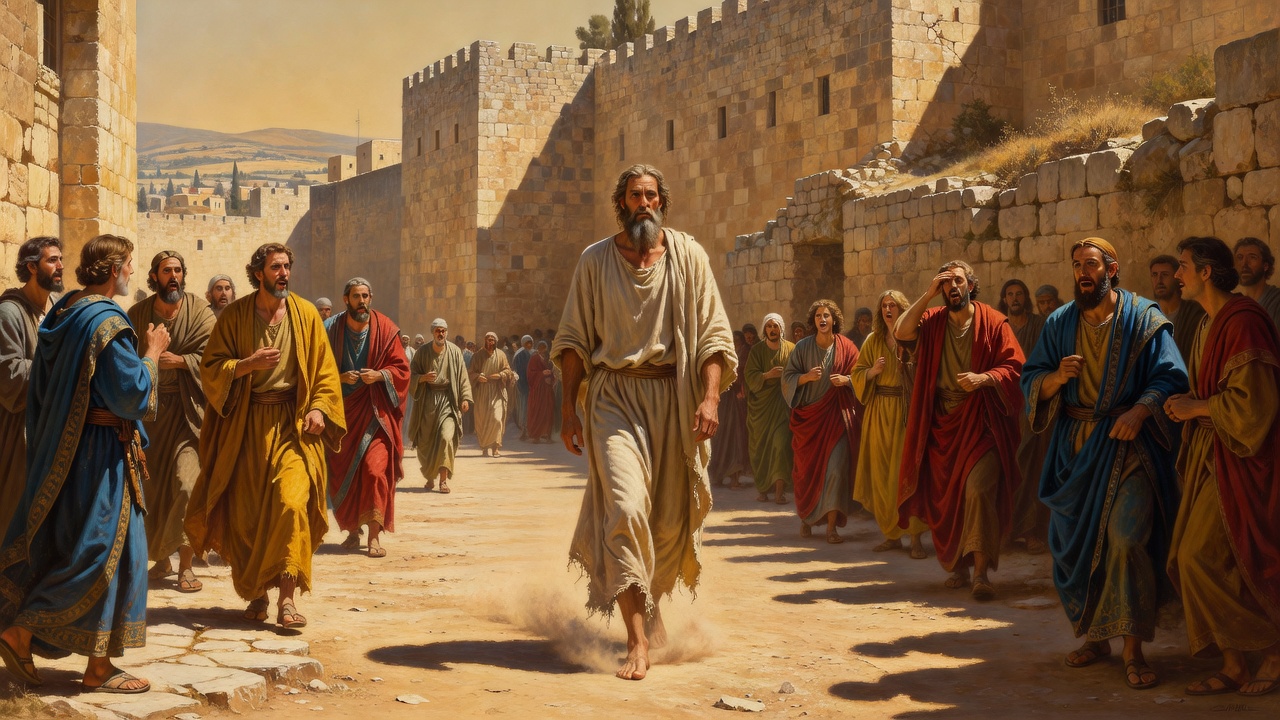
1Rhalboei ha pawk kum ah anih te Ashdod la a tueih hatah Assyria manghai Sargon loh Ashdod te a vathoh thil tih a loh. 2Te vaeng tue ah BOEIPA loh Amoz capa Isaiah kut ah a thui tih, “Cet lamtah na cinghen lamkah tlamhni te hlam laeh, na kho dongkah na khokhom khaw dul laeh,” a ti nah.
Te dongah a saii tangloeng tih pumtling neh khotling la van. 3Te vaengah BOEIPA loh, “Ka sal Isaiah te pumtling neh khotling neh kum thum a van bangla Egypt neh Kusah taengah miknoek neh kopoekrhai om ni. 4Assyria manghai Egypt tamna, Kusah hlangsol camoe patong te Egypt kah a yah dongah pumtling khotling neh a ael tlaai awk la a hmaithawn ni. 5Te vaengah amih kah a uepnah Kusah neh a boeimangnah Egypt khaw rhihyawp vetih yak ni. 6Tekah khohnin ah tah te tuikaeng khosa long khaw, 'Assyria manghai mikhmuh lamloh aka huul ham bomnah neh mamih kah uepnah tah rhaelrham coeng tih mamih loh metlam m'poenghal eh he,’ a ti ni,” a ti.
Did you know?
Prophetic Sign Against Egypt and Cush
- Ashdod was a heavily fortified Philistine city situated along the coastal highway linking Palestine with Egypt. The Assyrian king Sargon sent his commander to besiege and capture the city as the Assyrian Empire expanded southward.Sources: the Bible text itself · Ashdod
- God commanded Isaiah to take off his outer sackcloth and sandals, walking stripped and barefoot for three years. This dramatic prophetic act symbolized how Assyria would conquer and lead away the captives of Egypt and Cush in humiliation.Sources: the Bible text itself · Isaiah · Cush
Notes written with AI assistance from open sources (Theographic Bible Metadata, CC BY-SA 4.0; Easton’s Bible Dictionary, public domain) and reviewed before publishing.
Places in this chapter
- Ashdod · Today: Tel Ashdod · 31.757, 34.658 · verse 1
- Assyria · 36.359, 43.153 · verses 1, 4, 6
- Cush · Today: Cush 1 · 16.935, 33.751 · verses 3, 4, 5
- Egypt · 30.129, 31.308 · verses 3, 4, 5, 6
Only places identified with high confidence are shown (90% or more according to the scholarly sources compiled by OpenBible). Period map: DARE (Digital Atlas of the Roman Empire), CC BY 4.0; modern map: © OpenStreetMap contributors; places: OpenBible.info (CC BY 4.0).
Credits and license for this translation
Baibal Olcim
The Holy Bible in the Matupi Chin language of Mynmar. Matupi Chin Standard Bible
Public Domain
Language: Matupi Chin (Chin, Matu)
Published in Mynmar, which is not a signatory to international copyright treaties. Copyright may apply locally in Mynmar, where this is released under a Creative Commons Attribution Share-Alike 4.0 license.
2026-09-21
Source: http://ebible.org/hltmcsb/ · eBible.org