Isaiah 14
Baibal Olcim · Tap a verse to see its cross-references.
Israel kah Maelnah
1BOEIPA loh Jakob te a haidam vetih Israel te koep a coelh ni. Amih te amah khohmuen ah a khueh vetih yinlai loh amih taengah naep ni. Te vaengah yinlai khaw Jakob imkhui la thawth uh ni. 2Amih te pilnam loh a khuen vetih amah hmuen la a thak ni. BOEIPA kah khohmuen ah amih te Israel imkhui kah salnu neh salpa la a pang uh ni. Te vaengah amih kah a sol te a hlang sol a khueh uh vetih amih aka tueihno rhoek te a taemrhai uh ni.
Babylon Manghai Cungku
3Na tloh khui lamloh, nang kah khoponah khui lamloh, nang taengah manghkhak la aka thohtat sak thohtatnah lamloh nang duem sak ham BOEIPA kah khohnin ha pawk ni. 4Te vaengah Babylon manghai taengah thuidoeknah he na khuen vetih, “Tueihno te metlam a paa tih thisanah a kangkuen mai. 5BOEIPA loh halang kah conghol neh boei kah mancai khaw a khaem pah coeng.
6Hmasoe kah a thinpom neh pilnam a ngawn. Koeknah pawt khaw, thintoek neh a namtom taemrhai tih, phaepnah te tuem pawh.
7Duem aka mong diklai pum khaw tamlung neh rhong uh coeng. 8Hmaical loh nang te n'kokhah thil tih na yalh vaeng lamkah long ni Lebanon lamphai loh, “Mamih aka vung te pongpa voel pawh,” a ti coeng. 9Saelkhui te nang doe hamla ha pawk vaengah nang ham te a laedil ah tlai coeng. Diklai kikong boeih kah sairhai te nang hamla a haeng coeng tih namtom manghai boeih te a ngolkhoel lamloh a thoh sak. 10Amih te boeih a doo uh vetih nang taengah, “Namah khaw kaimih bangla na nue coeng tih kaimih bang boeiloeih la na om coeng. 11Na hoemdamnah na thangpa ol te, Saelkhui la a suntlak sak coeng. Namah hmui ah arhit phaih uh tih na dakda talam la poeh coeng,” na ti uh bitni. 12Yaoe thuipa khaw vaan lamloh na cungku mai tih khothaih capa khaw diklai la m'vung tih namtom taengah aka rhaa uh mai. 13Nang khaw na thinko ah,” Vaan la ka luei hang vetih Pathen kah aisi soah ka ngolkhoel ka pomsang saeh lamtah tlangpuei tlanghlaep kah tingtunnah tlang ah ka ngol eh. 14Hmuensang khomai dongah ka cet vetih Khohni te ka puet eh?,” na ti. 15Tedae tangrhom laedil kah saelkhui la na suntla coeng. 16Nang aka hmu rhoek loh namah te m'hmaitang uh. Nang kawng te, “Diklai aka tlai sak tih ram aka hinghuen hlang te a? 17Lunglai te khosoek la aka khueh tih khopuei khaw a koengloeng. A thongtla te im la hlah pawh,” tila m'hmat uh. 18Namtom manghai boeih khaw a thangpomnah neh a im ah a pum la rhip yalh uh. 19Tedae nang te thingpae bangla na phuel lamloh m'voeih. cunghang neh a thun tih a ngawn kah pueinak bangla n'tuei coeng. Lungto tangrhom khuila aka suntla rhok bangla n'suntlae coeng. 20Na khohmuen kah na pilnam te na phae tih na ngawn coeng dongah phuel ah khaw amih te pitpom sak mahpawh. Thaehuet rhoek kah tiingan tah kumhal duela thoel boel saeh. 21Amih te thoo mahpawt nim, a napa rhoek kathaesainah kongah a ca rhoek ham saicaeh hmuen te soepsoei pa uh. Te daengah ni khohmuen te a pang uh vetih khopuei kah lunglai hman ah a baetawt uh eh. 22Amih voelah caempuei BOEIPA kah olphong te ka thoh puei vetih Babylon ming neh a ca aka sueng te khaw, a cadil khaw ka saii ni. BOEIPA olphong coeng ni he. 23Khopuei te kharhoeng hut neh tuibap tui la ka khueh ni. Lungtang neh ka nawt vetih ka mitmoeng sak ni. Caempuei BOEIPA kah olphong coeng ni he.
Assyria Paci Ni
24Caempuei BOEIPA loh a toemngam tih, “Ka cai bangla om tangloeng tih ka uen bangla a thoh tangkhuet moenih a? a ti. 25Ka khohmuen kah Assyria khaem hamla ka tlang dongah ka suntlae ni. Te vaengah amih lamkah a hnamkun te a dul vetih a laengpang dong lamkah a hnorhih a hal ni. 26Hekah cilsuep he diklai pum ham ni a. poek tih kut he khaw namtom rhoek boeih a thueng thil coeng. 27caempuei BOEIPA loh a uen coeng dongah u long a phae voel. A kut te a thueng coeng dongah u long a yueh thai voel.
Philistia ham Olrhuh
28Manghai Ahaz a dueknah kum ah hekah olrhuh he ha pawk. 29Nang aka ngawn mancai a tlawt te Philistia nang loh boeih kokhahnah boeh. Rhul a yung te rhulthae la thoeng vetih a thaih te aka ding minyuk la poeh ni. 30Tattloel rhoek kah caming rhoek te luem uh vetih khodaeng rhoek khaw ngaikhuek la kol uh ni. Tedae na yung te khokha neh ka duek sak vetih na meet te a ngawn ni. 31Vongka nang rhung laeh. Khopuei nang pang laeh. Tlangpuei lamkah hmaikhu ha thoeng tih a caempa khuiah a pangoe pawt dongah Philistia nang tah boeih paci coeng. 32BOEIPA loh Zion a suen tih a khuiah a pilnam mangdaeng a ying ham te namtom puencawn loh metlam a doo eh.
Did you know?
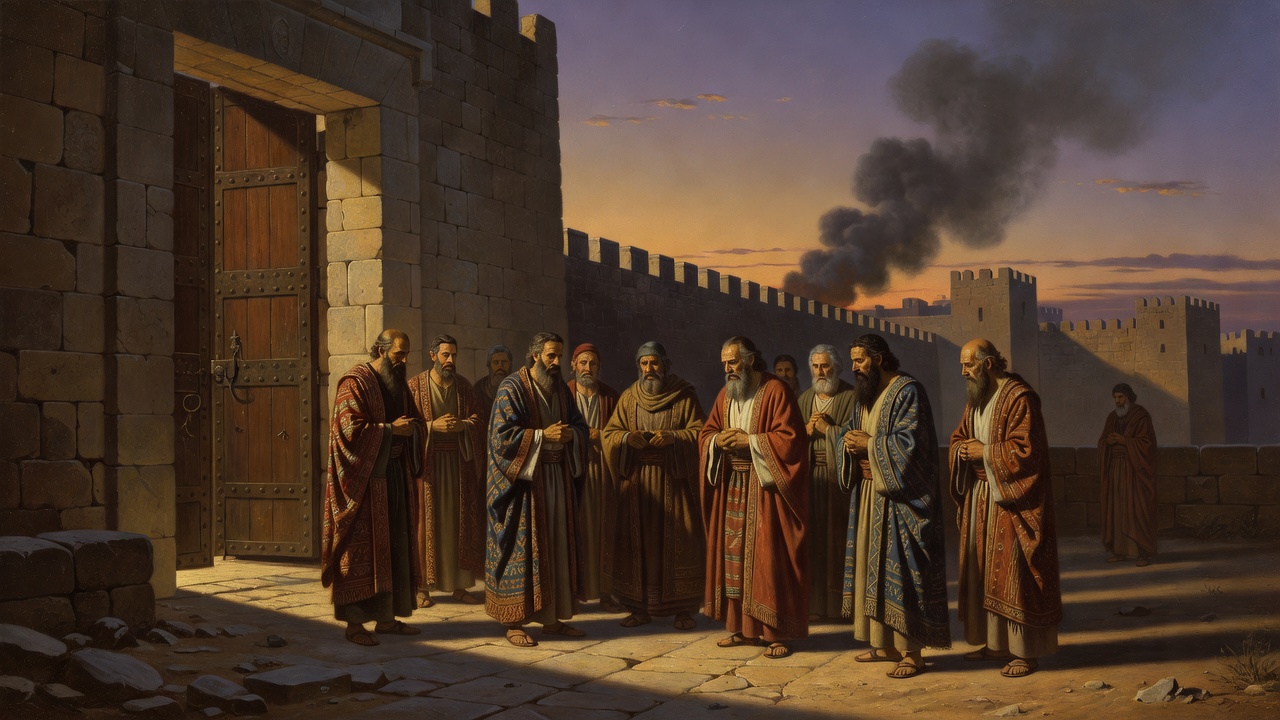
The Fall of Babylon and Oracle Against Philistia
- The title Lucifer, meaning brilliant star, is applied in Isaiah 14:12 to the proud king of Babylon within a poem mocking his sudden fall from grandeur into the depths of Sheol.Sources: Lucifer · the Bible text itself
- The poem personifies the ancient forests, describing the majestic cedars and cypresses of Lebanon rejoicing over the tyrant's defeat because no woodcutter would come to fell them anymore.Sources: Lebanon · the Bible text itself
- The closing oracle was delivered in the year King Ahaz of Judah died, warning the neighboring land of Philistia that their relief at a broken rod would be short-lived against impending destruction from the north.Sources: Ahaz · Philistia · the Bible text itself
Notes written with AI assistance from open sources (Theographic Bible Metadata, CC BY-SA 4.0; Easton’s Bible Dictionary, public domain) and reviewed before publishing.
Places in this chapter
- Babylon · 32.543, 44.422 · verses 4, 22, 23
- Lebanon · 33.540, 35.584 · verse 8
- Zaphon · Today: Jebel Aqra · 35.953, 35.969 · verse 13
- Assyria · 36.359, 43.153 · verse 25
- Philistia · 31.664, 34.546 · verses 29, 31
- Zion · Today: Jerusalem · 31.777, 35.234 · verse 32
Only places identified with high confidence are shown (90% or more according to the scholarly sources compiled by OpenBible). Period map: DARE (Digital Atlas of the Roman Empire), CC BY 4.0; modern map: © OpenStreetMap contributors; places: OpenBible.info (CC BY 4.0).
Credits and license for this translation
Baibal Olcim
The Holy Bible in the Matupi Chin language of Mynmar. Matupi Chin Standard Bible
Public Domain
Language: Matupi Chin (Chin, Matu)
Published in Mynmar, which is not a signatory to international copyright treaties. Copyright may apply locally in Mynmar, where this is released under a Creative Commons Attribution Share-Alike 4.0 license.
2026-09-21
Source: http://ebible.org/hltmcsb/ · eBible.org