Deuteronomy 8
Baibal Olcim · Tap a verse to see its cross-references.
BOEIPA Te Poek Lah
1Tihnin ah kai loh nang kang uen olpaek boeih he vai hamla ngaithuen uh. Te daengah ni BOEIPA loh na pa rhoek taengah a caeng khohmuen ah na hing vaengah na ping uh vetih na kun uh vaengah khaw na pang uh eh. 2A olpaek te a olpaek bangla na thinko ah ngaithuen neh ngaithuen pawt khaw ming ham a ngaih tih nang phaep ham neh noemcai ham kum likip khuiah BOEIPA na Pathen loh Khosoek longpuei ah nang n'caeh puei boeih te poek lah. 3Nang m'phaep vaengah n'lamlum sak ngawn dae namah loh na ming mueh neh na pa rhoek loh aming uh mueh manna te nang n'cah. Te dongah hlang he buh bueng neh hing pawt tih BOEIPA ka lamkah aka thoeng sarhui dongah ni hlang a hing tila nang m'ming sak. 4Nang dong lamkah na himbai khaw hmawn pawt tih kum likip khuiah na kho khaw phat pawh. 5Te dongah hlang loh a ca a toel bangla BOEIPA na Pathen loh nang n'toel te na thinko neh ming lah. 6Te dongah longpuei ah pongpa ham neh amah rhih ham tah BOEIPA na Pathen kah olpaek te ngaithuen lah. 7Kolbawn tlang ah soklong kah tuiphuet tui neh tuidung loh a long thil khohmuen, aka then khohmuen, 8cang, cangtun, misur, thaibu neh tale kho, olive situi neh khoitui kho la BOEIPA na Pathen loh nang n'khuen coeng. 9Tekah khohmuen ah tah buh dongah khaw sihtaehnah neh na ca pawt vetih, a khuiah pakhat khaw m'vaitah mahpawh. Khohmuen kah lungto dongah thicung neh tlang dongah rhohum khaw na dae thai.
10Tedae na caak tih na hah vaengah nang taengah khohmuen then neh aka phaeng BOEIPA na Pathen uem uh.
11Namah te ngaithuen, BOEIPA na Pathen te na hnilh ve. Tihnin ah kai loh nang kan uen olpaek, laitloeknah neh a khosing he na ngaithuen pawt ve ne. 12Na caak tih na hah vaengah, im then na sak tih na om vaengah, 13na saelhung neh na boiva loh ping tih, cak neh sui loh nang ham pung tih a cungkuem loh nang ham a pungtai vaengah, 14na thinko loh pomsang uh vetih sal imkhui Egypt kho lamkah nang aka khuen BOEIPA na Pathen te na hnilh ve ne. 15Khosoek duppuei neh rhih om minyuk rhul neh saelkhui ta-ai khuiah nang m'mawt tih tui aka om mueh tuihang ah pataeng hmailung lungpang khui lamkah tui te nang hamla hang khuen. 16Khosoek ah na pa rhoek loh a ming uh mueh manna te nang n'cah tih na hmailong ah khophoengpha sak ham nang m'phaep tih n'noemcai. 17Te dongah na thinko khuiah, 'Khuehtawn he kamah thadueng, kamah ban thaa loh kamah ham a saii,’ na ti ve. 18Tedae tihnin kah bangla na pa rhoek taengah a caeng paipi te cak sak tih khuehtawn dang sak ham nang taengah thadueng aka pae BOEIPA na Pathen amah te poek. 19BOEIPA na Pathen te na hnilh la na hnilh tih pathen tloe hnukah na caeh atah, amih taengah tho na thueng atah, amih te na bakop thil khohnin van vaengah na milh rhoe na milh ham ni nang taengah ka laipai. 20Na mikhmuh ah BOEIPA loh namtom rhoek a milh sak bangla BOEIPA na Pathen ol te na ya pawt vetih na milh uh van ve.
Did you know?
Remembering God in the Good Land
- Moses reminded the Israelites of their forty years of wandering in a harsh wilderness filled with venomous snakes, scorpions, and drought. During this testing period, God sustained them with manna and water from flint rock, and their clothing did not wear out nor did their feet swell.Sources: the Bible text itself
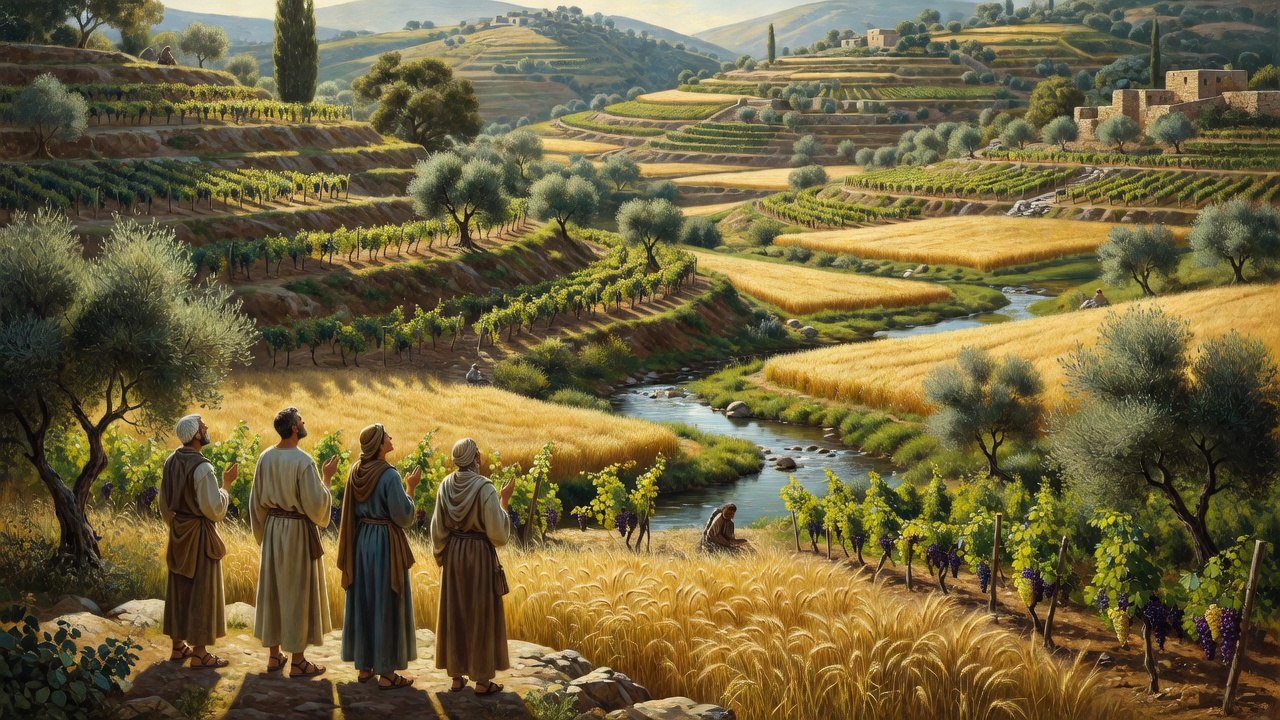
- The Promised Land is described not only by its natural water springs and streams, but also by seven primary agricultural products: wheat, barley, grapevines, fig trees, pomegranates, olive oil, and honey, along with valuable mineral deposits of iron and copper.Sources: the Bible text itself
- The chapter includes a strong warning against pride that can arise from prosperity. Moses cautioned the people that after building fine houses, expanding herds, and accumulating silver and gold, they might forget their liberation from Egyptian slavery and credit their own strength for their wealth.Sources: the Bible text itself · Egypt
Notes written with AI assistance from open sources (Theographic Bible Metadata, CC BY-SA 4.0; Easton’s Bible Dictionary, public domain) and reviewed before publishing.
Places in this chapter
- Egypt · 30.129, 31.308 · verse 14
Only places identified with high confidence are shown (90% or more according to the scholarly sources compiled by OpenBible). Period map: DARE (Digital Atlas of the Roman Empire), CC BY 4.0; modern map: © OpenStreetMap contributors; places: OpenBible.info (CC BY 4.0).
Credits and license for this translation
Baibal Olcim
The Holy Bible in the Matupi Chin language of Mynmar. Matupi Chin Standard Bible
Public Domain
Language: Matupi Chin (Chin, Matu)
Published in Mynmar, which is not a signatory to international copyright treaties. Copyright may apply locally in Mynmar, where this is released under a Creative Commons Attribution Share-Alike 4.0 license.
2026-09-21
Source: http://ebible.org/hltmcsb/ · eBible.org