Deuteronomy 20
Baibal Olcim · Tap a verse to see its cross-references.
Caemthoh Vaengkah Olkhueng
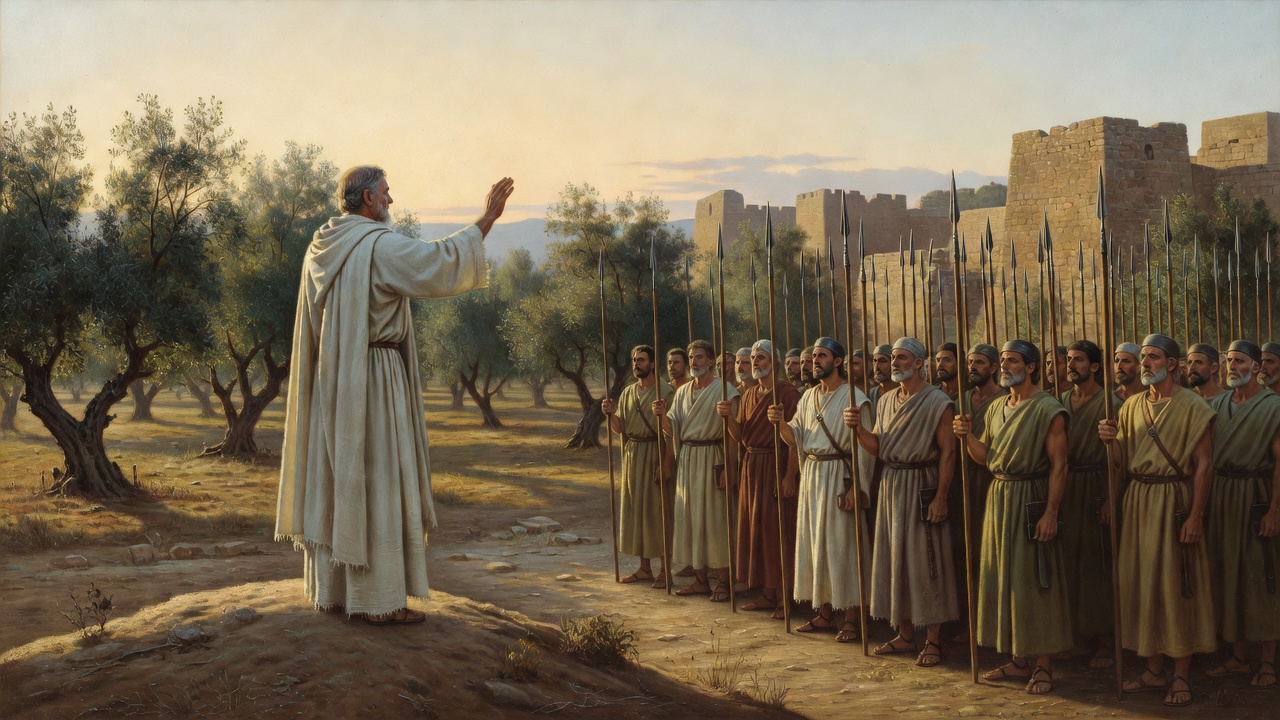
1Na thunkha taengah caem la na cet tih nang lakah aka yet pilnam kah marhang neh leng te na hmu cakhaw Egypt kho lamloh nang aka khuen BOEIPA na Pathen te nang taengla a om dongah amih te rhih boeh. 2Caemtloek neh na yoei vaengah khaw khosoih loh ha mop van saeh lamtah pilnam taengah ol aka thui la om van saeh. 3Te vaengah amih te, “Israel nang loh hnatun lah. Tihnin kah na thunkha rhoek taengah caemtloek la na mop uh vaengah na thinko phoena sak boeh, rhih uh boeh, tamto uh boeh, amih mikhmuh ah na sarhing uh boeh. 4Na thunkha rhoek te nangmih ham aka tloek tih nangmih aka khang ham ni BOEIPA na Pathen loh nangmih taengah a pongpa,” ti nah saeh.
5Rhoiboei rhoek long khaw pilnam te voek uh saeh lamtah, “Hlang khat khat loh im thai a sak tih a uum pawt atah cet saeh lamtah amah im la bal saeh. Caemtloek vaengah duek vetih hlang tloe loh vik uum pah ve. 6Hlang khat khat loh misur a ling tih a uem hlan atah cet saeh lamtah amah im la bal saeh. Caemtloek vaengah duek vetih hlang tloe loh vik uem pah ve. 7Hlang khat khat loh yuu a bae tih a loh hlan atah cet saeh lamtah a im la bal saeh. Caemtloek vaengah duek vetih hlang tloe loh vik loh pah ve,” ti nah saeh. 8Te phoeiah pilnam taengah a thui ham rhoiboei rhoek loh thap uh saeh lamtah, “Hlang khat khat long ni a rhih tih a thinko a mongkawt atah cet saeh lamtah amah im la bal saeh. Te daengah ni anih kah a thinko bangla a manuca rhoek kah a thinko khaw a yut pawt eh?,” ti na uh saeh. 9Pilnam taengkah olthui te rhoiboei rhoek loh a khah phoeiah pilnam kah a lu dongah caempuei rhoek kah mangpa te hlah la om saeh.
10Khopuei te na paan tih na vathoh thil vaengah anih te rhoepnah neh tuentah dae. 11Te vaengah nang te rhoepnah neh n'doo tih nang hamla thohka aka ong a om atah a khuikah m'hmuh pilnam boeih neh saldong khaw nang hamla om saeh lamtah nang taengah thotat uh saeh. 12Tedae nang te n'thuung pawt tih nang te caem la m'hmoel atah amah te na dum van ni. 13Te vaengah anih te BOEIPA na Pathen loh na kut dongah han tloeng vetih cunghang ha neh amah tongpaca te boeih na tloek bitni. 14Huta camoe neh rhamsa khaw, khopuei khuikah aka om boeih neh a kutbuem boeih khaw namah ham na poel na yoe vetih BOEIPA na Pathen loh nang taengah m'paek na thunkha rhoek kah a kutbuem te na caak ni. 15A yoei kah namtom khopuei rhoek he pawt tih namah taeng lamloh bahoeng aka hla khopuei rhoek te boeih na saii ni. 16Tedae BOEIPA na Pathen loh nang taengah rho la m'paek, pilnam rhoek kah khopuei ah hiil aka khueh boeih tah na hlun mahpawh. 17Te dongah amih Khitti neh Amori, Kanaani neh Perizzi, Khivee neh Jebusi ngawn tah BOEIPA na Pathen loh nang ng'uen vanbangla na thup rhoe na thup ni. 18Amamih kah pathen rhoek taengah a saii uh tueilaehkoi boeih te saii hamla na cang mahpawh. BOEIPA na Pathen taengah na tholh van ve.
19Khopuei te tuuk ham neh tloek hamla khohnin a sen na dum atah a taengah hai neh heh tih a thing te na hum mahpawh. Amih te na caak thai dongah na vung mahpawh. Na mikhmuh kah vongup khuiah na paan te khaw khohmuen thingkung lamkah hlang boeiloeih ni. 20Tedae thingkung te a thaih aka om pawh thingkung la na ming atah na phae thai. Te vaengah na hum vetih nang taengah caem aka saii khopuei loh a tim hlandue tah vongsoel la na saii thai.
Did you know?
Laws Concerning Warfare
- Before entering combat, Israelite officers announced specific exemptions from military duty, releasing men who had built a house not yet dedicated, planted a vineyard not yet harvested, become engaged to be married, or felt afraid.Sources: the Bible text itself
- The law established different warfare policies for distant cities compared to cities within the Promised Land; distant cities were first offered terms of peace, whereas the inhabitants of nearby nations were marked for complete destruction to avoid idolatry.Sources: the Bible text itself
- During long sieges, Israelite forces were forbidden from cutting down fruit-bearing trees to construct siege works, limiting their timber harvesting only to trees known not to produce food.Sources: the Bible text itself
Notes written with AI assistance from open sources (Theographic Bible Metadata, CC BY-SA 4.0; Easton’s Bible Dictionary, public domain) and reviewed before publishing.
Places in this chapter
- Egypt · 30.129, 31.308 · verse 1
Only places identified with high confidence are shown (90% or more according to the scholarly sources compiled by OpenBible). Period map: DARE (Digital Atlas of the Roman Empire), CC BY 4.0; modern map: © OpenStreetMap contributors; places: OpenBible.info (CC BY 4.0).
Credits and license for this translation
Baibal Olcim
The Holy Bible in the Matupi Chin language of Mynmar. Matupi Chin Standard Bible
Public Domain
Language: Matupi Chin (Chin, Matu)
Published in Mynmar, which is not a signatory to international copyright treaties. Copyright may apply locally in Mynmar, where this is released under a Creative Commons Attribution Share-Alike 4.0 license.
2026-09-21
Source: http://ebible.org/hltmcsb/ · eBible.org