Deuteronomy 14
Baibal Olcim · Tap a verse to see its cross-references.
Boeipa kah a Ngaih Mueh Khoboe
1Nangmih tah BOEIPA na Pathen kah koca rhoek ni. Aka duek ham na saa hlap pah boeh. Na mik rhoi laklo te lungawng la khueh boeh. 2BOEIPA na Pathen kah pilnam cim la na om uh dongah diklai hman kah pilnam boeih khuiah pilnam lungthen bangla amah hut la om ham ni BOEIPA loh nang n'coelh.
Caak Koi neh Yaeh Koi
3Tueilaehkoi boeih tah ca boeh. 4Rhamsa dongah he vaito, tu dongkah boiva neh maae dongkah boiva, 5rhangrhaeh kirhang neh sayuk, sathai, sayaa, cuung neh tlang kah tu te ca uh. 6Khomae aka rhak rhamsa boeih khuiah khaw a khomae rhoi laklo kah a khorhaek aka rhak tih caknaih aka naih rhamsa khuikah te mah ca uh. 7Tedae canaih aka naih neh khomae aka rhak tih aka rhek khuiah he he ca uh boeh. Kalauk, saveh neh saphih he caknaih a naih dae a khomae a rhak pawt dongah nangmih ham rhalawt. 8Ok he a khomae rhak dae caknaih a tal dongah nangmih ham rhalawt. A saa te ca uh boeh, a rhok te khaw ben uh boeh. 9Tui dongah aka om boeih lamkah na caak uh koi lamtah, a pum dongah a phae neh a lip aka om boeih te na caak uh thai. 10A pum dongah a phae neh a lip aka om pawt boeih tah nangmih ham rhalawt, ca uh boeh. 11Vaa boeih khuiah aka caih te na caak uh thai. 12Tedae atha, langta neh thamuk, 13khangkham, maisi, neh valae kah a hui boeih, 14vangak boeih neh anih hui boeih, 15tuirhuk, vanu, kirhoeng, khangkhoe, mutlo neh anih hui boeih, 16thathawt, saelbu, abuu, 17khosoek saelbu, tamcu, tuiliim, 18bungrho, kaikoi neh anih hui boeih, thongpanai neh pumphak te ca uh boeh. 19Vaa bangla aka om rhulcai boeih khaw nangmih ham rhalawt. Te te ca uh boeh. 20Aka cuem vaa boeih te tah na caak uh thai. 21Maehrhok boeih ke ca uh boeh. Na vongka khuiah aka om yinlai te pae lamtah ca mai saeh. Te pawt atah kholong taeng lam khaw yoi mai. Nang tah BOEIPA na Pathen kah pilnam cim la na om dongah boiva ca te a manu suktui dongah thong thil boeh.
BOEIPA Kah Parha Pakhat
22Kum khat kum khat ah khohmuen lamkah aka thoeng na cangti a vueithaih boeih te parha pakhat la na duen rhoe na duen ni. 23Na cangpai, na misur thai, na situi parha pakhat khaw, na saelhung neh na boiva cacuek khaw, a ming phuk thil ham a tuek hmuen kah BOEIPA na Pathen kah mikhmuh ah na caak ni. Te daengah ni BOEIPA na Pathen te hnin takuem ah rhih ham na cang pueng eh. 24Tedae namah taeng lamloh longpuei sen tih amah ming phuk thil ham BOEIPA na Pathen loh a coelh hmuen te namah lamloh a hlavak dongah khuen hamla a coeng pawt oeh atah, BOEIPA na Pathen kah yoethen paek te tangka la khueh. 25Te phoeiah tangka te namah kut dongah yom lamtah BOEIPA na Pathen loh amah ham a coelh hmuen la caeh puei. 26Te vaengah na hinglu loh a nai sarhui boeih dongkah ham tangka te hnonah. Saelhung khaw, boiva misur khaw, yu khaw na hinglu neh na hoe boeih te tah BOEIPA na Pathen kah mikhmuh ah ca lamtah namah neh na imkhuikho loh na kohoe sakuh. 27Na vongka khuikah Levi khaw hnoo boeh. Anih te nang taengah khoyo neh rho a khueh moenih.
28Kum thum a thok kum kah na cangah parha pakhat boeih te na khuen vetih na vongka khuiah na tung ni. 29Na khuiah khaw a taengah khoyo neh rho aka mueh tah Levi khaw, na vongka khuikah yinlai khaw, cadah neh nuhmai khaw, ha kun mai khaming. Te vaengah ca uh saeh lamtah cung uh saeh. Te daengah ni na kut dongkah bitat na saii boeih te na Pathen BOEIPA loh nang yoethen m'paek eh.
Did you know?
Dietary Regulations and Tithe Provisions
- The dietary laws in Deuteronomy 14 distinguish clean from unclean land animals based on two physical criteria: having completely divided hooves and chewing the cud. Aquatic creatures were considered clean for consumption only if they possessed both fins and scales.Sources: the Bible text itself
- To accommodate families who lived far from the designated sanctuary, the law allowed agricultural tithes to be converted into silver for travel. Upon arriving at the central sanctuary, worshippers could use the money to purchase festive food and drink to celebrate with their households.Sources: the Bible text itself
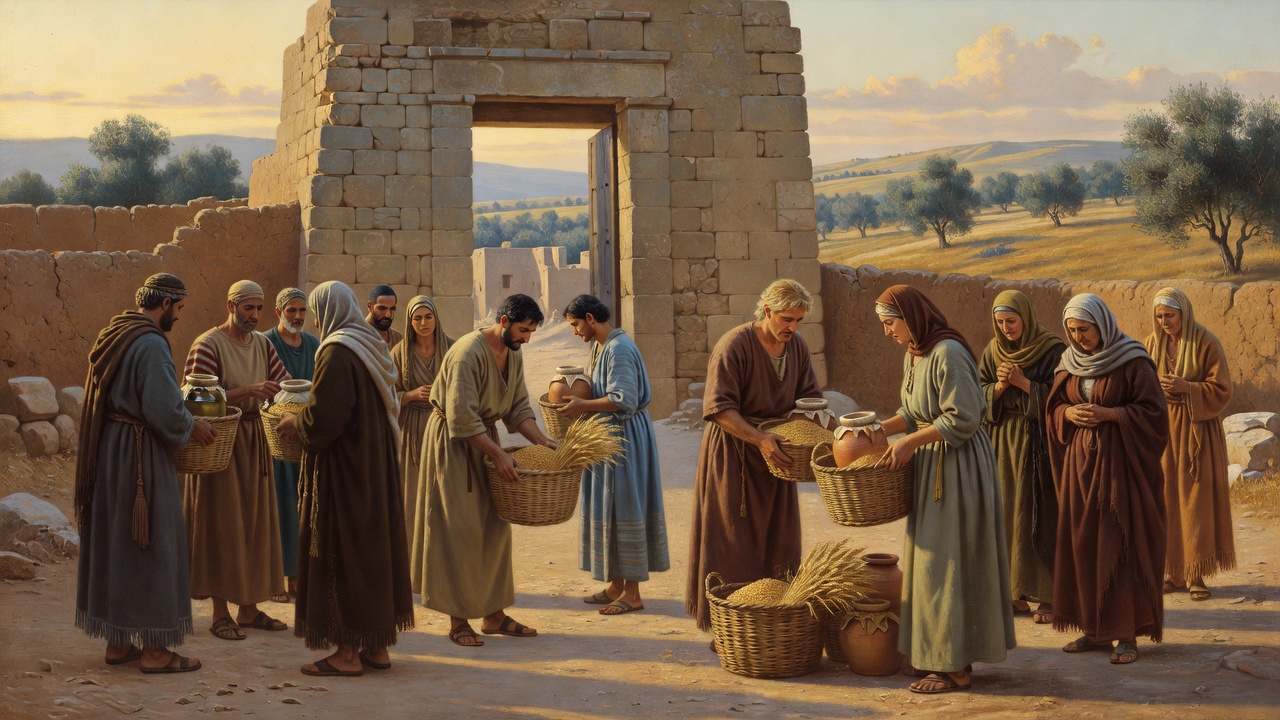
- Every third year, the annual tithe was gathered and stored within local towns rather than taken to the central sanctuary. This food was set aside to support community members without land inheritances, specifically Levites, resident foreigners, orphans, and widows.Sources: the Bible text itself
Notes written with AI assistance from open sources (Theographic Bible Metadata, CC BY-SA 4.0; Easton’s Bible Dictionary, public domain) and reviewed before publishing.
Credits and license for this translation
Baibal Olcim
The Holy Bible in the Matupi Chin language of Mynmar. Matupi Chin Standard Bible
Public Domain
Language: Matupi Chin (Chin, Matu)
Published in Mynmar, which is not a signatory to international copyright treaties. Copyright may apply locally in Mynmar, where this is released under a Creative Commons Attribution Share-Alike 4.0 license.
2026-09-21
Source: http://ebible.org/hltmcsb/ · eBible.org