Amos 8
Baibal Olcim · Tap a verse to see its cross-references.
Khohal kah Boem
1Ka Boeipa Yahovah loh kai te n'tueng vaengah khohal kam boem tarha om. 2Te vaengah, “Amos balae na hmuh?” a ti tih, “Khohal boem,” ka ti nah.
Te dongah BOEIPA loh kai taengah, “Ka pilnam Israel kah a bawtnah a pha coeng, anih te poeng hamla koep ka koei mahpawh. 3Khothaih ah bawkim kah laa neh rhung uh ni. Te tah ka Boeipa Yahovah kah olphong ni. Hmuen takuem ah rhok te a huep la muep a voeih ni. 4Khodaeng aka hloem tih khohmuen kah mangdaeng kodo aka kangkuen te he he hnatun uh. 5“Me vaengah nim hla a boeih vetih cangtham n'yoih ve. Sabbath laeh vetih cangpai n'ong laeh mako. Cangnoek khaw rhaidaeng la, shekel khaw a puehkan mai la, thailatnah te cooi aka khun mai la. 6Tattloel te tangka neh, khodaeng khaw khokhom neh lai ham tih cang hi yoih ham,” a thui. 7BOEIPA loh Jakob kah hoemdamnah neh a toemngam coeng. Amih kah khoboe boeih te a yoeyah la ka hnilh mahpawh. 8He dongah nim diklai a tlai pawt eh? A khuikah khosa boeih loh nguekcoi vetih a pum la sokko bangla phul ni. A samboek tih a sul phoeiah tah Egypt sokko bangla rhaeng ni. 9Te khohnin ah ka Boeipa Yahovah kah olphong pai ni. Khomik te khothun ah ka tlak sak vetih khothaih khosae ah diklai te ka hmuep sak ni. 10Nangmih kah khotue te nguekcoinah la, na lumlaa boeih rhahlung la ka maelh ni. Cinghen tom ah tlamhni kan yen vetih na lu boeih te lungawng la om ni. Anih te oingaih cangloeng kah nguekcoinah bangla, a hmailong te khahing khohnin bangla ka khueh ni. 11Ka Boeipa Yahovah kah olphong hnin pai coeng he. Te dongah diklai ah khokha ka tueih ni. Buh kah khokha pawt tih tui dongah tuihalh bal moenih. Tedae BOEIPA ol yaak nah te ni. 12Tuitunli lamloh tuitunli duela hinghuen uh ni. BOEIPA ol te tlap hamla tlangpuei lamloh khocuk duela hil uh cakhaw hmu uh mahpawh. 13Te khohnin ah tah oila sakthen neh tongpang khaw tuihalh dongah saa uh ni. 14Samaria kah dumlai neh aka toemngam rhoek long khaw, “Dan nang kah pathen tah hing tih Beersheba longpuei khaw hing,” ti uh. Tedae cungku vetih koep thoo mahpawh.
Did you know?
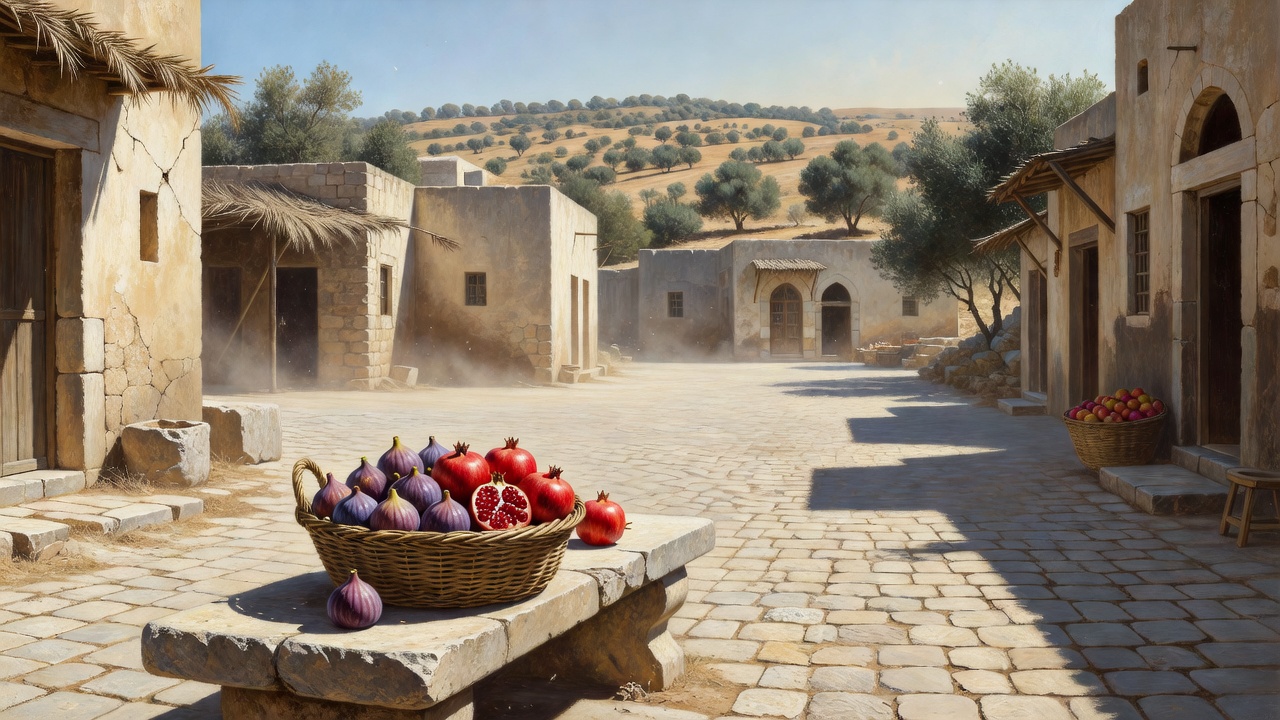
The Basket of Summer Fruit and Coming Famine
- Amos condemned merchants who grew impatient with religious observances like the New Moon and the Sabbath because they paused commerce. These traders sought to cheat buyers by shrinking the measure for grain (the ephah), increasing the price (the shekel), using rigged scales, and selling worthless chaff to desperate buyers.Sources: the Bible text itself
- To describe the catastrophic shaking and upheaval awaiting the land, the prophet compared the ground rising and receding to the annual flooding of the Nile River in Egypt.Sources: the Bible text itself · Egypt
- Amos warned of a severe spiritual crisis: a famine not of bread or water, but of hearing the words of the Lord. He pictured people wandering in exhaustion from sea to sea across the land in search of divine guidance without finding it.Sources: the Bible text itself
Notes written with AI assistance from open sources (Theographic Bible Metadata, CC BY-SA 4.0; Easton’s Bible Dictionary, public domain) and reviewed before publishing.
Places in this chapter
- Egypt · 30.129, 31.308 · verse 8
- Nile · Today: Nile River · 31.465, 30.367 · verse 8
- Dan · Today: Tel Dan · 33.249, 35.652 · verse 14
- Samaria · 32.276, 35.195 · verse 14
Only places identified with high confidence are shown (90% or more according to the scholarly sources compiled by OpenBible). Period map: DARE (Digital Atlas of the Roman Empire), CC BY 4.0; modern map: © OpenStreetMap contributors; places: OpenBible.info (CC BY 4.0).
Credits and license for this translation
Baibal Olcim
The Holy Bible in the Matupi Chin language of Mynmar. Matupi Chin Standard Bible
Public Domain
Language: Matupi Chin (Chin, Matu)
Published in Mynmar, which is not a signatory to international copyright treaties. Copyright may apply locally in Mynmar, where this is released under a Creative Commons Attribution Share-Alike 4.0 license.
2026-09-21
Source: http://ebible.org/hltmcsb/ · eBible.org