Amos 6
Baibal Olcim · Tap a verse to see its cross-references.
Zion te Lungma
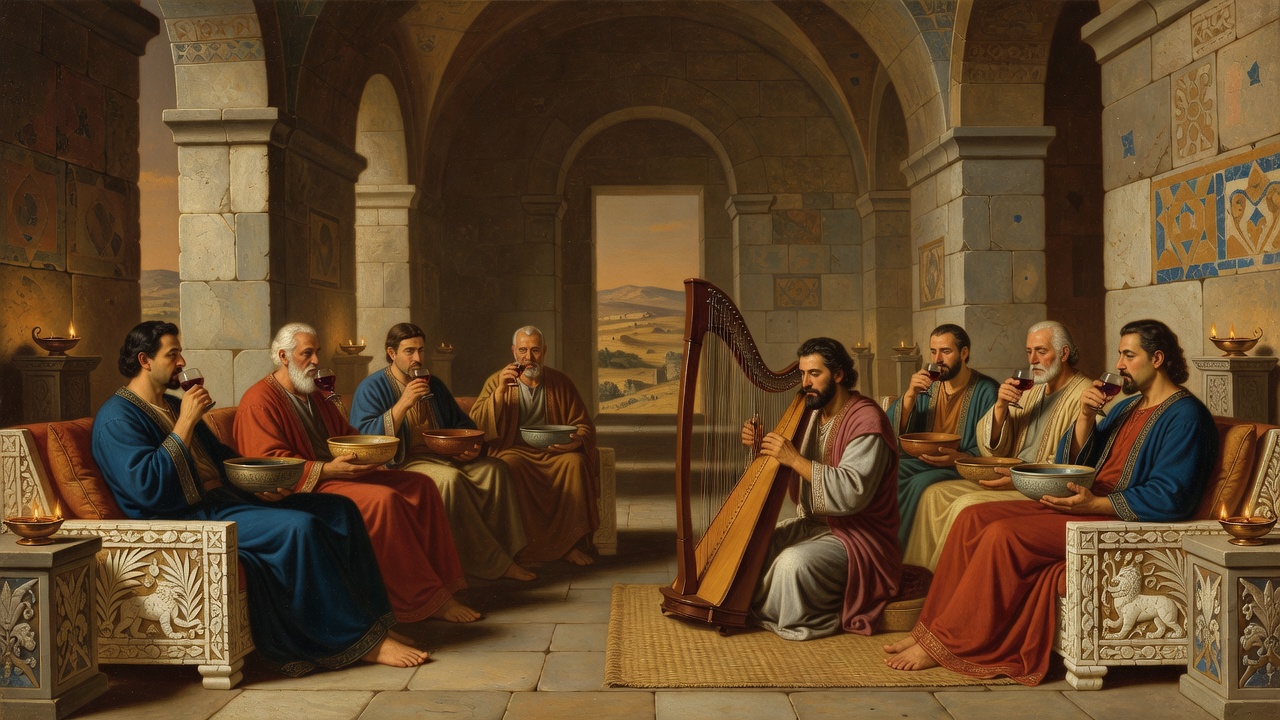
1Anunae Zion dongah mongkawt tih Samaria tlang ah aka pangtung rhoek aih. Namtom kah a tanglue a phoei dongah amih taengla Israel imkhui te kun uh van. 2Kalneh la cet uh lamtah hmu lah. Te lamloh Khamath Rabbah la cet uh lamtah Philisti kah Gath la suntla uh. Te kah ram tah then ngai tih a khorhi te na khorhi lakah len a? 3Yoethae khohnin ham rhoe tih kuthlahnah hmuen la mop uh. 4Vueino thingkong dongah yalh uh tih a soengca dongah cawklawih uh. Boiva khui lamkah tuca neh sael-im khui lamkah saelca aka ca rhoek. 5David bangla thangpa ol te a oei uh tih lumlaa tumbael te amamih ham a moeh uh. 6Misurtui te baelcak dongah a ok uh tih situi tanglue neh koelh uh dae Joseph kah pocinah dongah a kothae uh pawh. 7Te dongah boeilu a poelyoe bangla a poelyoe uh pawn vetih cawklawih rhoek kah rhok nong ni.
Israel kah Hoemdamnah
8Ka Boeipa Yahovah loh a hinglu neh a toemngam coeng. He tah caempuei Pathen BOEIPA kah olphong ni. Jakob kah hoemdamnah te ka lok lo tih a impuei khaw ka hmuhuet. Te dongah khopuei neh a cungkuem te ka khaih ni. 9Tedae ana om saeh, im pakhat ah hlang parha sueng mai cakhaw duek uh ni. 10Anih te a panoe neh a rhok aka soem loh a khuen tih im lamloh a rhuh a khuen vaengah khaw im thael kah taengah, “Nang taengah om pueng a?” a ti nah ni. Te vaengah, “ Lunglilungla la,” a ti vetih, “Saah lah, BOEIPA ming te poek ham moenih,” a ti ni. 11BOEIPA loh a uen dongah im len te a pil la, im yit te a nuei la a boh pawn ni ke. 12Thaelpang dongah marhang yong vetih saelhung nen khaw a thoe rhet aya? Te dongah tiktamnah te sue la, duengnah thaihtae te pantong la na poeh sak uh. 13“Mah thaa neh mah hamla a ki n'loh moenih a?,” aka ti rhoek te Lodebar ah a kohoe uh. 14He tah caempuei Pathen BOEIPA kah olphong ni. Israel imkhui nang taengah namtom ka thoh coeng ne. Te dongah nangmih te Khamath a pawk nah lamloh Arabah soklong duela n'nen uh ni.
Did you know?
Complacency and Impending Exile
- Amos addresses the ruling elite who felt secure in both Zion, the fortified hill of Jerusalem, and Mount Samaria, the capital of the northern kingdom built on an elevated summit by King Omri. Despite the natural defenses and prestige of these cities, their leaders are warned that their ease and overconfidence would end in captivity.Sources: Zion · Samaria · the Bible text itself
- The prophet challenges Israel to look at renowned foreign cities such as Calneh near the Euphrates, Hamath on the Orontes in Upper Syria, and the Philistine stronghold of Gath. These neighboring powers were neither smaller nor less protected, yet they could not escape destruction.Sources: Calneh · Hamath · Gath · the Bible text itself
- Amos criticizes the aristocracy for indulging in extravagant banquets, resting on beds inlaid with ivory, and improvising music on harps like David, all while ignoring the impending ruin of Joseph. The name Joseph here designates the northern tribes of Israel, whose moral decay and social injustice were neglected by their wealthy leaders.Sources: David · Joseph (son of Jacob) · the Bible text itself
Notes written with AI assistance from open sources (Theographic Bible Metadata, CC BY-SA 4.0; Easton’s Bible Dictionary, public domain) and reviewed before publishing.
Places in this chapter
- Samaria · 32.276, 35.195 · verses 1, 8
- Zion · Today: Jerusalem · 31.777, 35.234 · verse 1
- Hamath · Today: Hama · 35.136, 36.750 · verse 2
- Philistia · 31.664, 34.546 · verse 2
Only places identified with high confidence are shown (90% or more according to the scholarly sources compiled by OpenBible). Period map: DARE (Digital Atlas of the Roman Empire), CC BY 4.0; modern map: © OpenStreetMap contributors; places: OpenBible.info (CC BY 4.0).
Credits and license for this translation
Baibal Olcim
The Holy Bible in the Matupi Chin language of Mynmar. Matupi Chin Standard Bible
Public Domain
Language: Matupi Chin (Chin, Matu)
Published in Mynmar, which is not a signatory to international copyright treaties. Copyright may apply locally in Mynmar, where this is released under a Creative Commons Attribution Share-Alike 4.0 license.
2026-09-21
Source: http://ebible.org/hltmcsb/ · eBible.org