2 Corinthians 4
Baibal Olcim · Tap a verse to see its cross-references.
Olthangthen kah Hmaivang
1Te dongah mamih ng'rhen tih bibi n'dang uh he n'thathae pawh. 2Tedae yahkoi kah olhuep te n'thaek uh coeng. Pathen kah olka he rhaithinah neh pongpa pawt tih a tuengkhuep moenih. Tedae oltak kah a phoenah lamloh Pathen hmaiah neh hlang rhoek kah mingcimnah cungkuem dongah mah neh mah n'oep uh coeng. 3Tedae mamih kah olthangthen he muekdah la om ngawn cakhaw aka paci rhoek taengah ni muekdah laa om. 4Ta kumhal kah pathen tah amih ah om tih aka tangnahmueh rhoek kah poeknah te a dael sak. Te vaengah Khrih thangpomnah olthangthen kah khoval te aa voelpawh. Amah tah Pathen kah mueimae ni. 5Kamamih kawng pawt tih Jesuh Khrih Boeipa ni ka hoe uh. Jesuh kongah kaimih khaw nangmih sal la ka om uh. 6Pathen loh a thui dongah vangnah tah yinnah lamloh ha vang. Amah loh Jesuh Khrih kah maelhmai neh Pathen kah thangpomnah, mingnah khoval te mamih thinko ah a sae sak.
Lai Hno Dongkah Khohrhang
7Hekah khohrhang he diklai hno dongah tah ng'khueh uh coeng. Te daengah ni thaomnah dongkah a puehkan tah Pathen kah koe la om vetih mamih kah la a om pawt eh. 8A cungkuem loh n'lawn uh dae ka khawk uh moenih. Ka ingang uh dae a tal uh moenih. 9Hnaemtaek dae m'phap moenih. N'tloeng sut dae m'paci uh moenih. 10Jesuh kah dueknah he pum dongah puet m'phueih daengah ni Jesuh kah hingnah loh mamih pum dongah a phoe van eh. 11Mamih aka hing rhoek tah Jesuh kongah dueknah taengah m'voeih taitu. Te daengah ni Jesuh kah hingnah long khaw aka duek thai mamih pumsa dongah a phoe eh. 12Te dongah dueknah loh kaimih ah, hingnah loh nangmih ah pongthoo coeng. 13Tangnah mueihla amah te aka khueh long tah a daek tangtae bangla ka tangnah tih ka thui. Kaimih loh ka tangnah uh dongah ka thui uh bal. 14Boeipa Jesuh te thoo tila ming uh. Kaimih khaw Jesuh neh n'thoh vetih nangmih taengah m'pai sak ni. 15A cungkuem he nangmih ham ni. Te daengah ni lungvatnah loh uemonah te muep a pungtai sak vetih Pathen kah thangpomnah te a baetawt eh. 16Te dongah n'thathae uh pawh. Mamih kah poenghman hlang tah poci ngawn mai cakhaw mamih kaha khui tah a hnin hnin ah tlaihvong uh. 17Te dongah kolkalh kah phacip phabaem aka phoeng long he dungyan thangpomnah kaha khiing te mamih hama puehkan lamloh a phuehkan la a thoeng sak. 18Mamih kah hmuh tangtae dongah pawt tih hmuh pawt te ni m'paelki uh. Hmuh tangtae long he kolkalh om tih hmuh mueh long tah dungyan duela cak.
Did you know?
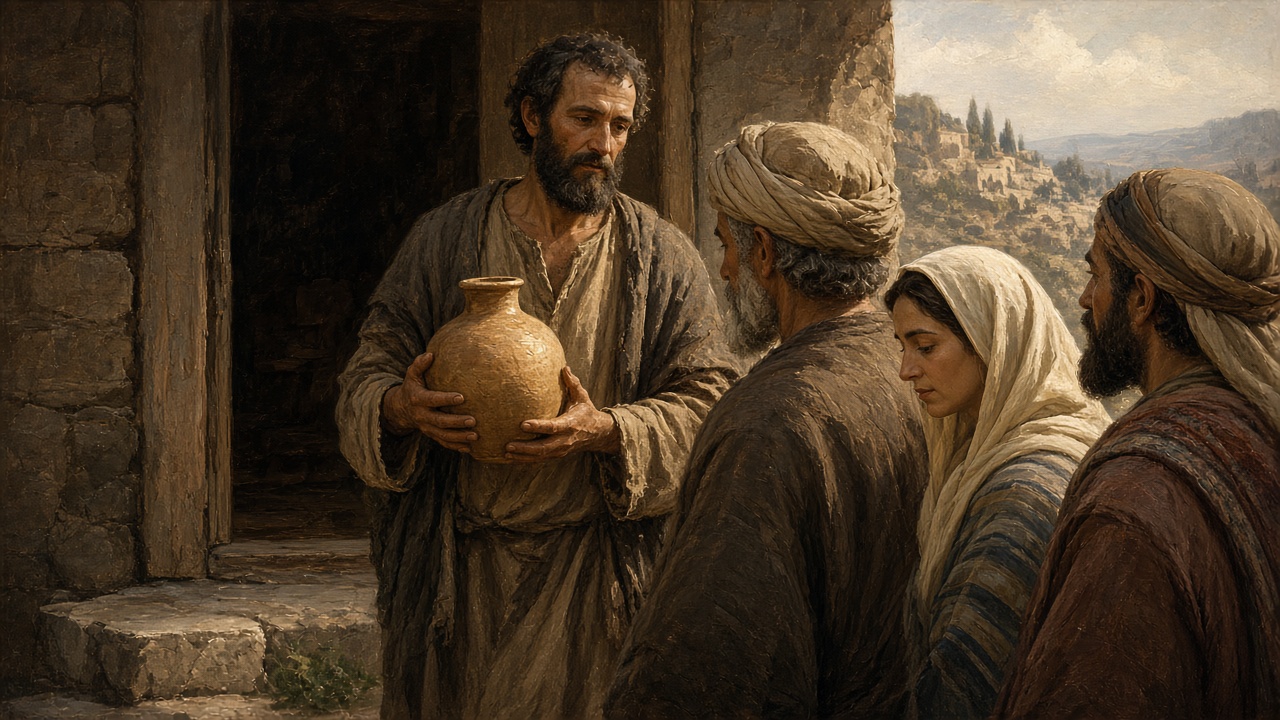
Treasure in Jars of Clay
- In this chapter the speakers say that, because God in his mercy has given them this ministry, they do not lose heart. They have renounced secret and shameful ways: they do not practice deceit or distort the word of God, but by the open proclamation of the truth they commend themselves to every person's conscience in the sight of God.Sources: the Bible text itself
- Their message is pictured as a treasure held in jars of clay, so that this surpassingly great power is shown to be from God and not from them. The same contrast runs through their hardships: hard pressed on all sides but not crushed, perplexed but not in despair, persecuted but not forsaken, struck down but not destroyed.Sources: the Bible text itself
- Light is the chapter's other central image. God, who said, "Let light shine out of darkness," is said to have shone his light in their hearts to give the light of the knowledge of the glory of God in the face of Jesus Christ. They proclaim not themselves but Jesus Christ as Lord, and themselves as servants of those they address, for Jesus' sake; if the gospel is veiled, the text says it is veiled to those who are perishing, whose minds "the god of this age" has blinded.Sources: the Bible text itself
Notes written with AI assistance from open sources (Theographic Bible Metadata, CC BY-SA 4.0; Easton’s Bible Dictionary, public domain) and reviewed before publishing.
Credits and license for this translation
Baibal Olcim
The Holy Bible in the Matupi Chin language of Mynmar. Matupi Chin Standard Bible
Public Domain
Language: Matupi Chin (Chin, Matu)
Published in Mynmar, which is not a signatory to international copyright treaties. Copyright may apply locally in Mynmar, where this is released under a Creative Commons Attribution Share-Alike 4.0 license.
2026-09-21
Source: http://ebible.org/hltmcsb/ · eBible.org