1 Kings 1
Baibal Olcim · Tap a verse to see its cross-references.

About this book
About 1 Kings
- Easton's Bible Dictionary (1897) treats the authorship of the books of Kings as uncertain. A tradition that Jeremiah wrote them is, in Easton's view, supported by passages almost identical with parts of Jeremiah and by events Jeremiah knew personally, yet Easton thinks it more probable that Ezra, after the Captivity, compiled the books from earlier documents, perhaps written by David, Solomon, Nathan, Gad, and Iddo. Easton dates the composition between 561 B.C., when Jehoiachin was released from captivity by Evil-merodach, and 538 B.C., the decree of Cyrus.Sources: Easton: Kings, The Books of
- Easton says these books contain the annals of the kingdom from Solomon's accession until Nebuchadnezzar and the Babylonians subdued it, a period he estimates at about 453 years. 1 Kings opens while David is dying: Adonijah, his fourth son, who had become heir-apparent to the throne after the deaths of Amnon and Absalom, has himself proclaimed king, but Nathan and Bathsheba persuade David to enthrone Solomon at once. Solomon, David's son by Bathsheba, whose history is recorded in 1 Kings 1-11, came to the throne, Easton suggests, at about sixteen or eighteen.Sources: Easton: Kings, The Books of · Adonijah · Solomon
- In the Hebrew Scriptures the two books of Kings originally formed one book; the Septuagint first divided them and, with the Vulgate, numbers them as the third and fourth books of Kings, the books of Samuel being the first and second. Easton notes that Chronicles gives greater prominence to the priestly or Levitical office, while Kings gives greater prominence to the royal office, and that in the threefold division of the Scriptures by the Jews these books are ranked among the Prophets. The narrative points to earlier sources: the book of the acts of Solomon and the chronicles of the kings of Judah and of Israel.Sources: Easton: Kings, The Books of
- After Solomon's death the ten tribes revolted and invited Jeroboam, son of Nebat, to be their king; Easton calls him the first king of those tribes and dates his reign from 976 to 945 B.C. He had fled to Egypt under the protection of Shishak I, and later moved his residence from Shechem, his first capital, to Tirzah, which remained the chief residence of Israel's kings until Omri bought the hill of Shomeron from Shemer for two talents of silver and built Samaria. The later narrative includes Ahab, Omri's son and the seventh king of Israel, whose wife was Jezebel: to the calf worship introduced by Jeroboam he added the worship of Baal, and he was severely admonished by the prophet Elijah.Sources: Jeroboam · Tirzah · Samaria · Ahab
Notes written with AI assistance from open sources (Theographic Bible Metadata, CC BY-SA 4.0; Easton’s Bible Dictionary, public domain) and reviewed before publishing.
David kah Hnukkhueng
1Manghai David tah a kum khaw patong la om coeng tih himbai neh a khuk uh akhaw anih ham bae voel pawh. 2Te dongah anih te a sal rhoek loh, “Mamih kah boei manghai ham hula, oila pakhat tlap uh mai saeh. Te vaengah manghai mikhmuh ah mop uh saeh lamtah anih ham hmaiben la om saeh. Te daengah ni na rhang dongah yalh vetih ka boei manghai ham a bae pa eh,” a ti uh. 3Te phoeiah hula sakthen te Israel khorhi khui boeih ah a tlap uh. Te vaengah Shunam nu Abishag te a hmuh uh tih anih te manghai taengla a khuen uh. 4Te hula tah bahoeng a sakthen tih manghai ham hmaiben la om tih manghai te a khut. Tedae manghai loh anih te a hmaiben moenih.
Adonijah Phuel Uh
5Te vaengah Haggith capa Adonijah te phuel uh tih, “Kai ka manghai pawn ni,” a ti. Te dongah amah hamla leng neh marhang caem neh a hmaiah aka yong la hlang sawmnga te a hmoel. 6Tedae a napa kah a tue vaengah, “Balae tih te tlam te na saii,” a ti nah dawk neh anih te a noih moenih. Anih khaw a suisak bahoeng then tih Absalom hnukah a sak. 7Zeruiah capa Joab nen khaw, khosoih Abiathar nen khaw ol a khueh coeng dongah Adonijah te a bom rhoi. 8Tedae khosoih Zadok, Jehoiada capa Benaiah, tonghma Nathan, Shimei, Rei neh David taengkah hlangrhalh rhoek long tah Adonijah taengah om uh pawh. 9Adonijah loh boiva neh saelhung a puetsuet te Enrogel kah, a kaep ah a ngawn. Te vaengah manghai koca khuikah a manuca boeih neh manghai kah sal rhoek, Judah hlang boeih te a khue. 10Tedae tonghma Nathan, Benaiah, a manuca Solomon neh a hlangrhalh rhoek, tah khue pawh.
Nathan neh Bathsheba kah Bihnah
11Te dongah Nathan loh Solomon manu Bathsheba te a voek tih, “Haggith capa Adonijah te manghai coeng tih mamih kah boeipa David loh a ming pawt te na yaak moenih a? 12Te dongah halo lamtah cilsuep neh namah kang uen mai pawn eh. Namah kah hinglu khaw, na capa Solomon kah hinglu khaw hlawt laeh. 13Halo lamtah manghai David te paan laeh. Te vaengah amah te, 'Ka boei manghai namah loh na salnu taengah ol na caeng tih: “Na capa Solomon tah kamah hnukah manghai vetih ka ngolkhoel dongah ngol ni” rhep na ti moenih a? Balae tih Adonijah vik a manghai?' ti nah.
14Manghai ham na thui pah li vaengah namah hnukah tloep ka kun saeh lamtah nang ol te cawt kan duel eh?,” a ti nah.
15Te dongah Bathsheba loh manghai te imkhui la thaeng a paan. Te vaengah manghai tah bahoeng patong coeng tih Shunam nu Abishag tah manghai taengah a thohtat pah. 16Bathsheba te buluk tih manghai te a bawk vaengah tah manghai loh, “Nang te balae?” a ti nah.
17Te phoeiah anih te, “Ka boei namah long ni BOEIPA na Pathen te na toem na ngam. Na salnu taengah khaw, 'Na capa Solomon tah kamah hnukah manghai vetih ka ngolkhoel dongah ngol ni, ' na ti. 18Tedae Adonijah a manghai coeng ke ka boei manghai long khaw na ming moenih a? 19Vaito a puetsuet neh boiva muep a ngawn tih manghai koca boeih, khosoih Abiathar neh caempuei mangpa Joab te a khue. Tedae na sal Solomon tah a khue moenih. 20Ka boei manghai nang, Israel pum kah a mik he nang pum dongla a hoi coeng. Amah yuengla ka boei manghai kah ngolkhoel dongah aka ngol ham te amih taengah thui pah laeh. 21Ka boei manghai te a napa rhoek taengla a khoem uh vaengah tah kamah neh ka capa Solomon te hlangtholh la vik om ve,” a ti nah.
22Manghai taengah a thui li vaengah tonghma Nathan te pakcak ha pawk. 23Te dongah manghai taengla puen uh tih, “Tonghma Nathan ke,” a ti na uh . Te daengah manghai kah mikhmuh la kun tih manghai taengah a maelhmai neh diklai la a bakop pah. 24Te phoeiah Nathan loh, “Ka boei manghai namah loh, 'Adonijah tah kamah yueng la manghai vetih, anih ni ka ngolkhoel dongah aka ngol eh?,’ na ti tang a? 25Tihnin ah suntla mai tih vaito a puetsuet neh boiva khaw muep a ngawn. Manghai koca rhoek boeih neh caempuei mangpa khaw, khosoih Abiathar khaw a khue. Amih te amah neh a caak a ok uh tih, 'Manghai Adonijah tah hing pai saeh,” a ti uh ke. 26Tedae na sal kai kamah neh khosoih Zadok, Jehoiada capa Benaiah, na sal Solomon tah a khue moenih.
27Tahae kah olka he ka boei manghai taeng lamkah ni a. phuet atah na sal khaw na ming sak van kolla. A hnukah ka boei manghai kah ngolkhoel dongah ulae aka ngol eh?” a ti nah.
Solomon tah Manghai La A Pom
28Te phoeiah manghai David loh a doo tih, “Bathsheba te kamah taengla hang khue,” a ti nah.
Te dongah manghai mikhmuh la ha moe tih manghai kah mikhmuh ah a pai pah. 29Te vaengah manghai loh a toemngam tih, “BOEIPA kah hingnah dongah citcai cungkuem lamloh ka hinglu a lat coeng. 30Israel Pathen BOEIPA rhang neh nang taengah rhep ka toemngam bangla, “Na capa Solomon tah kai hnukah manghai ni,” rhep ka ti. Te dongah anih ni kai yueng la ka ngolkhoel dongah a ngol eh. Te tlam ni tahae khohnin ah khaw ka saii eh?,” a ti nah.
31Te vaengah Bathsheba tah a maelhmai neh diklai la buluk tih manghai taengah a bakop pah. Te phoeiah, “Ka boei manghai David tah kumhal duela hing pai saeh,” a ti nah.
32Te phoeiah manghai David loh, “Khosoih Zadok, tonghma Nathan, Jehoiada capa Benaiah te kamah taengla hang khue lah,” a ti. Te dongah amih khaw manghai kah mikhmuh la ha pawk uh. 33Te phoeiah manghai loh amih taengah, “Na boei kah sal rhoek te namah neh puei uh lamtah, kamah kah laak dongah ka capa Solomon te ngol sak. Te phoeiah anih te Gihon la suntlak puei. 34Anih te khosoih Zadok neh tonghma Nathan loh Israel manghai la koelh saeh. Te vaengah tuki te ueng lamtah manghai Solomon tah hing pai saeh,'ti uh. 35Te phoeiah anih te nang khuen tih ha pawk vaengah ka ngolkhoel dongah ngol saeh lamtah kamah yueng la manghai saeh. Anih te ni Israel so neh Judah soah rhaengsang la om ham ka uen,” a ti nah.
36Jehoiada capa Benaiah loh manghai te a doo tih, “Amen, ka boei Pathen Yahovah long khaw, 'Manghai ni, 'ti pai saeh. 37Ka boei manghai taengah Yahovah a om vanbangla Solomon taengah khaw om rhoe om van saeh. A ngolkhoel khaw ka boei manghai David kah ngolkhoel lakah rhoeng ngai saeh,” a ti.
38Te phoeiah khosoih Zadok, tonghma Nathan, Jehoiada capa Benaiah, Kerethi, neh Phelethi te suntla uh. Solomon te manghai David kah laak dongah a ngol sak uh tih Gihon la cet uh. 39Te phoeiah khosoih Zadok loh situi ki te dap khui lamloh a loh tih Solomon te a koelh. Te vaengah tuki te a ueng uh tih pilnam boeih loh, “Manghai Solomon tah hing pai saeh,” a ti uh. 40Pilnam khaw anih hnukah boeih cet uh. Te vaengah pilnam tah phitphoet aka tum neh kohoenah dongah bahoeng a kohoe uh. Amih ol dongah diklai khaw thulh uet.
Adonijah Loh A Yaak
41Adonijah neh a taengkah a khue rhoek boeih loh a yaak uh vaengah buh caak te pak a toeng uh. Tuki ol te Joab loh a yaak vaengah, “Khorha aka hut te ba ol lae?” a ti. 42A thui li vaengah khosoih Abiathar capa Jonathan te pakcak ha pawk. Te dongah Adonijah loh, “Halo lah namah hlang tatthai long ni a then khaw na phong,” a ti nah.
43Jonathan loh a doo tih Adonijah taengah, “Pawh, mamih kah boeipa manghai David loh Solomon te a manghai sak coeng. 44Anih te manghai loh khosoih Zadok, tonghma Nathan, Jehoiada capa Benaiah, Kerethi neh Phelethi te a tueih pah tih manghai kah laak dongah a ngol sak uh. 45Anih te khosoih Zadok neh tonghma Nathan loh Gihon ah manghai la a koelh coeng. Te lamloh kohoe la a caeh uh dongah khorha kah a pang a ngawl ol te ni na yaak uh. 46Tedae Solomon tah mangpa ngolkhoel dongah ngol bal pueng.
47Te vaengah manghai kah sal rhoek tah ka boei rhoek kah manghai David te uem ham ha pawk uh tih, 'Namah kah Pathen, Pathen amah loh nang ming lakah Solomon ming te thang sak saeh. A ngolkhoel te na ngolkhoel lakah pueh pah saeh,’ a ti uh vaengah manghai tah thingkong dongah bakop. 48Te vaengah manghai long khaw, “Ka ngolkhoel dongah aka ngol tih ka mik loh hmuh ham khohnin aka pae Israel Pathen BOEIPA tah a yoethen pai,’ a ti,” a ti nah.
49Te vaengah Adonijah neh a khue boeih khaw lakueng neh thoo uh tih hlang boeih loh amah longpuei la cet uh. 50Adonijah tah a rhih coeng dongah Solomon mikhmuh lamloh thoo. Te phoeiah cet tih hmueihtuk ki te a tuuk.
51Te dongah Solomon taengah a puen pah tih, “Adonijah loh manghai Solomon te a rhih coeng ke. Hmueihtuk ki te a tuuk tih, 'Tihnin kah bangla kai taengah toemngam saeh lamtah manghai Solomon loh a sal te cunghang neh duek sak pawt khaming,’ a ti ne,” a ti nah.
52Te vaengah Solomon loh, “Tatthai ca la a om atah a sam te diklai la rhul mahpawh. Tedae a khuikah boethae te a tueng daengah ni a. duek eh?,” a ti nah.
53Manghai Solomon loh a tah daengah hmueihtuk dong lamloh amah rhum tih kun. Tedae manghai Solomon taengah a bakop vaengah tah anih te Solomon loh, “Namah im la cet,” a ti nah.
Did you know?
The Succession to David's Throne
- As David's oldest surviving son after the deaths of Amnon and Absalom, Adonijah claimed the royal succession, backed by the military commander Joab and the high priest Abiathar. However, David chose his younger son Solomon, who was supported by the prophet Nathan, the priest Zadok, and the royal bodyguard under Benaiah.Sources: Adonijah · Solomon · the Bible text itself
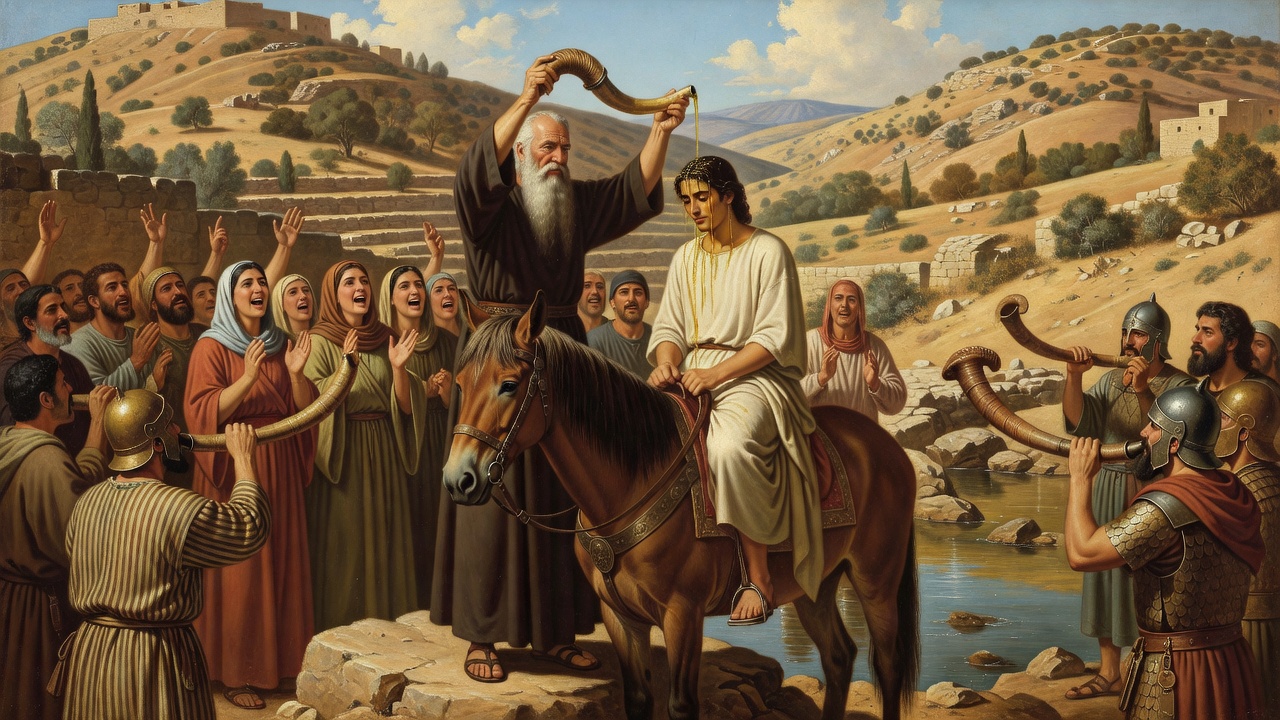
- Riding the king's own mule was a decisive public declaration of royal authority. By David's explicit instruction, Solomon was escorted down to the spring of Gihon, where Zadok anointed him king with oil taken from the tabernacle to the sound of ram's horns and popular celebration.Sources: Gihon · Zadok · the Bible text itself
- Upon hearing of Solomon's public coronation, Adonijah fled in terror and sought asylum by taking hold of the horns of the sacrificial altar. Solomon granted him conditional clemency, sparing his life so long as he proved himself a worthy man.Sources: Adonijah · the Bible text itself
Notes written with AI assistance from open sources (Theographic Bible Metadata, CC BY-SA 4.0; Easton’s Bible Dictionary, public domain) and reviewed before publishing.
Places in this chapter
- Shunem · Today: Sulam · 32.606, 35.334 · verse 3
- Serpent’s Stone · Today: within 100 m of Bir Ayub · 31.767, 35.236 · verse 9
- Gihon · Today: Gihon Spring · 31.773, 35.236 · verses 33, 38, 44, 45
- Jerusalem · 31.777, 35.234 · verse 40
Only places identified with high confidence are shown (90% or more according to the scholarly sources compiled by OpenBible). Period map: DARE (Digital Atlas of the Roman Empire), CC BY 4.0; modern map: © OpenStreetMap contributors; places: OpenBible.info (CC BY 4.0).
Credits and license for this translation
Baibal Olcim
The Holy Bible in the Matupi Chin language of Mynmar. Matupi Chin Standard Bible
Public Domain
Language: Matupi Chin (Chin, Matu)
Published in Mynmar, which is not a signatory to international copyright treaties. Copyright may apply locally in Mynmar, where this is released under a Creative Commons Attribution Share-Alike 4.0 license.
2026-09-21
Source: http://ebible.org/hltmcsb/ · eBible.org