Revelation 6
Baibal Olcim · Tap a verse to see its cross-references.
Kutnoek Pakhat
1Tuca loh kutnoek parhih khuikah pakhat a ong vaengah ka hmuh. Te vaengah mulhing pali khuikah pakhat loh rhaek ol bangla ka yaak tih, “Ha lo lah,” a ti. 2Te vaengah marhang bok lawt ka hmuh. A soah aka ngol loh lii a pom. Rhuisam khaw anih te a paek coeng. Te dongah aka noeng longtah cet coeng tih noeng hamla om coeng.
Kutnoek Pabae
3Kutnoek pabae te a ong vaengah mulhing pabae kah, “Ha lo lah,” a ti te ka yaak. 4Te vaengah marhang ling pakhat ha pawk tih a soah aka ngol te diklai lamkah rhoepnah te lat tih khat neh khat ngawn sak ham a paek. Te dongah anih te cunghang len a paek.
Kutnoek a Pathum
5Kutnoek pathum te a ong vaengah a pathum nah mulhing loh, “Ha lo lah,” a ti te ka yaak. Te vaengah marhang muem pakhat lawt ka hmuh. A soah aka ngol loh a kut ah coi a pom. 6Te phoeiah mulhing pali lakli ah ol pakhat bangla ka yaak tih, “Cang sum at denari pakhat la, cangtun sum thum ah denari pakhat la, situi neh misurtui te khaw pat sak boeh,” a ti.
Kutnoek Pali
7Kutnoek pali te a ong vaengah a pali nah mulhing kah, “Ha lo lah,” a ti ol te ka yaak. 8Te vaengah marhang a pol lawt ka hmuh. A sokah aka ngol tah a ming te dueknah la om tih Saelkhui loh anih te a vai. Amih te diklai pali ah pakhat sokah, thunglang neh, khokha neh, dueknah neh, diklai satlung neh ngawn hamla saithainah a paek.
Kutnoek a Panga
9Kutnoek panga te a ong vaengah Pathen kah olka neh te olka ham laipainah aka khueh rhoek kongah a ngawn uh kah hinglu rhoek te hmueihtuk hmuiah ka hmuh. 10Te vaengah ol ue la pang uh, “Me hil nim, hlangcim neh oltak Boeipa, diklai hman khosa rhoek taengkah kaimih thii te laitloek tih na thuung mahpawt nim,” a ti uh.
11Te vaengah amih te hnikul a bok rhip a paek tih a sal puei rhoek khaw, a manuca rhoek khaw, amih vanbangla ngawn ham aka om rhoek te khaw a cup uh duela rhaih ah duem uh dae tila amih te a thui pah.
Kutnoek a Parhuk
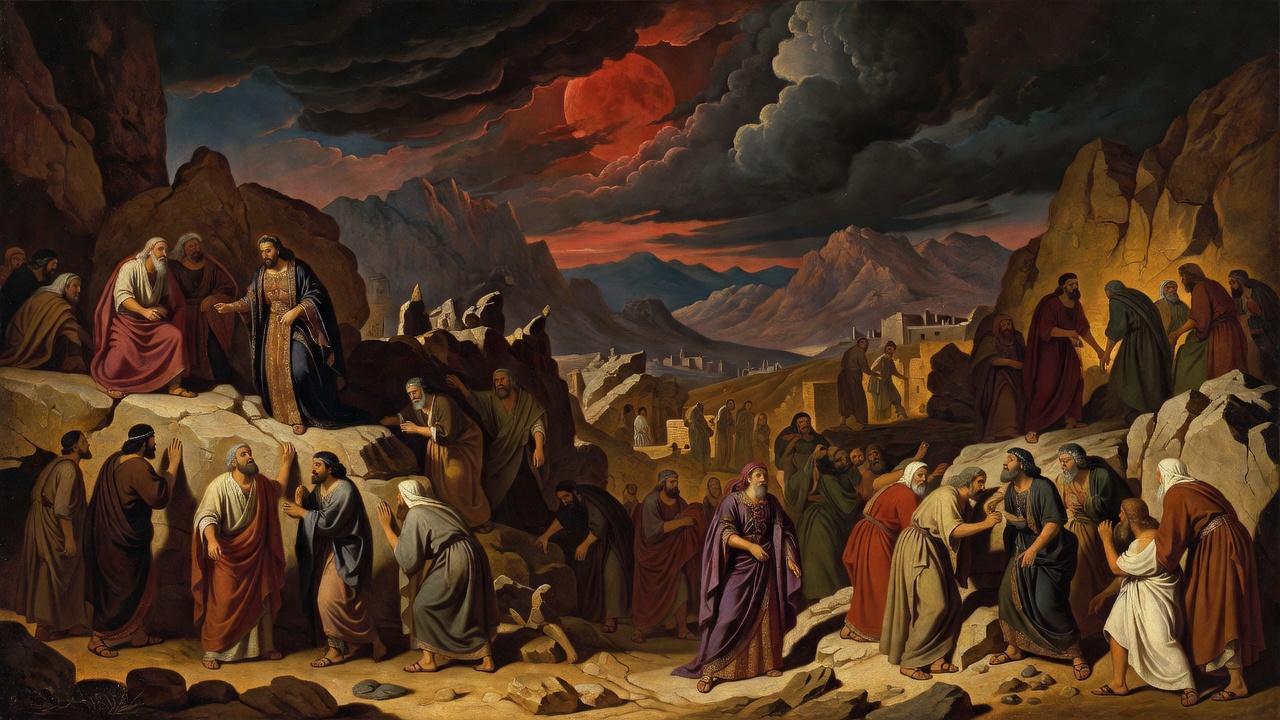
12Kutnoek parhuk te a ong vaengah ka sawt hatah lingluei muep hinghuen tih khomik te tlamhni mulsui bangla a mukhut la vik poeh. Hla te khaw thii bangla boeih om. 13Vaan kah aisi rhoek tah diklai la tla. Thaibu haengkang a voeih bangla khohli loh mat a hinghuen. 14Vaan tah cayol a yol bangla khum. Tlang neh sanglak boeih loh a hmuen te a phawt uh. 15Te vaengah diklai kah manghai rhoek long khaw, hlanglen rhoek long khaw, rhalboeipa rhoek long khaw, kuirhang rhoek long khaw, thaom rhoek long khaw, sal neh aka loeih rhoek boeih loh amamih te lungko khui neh tlang kah lungpang khuiah thuh uh. 16Te phoeiah tlang neh lungpang te, kaimih soah ha tla lamtah ngolkhoel soah aka ngol kah maelhmai lamkah neh tuca kah kosi lamloh kaimih n'thuh dae. 17A kosi khohnin puei ha pawk dongah ulae aka pai thai eh?,” a ti uh.
Did you know?
The Opening of the Six Seals
- The first four seals reveal four riders on white, bright red, black, and pale green horses, summoned one by one by the four living creatures. Each horseman brings a distinct affliction across the earth, ranging from conquest and the loss of peace to widespread famine, plague, and death.Sources: the Bible text itself
- The third horseman holds a pair of scales, accompanied by a proclamation setting the price of a quart of wheat or three quarts of barley at a denarius, reflecting severe inflation and food rationing while oil and wine are preserved.Sources: the Bible text itself
- When the fifth and sixth seals are opened, the focus shifts to the souls of slain believers waiting under the altar, followed by immense cosmic and earthly upheavals that lead people of every social station to hide in mountain caves.Sources: the Bible text itself
Notes written with AI assistance from open sources (Theographic Bible Metadata, CC BY-SA 4.0; Easton’s Bible Dictionary, public domain) and reviewed before publishing.
Credits and license for this translation
Baibal Olcim
The Holy Bible in the Matupi Chin language of Mynmar with Strong's numbers
Public Domain
Language: Matupi Chin (Chin, Matu)
Published in Mynmar, which is not a signatory to international copyright treaties. Copyright may apply locally in Mynmar.
2026-07-16
Source: http://ebible.org/hlt/ · eBible.org