Psalms 87
Baibal Olcim · Tap a verse to see its cross-references.
Zion, Pathen Khopuei
Korah Koca rhoek kah Tingtoeng Laa
1Tlang cim dongah a khoengim aka sut tih,
2Jakob tolhmuen boeih lakah Zion vongka rhoek aka lungnah BOEIPA kah,
3Pathen khopuei namah te n'thangpom a ti pai. Selah
4Kai aka ming rhoek taengah Rahab neh Babylon he ka thoelh ni. Tekah khopuei long ni Philistia, Tyre neh Kusah khaw a sak ne.
5Zion te khaw pakhat phoeiah pakhat loh, “Anih loh n'cun dongah Khohni loh a thoh bitni,” a ti uh ni.
6Tekah a sak pilnam te BOEIPA loh a tae vetih ming a daek ni. Selah
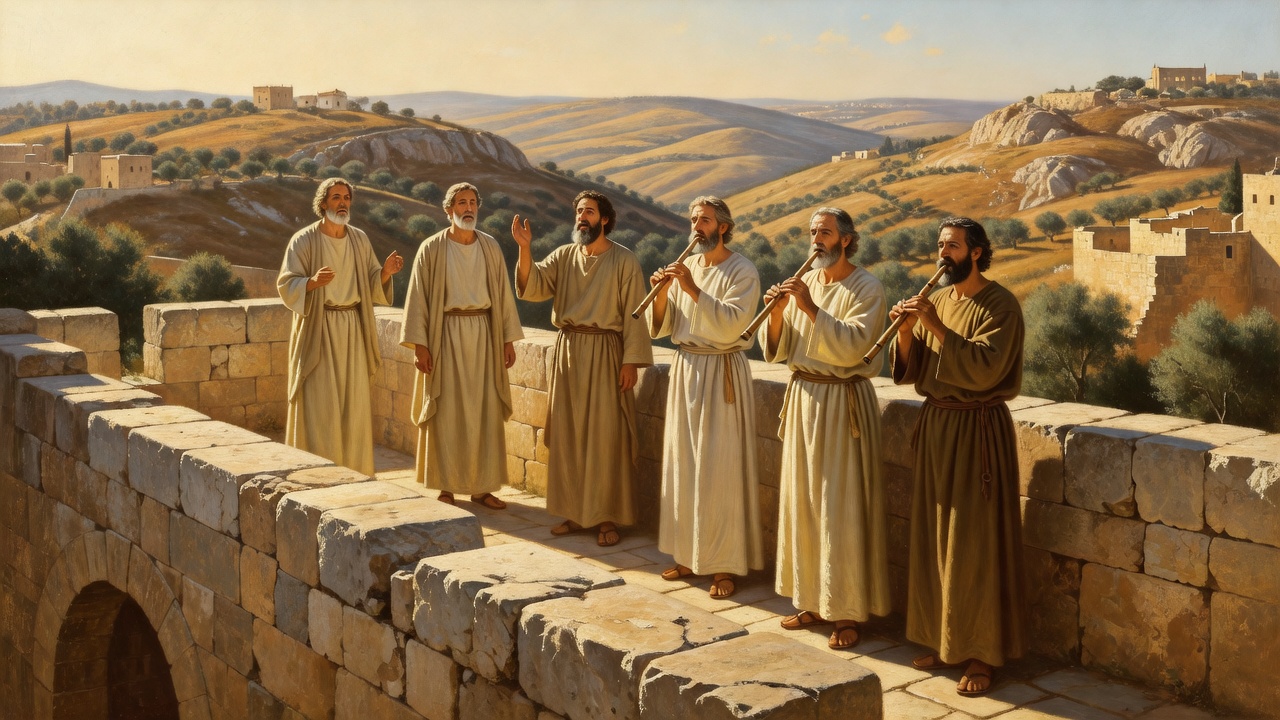
7Te dongah ka tuisih boeih loh namah dongah lamcawn bangla hlai uh thae.
Did you know?
Zion and the Nations
- In Psalm 87, foreign and historically rival regions—including Babylon, Philistia, Tyre, and Cush—are depicted as being registered as native citizens born in Zion, the city of God.Sources: the Bible text itself · Zion · Tyre · Babylon
- The name 'Rahab' in verse 4 is a poetic Hebrew term meaning insolence or pride, used in biblical poetry as a symbolic designation for Egypt.Sources: Rahab · the Bible text itself
- The psalm is attributed to the 'sons of Korah,' a Levitical group that provided musical leadership in Jerusalem centuries after their ancestor Korah led a rebellion in the wilderness.Sources: Korah (Levite) · the Bible text itself
Notes written with AI assistance from open sources (Theographic Bible Metadata, CC BY-SA 4.0; Easton’s Bible Dictionary, public domain) and reviewed before publishing.
Places in this chapter
- Zion · Today: Jerusalem · 31.777, 35.234 · verses 2, 5
- Babylon · 32.543, 44.422 · verse 4
- Cush · Today: Cush 1 · 16.935, 33.751 · verse 4
- Egypt · 30.129, 31.308 · verse 4
- Jerusalem · 31.777, 35.234 · verses 4, 6, 7
- Philistia · 31.664, 34.546 · verse 4
- Tyre · 33.271, 35.196 · verse 4
Only places identified with high confidence are shown (90% or more according to the scholarly sources compiled by OpenBible). Period map: DARE (Digital Atlas of the Roman Empire), CC BY 4.0; modern map: © OpenStreetMap contributors; places: OpenBible.info (CC BY 4.0).
Credits and license for this translation
Baibal Olcim
The Holy Bible in the Matupi Chin language of Mynmar with Strong's numbers
Public Domain
Language: Matupi Chin (Chin, Matu)
Published in Mynmar, which is not a signatory to international copyright treaties. Copyright may apply locally in Mynmar.
2026-07-16
Source: http://ebible.org/hlt/ · eBible.org