Psalms 53
Baibal Olcim · Tap a verse to see its cross-references.
Hlangtholh kah Mueimae
Aka mawt ham Mahalath dongkah David hlohlai
1Hlang ang loh amah lungbuei neh Pathen om pawh a ti. A poci uh dongah dumlai la tueilaeh kap tih, a then aka saii om pawh.
2Vaan lamkah Pathen loh hlang ca rhoek te hmuh hamla a dan. Pathen aka toem lungming khaw om van nim?
3Anih loh hlang boeih te tun a balkhong sak tih a rhonging uh coeng dongah hno then aka saii om pawh. Pakhat khaw om pawh.
4Boethae saii tih buh caak bangla ka pilnam aka yoop rhoek loh Pathen a khue uh pawt te ming uh pawt nim?
5Nang aka rhaeh thil kah rhuhrhong te Pathen loh a yaal dongah birhihnah om pawt dae birhihnah neh birhih uh. Amih te Pathen loh a hnawt dongah yah a bai.
6Amah loh Israel kah khangnah te Zion lamkah han khuen tih a pilnam kah thongtla te Pathen loh ham bal puei vaengah Jakob omngaih saeh lamtah Israel kohoe saeh.
Did you know?
A Reflection on Folly and Deliverance
- The psalm depicts God observing humanity from heaven to see if any seek Him, observing that all have turned aside and become corrupt.Sources: the Bible text itself
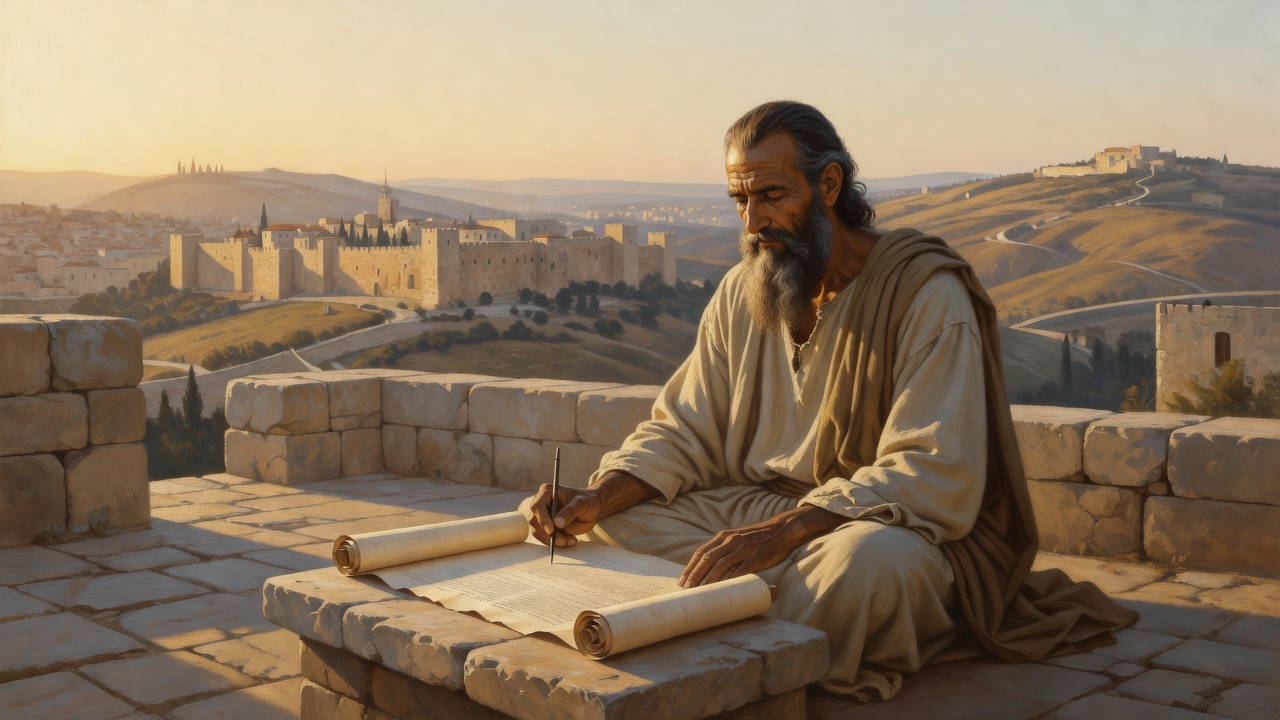
- The closing verse calls for salvation to come from Zion, the south-eastern hill of Jerusalem where David established his citadel and palace after capturing it from the Jebusites.Sources: the Bible text itself · Zion
- The poem concludes by pairing the names Jacob and Israel in a call for rejoicing, recalling the patriarch Jacob, the son of Isaac, who also bore the name Israel.Sources: the Bible text itself · Jacob (Israel)
Notes written with AI assistance from open sources (Theographic Bible Metadata, CC BY-SA 4.0; Easton’s Bible Dictionary, public domain) and reviewed before publishing.
Places in this chapter
- Zion · Today: Jerusalem · 31.777, 35.234 · verse 6
Only places identified with high confidence are shown (90% or more according to the scholarly sources compiled by OpenBible). Period map: DARE (Digital Atlas of the Roman Empire), CC BY 4.0; modern map: © OpenStreetMap contributors; places: OpenBible.info (CC BY 4.0).
Credits and license for this translation
Baibal Olcim
The Holy Bible in the Matupi Chin language of Mynmar with Strong's numbers
Public Domain
Language: Matupi Chin (Chin, Matu)
Published in Mynmar, which is not a signatory to international copyright treaties. Copyright may apply locally in Mynmar.
2026-07-16
Source: http://ebible.org/hlt/ · eBible.org