Matthew 11
Baibal Olcim · Tap a verse to see its cross-references.
Baptistma Johan a Oep
1Jesuh loh a hnukbang rhoek hlainit a uen te a khah vaengah, amamih kah khopuei rhoek ah thuituen ham neh hoe ham te te lamloh thoeih. 2Te vaengah Khrih kah bibi boeih te Johan loh thongim khui ah a yaak tih a hnukbang rhoek te a tueih. 3Te vaengah, “Namah ah naka pawk, a tloe a ka lamso eh?,” patoeng a ti nah.
4Jesuh loh amih te a doo tih, “ Cet uh lamtah na hmuh neh na yaak te Johan taengla puen pa uh. 5Mikdael loh a hmuh tih aka khaem loh cet coeng. Hmaibae loh cing coeng, hnapang hnalol loh a yaak coeng. Aka duek khaw thoo tih khodaeng taengah olthangthen a phong coeng. 6U khaw kai kongah a khah pawt atah yoethen la om,” a ti nah.
7Amih boeih a caeh uh phoeiah Jesuh loh hlangping taengah Johan kawng te a tong tih, “ Ba sawt ham nim khosoek khuila na caeh uh? Yilh loh a hlinghloek capu a? 8Tedae ba sawt ham nim na caeh uh? a hnal la aka phuekhlaak hlang te nim? Himbai hnal aka bai ke manghai im ah om uh ke. 9Ba sawt ham nim na caeh uh? Tonghma a? Thuem, nangmih taengah kan thui, anih tah tonghma lakah olpuei ngai ta. 10‘Nangmih hmai ah kamah kah puencawn ka tueih ke. Anih loh nangmih hmaiah na longpuei a rhoekbah ni,’ tila anih kawng ni ana daek. 11Nangmih taengah rhep kan thui. Huta kah a cun khuiah tuinuem Johan lakah aka tanglue phoe pawh, tedae vaan ram kah a yit koek pataeng anih lakah a tanglue la om. 12Tuinuem Johan tue lamloh tahae duela vaan ram te a ael thil tih, aka aelkung rhoek loh a poelyoe uh. 13Johan duela tonghma rhoek neh olkhueng loh boeih a phong coeng. 14Tedae doe hamla na ngaih uh koinih, halo hamla aka cai Elijah tah Johan coeng ni. 15Hna aka khueh loh ya saeh.
Lungmong Cadil
16Tedae hekah cadil he ba nen lae ka thuidoek lah eh? Hnoyoih hmuen ah ngol uh tih hlang tloe aka khue, aka thui camoe rhoek phek la om.
17Nangmih hamla phavi ka tum uh akhaw na lam uh pawh. Hlo ka hlai akhaw na rhaengsae uh pawh. 18Johan ha pawk tih a caak a ok pawt hatah, ‘Rhaithae a kaem a ti uh.
19Hlang capa ha pawk tih a caak a ok hatah, ' Carhut neh yumi hlang la ke, mangmucoi rhoek neh hlangtholh rhoek kah a puei a po,’ a ti uh. Tedae cueihnah khaw a khoboe long ni a tang sak,” a ti nah.
20Te phoeiah a thaomnah a kumngai a tueng sak kho rhoek te a yut uh pawt dongah ol a tong tih, 21Anunae Khorazim nang te. Anunae Bethsaida nang te, Nangmih taeng ah ka thaomnah ka tueng sak he Tyre neh Sidon ah ka tueng sak koinih tlamhni, hmaiphu neh yut uh dingrhae pawn ni. 22Tedae nangmih taengah kan thui. Laitloeknah khohnin ah Tyre neh Sidon tah nangmih lakah a phoeng la om ni. 23Kapernaum nang khaw, vaan duela na pomsang uh pawt nim? Saelkhui duela na suntla bitni. Nangmih taengah ka thaomnah ka tueng sak he Sodom ah tueng sak koinih, tihnin duela te om suidae. 24Tedae nangmih taengah kan thui. Laitloeknah khohnin ah Sodom kho tah nang lakah a phoeng la om ni,” tila a toel.
Capa Loh Duemnah A Paek
25Tevaeng tue ah Jesuh loh a doo tih, “ A pa, vaan neh diklai kah Boeipa nang kan uem tangkik, he rhoek he hlangcueih neh lungming taeng lamkah loh na thuh tih cahmang rhoek taengah na pumphoe coeng. 26Ue apa na hmaiah kolonah la a om tangloeng dongah ni. 27A pa loh kai he a cungkuem la m'paek coeng. Te dongah pa pawt koinih capa te a ming moenih. Capa pawt koinih pakhat long khaw pa te a ming moenih. Tedae u khaw a ngaih atah capa loh a pumphoe pah coeng.
28Hnorhih rhoek neh thakthae rhoek boeih te kai taengla halo lah, kai loh nangmih te kan duem sak ni. 29Ka hnamkun he na pum dongah phuei uh lamtah kamah taeng lamkah he cang uh. Muelhtuet neh thinko tlayae la ka om dongah na hinglu ham duemnah na hmuh uh ni. 30Kai kah hnamkun tah kodam coeng tih ka hnophueih loh a yanghoep la om,” a ti.
Did you know?
John's question and the cities that did not repent
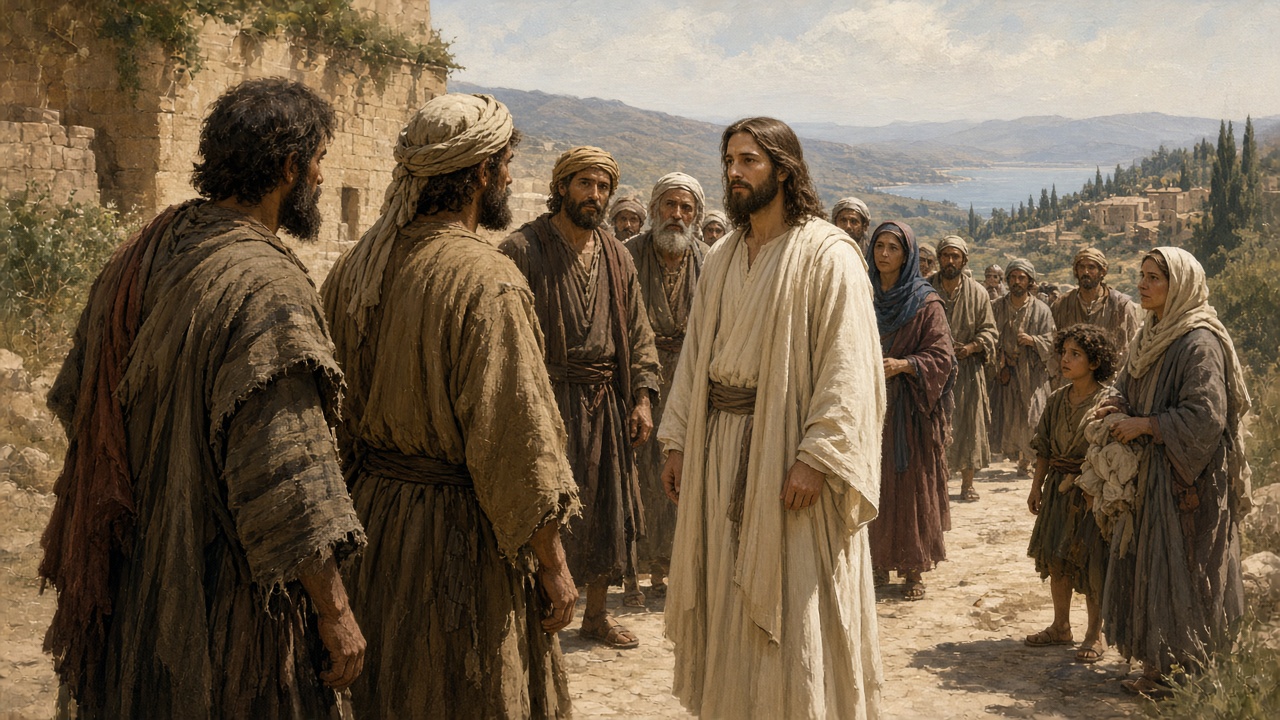
- From prison, John sent his disciples to ask whether Jesus was the one who was to come. Jesus told the crowds that John was more than a prophet—the messenger sent ahead to prepare the way—and, if they were willing to accept it, the Elijah who was to come. A Bible dictionary calls John the forerunner and says his mission was already the subject of prophecy, citing Isaiah 40:3 and Malachi 3:1; it also introduces Elijah as the Elias of the New Testament.Sources: the Bible text itself · John the Baptist · Elijah
- Jesus then denounced Chorazin, Bethsaida, and Capernaum, where most of his miracles had been performed, because they did not repent. A dictionary identifies Chorazin with modern Kerazeh, about two and a half miles up the Wady Kerazeh from Capernaum, and says that Capernaum, absent from the Old Testament, became Jesus' own city after he left Nazareth. It places Bethsaida on the east side of the lake, two miles up the Jordan in Gaulonitis, enlarged by Philip the tetrarch and named Julias after the emperor's daughter, though some have supposed there was only one Bethsaida, near where the Jordan enters the lake.Sources: the Bible text itself · Chorazin · Capernaum · Bethsaida
- He set those cities against Tyre and Sidon, which he said would have repented long ago in sackcloth and ashes, and against Sodom, which he said would have remained to this day. Sidon, on the Mediterranean coast about twenty-five miles north of Tyre, was the oldest Phoenician city there and the mother city of Tyre. A dictionary says the commerce of the whole world was gathered into Tyre's warehouses, and that Sodom, in the vale of Siddim, was destroyed by fire from heaven so completely that no trace of it has been found.Sources: the Bible text itself · Sidon · Tyre · Sodom
Notes written with AI assistance from open sources (Theographic Bible Metadata, CC BY-SA 4.0; Easton’s Bible Dictionary, public domain) and reviewed before publishing.
Places in this chapter
- Galilee · 32.760, 35.527 · verse 1
- Sidon · Today: Sandikli archaeological site in Sidon · 33.561, 35.372 · verses 21, 22
- Tyre · 33.271, 35.196 · verses 21, 22
Only places identified with high confidence are shown (90% or more according to the scholarly sources compiled by OpenBible). Period map: DARE (Digital Atlas of the Roman Empire), CC BY 4.0; modern map: © OpenStreetMap contributors; places: OpenBible.info (CC BY 4.0).
Credits and license for this translation
Baibal Olcim
The Holy Bible in the Matupi Chin language of Mynmar with Strong's numbers
Public Domain
Language: Matupi Chin (Chin, Matu)
Published in Mynmar, which is not a signatory to international copyright treaties. Copyright may apply locally in Mynmar.
2026-07-16
Source: http://ebible.org/hlt/ · eBible.org