Isaiah 66
Baibal Olcim · Tap a verse to see its cross-references.
Hnukkhueng kah Paihmuen
1BOEIPA loh he ni a thui. Vaan khaw kai kah ngolkhoel ni. Diklai khaw ka kho kah khotloeng ni. Kai ham im na sak uh te melae? Ka duemnah hmuen te menim? 2Te rhoek boeih te ka kut loh a saii. Te rhoek boeih te BOEIPA kah olphong ah om coeng. Mangdaeng neh mueihla aka paep, kai ol dongah aka thuen, te ni ka paelki. 3Vaito aka ngawn loh hlang ni a ngawn. Tu aka ngawn loh ui ni a ah. Ok thii te khocang la aka khuen, hmueihtui aka thoelh tih boethae aka uem, amih long khaw amamih kah longpuei te a coelh uh. Amamih kah sarhingkoi dongah a hinglu khaw naep lah. 4Kai long khaw amih kah camoe hnatuem te ka coelh vetih amamih kah rhihnahkoi te amamih soah ka thoeng sak ni. Ka khue vaengah aka doo om pawh. Ka thui dae hnatun uh pawh. Ka mikhmuh ah thae a saii uh tih ka ngaih mueh te a tuek uh. 5A ol dongah aka thuen rhoek te BOEIPA ol hnatun uh. Nangmih aka hmuhuet tih nang aka rhoe na manuca rhoek loh, “Kai ming neh BOEIPA thangpom saeh lamtah nangmih kah kohoenah te ka hmu eh?,” a ti uh dae amih te yak uh ni. 6Khopuei lamkah longlonah ol neh bawkim lamkah ol, a thunkha te a tiing la aka thung BOEIPA ol. 7A vawn hlan ah aka cun, a soah tharhui a tloh hlan ah ca tongpa aka oi. 8Te bang aka ya te unim? Te bang aka hmu te unim? Khohnin pakhat dongah diklai he vawn tih namtom he voei khat la a cun a? A vawn phoeiah ni Zion loh a ca te a cun. 9Kai ka khaem tih a ka cun pawt eh? BOEIPA loh a thui coeng. Kai loh ka cun sak tih ka khaih. Te te na Pathen long ni a thui. 10Jerusalem taengah kohoe sak lamtah amah aka lungnah boeih loh anih ham omngaih uh. Anih ham aka nguekcoi boeih loh a taengah omthennah neh ngaingaih uh. 11Te daengah ni nangmih te ng'khut vetih a hloephloeinah rhangsuk te na cung uh eh. Na oktoem uh vetih a thangpomnah neh a baepet la na pang na dok uh bitni. 12Te dongah ni BOEIPA loh a thui. Anih te kai kah rhoepnah tuiva bangla ka dangka sak tih namtom kah a thangpomnah soklong bangla ka long sak. A haep ah n'khut uh tih m'poeh uh phoeiah khuklu soah n'hnang sak ni. 13Hlang bangla anih aka hloep a manu te unim? Kamah loh nang kan hloep tangloeng vetih Jerusalem soah dam na ti bitni. 14Na hmuh vaengah na lungbuei ngaingaih vetih na rhuh khaw baelhing bangla poe ni. A sal rhoek te BOEIPA kut loh a ming vetih a thunkha rhoek te kosi a sah thil ni. 15BOEIPA tah hmai neh a leng khaw cangpalam bangla ha pawk coeng ke. Amah kah kosi thintoek neh, amah kah tluungnah hmaihluei hmai neh thuung ham pawn ni. 16Pumsa boeih te BOEIPA loh hmai neh cunghang neh lai a tloek ni. BOEIPA taengah a rhok la muep pung ni. 17Aka ciim uh tih aka caihcil loh, a khui kah khat khat hnukah, dum kah ok saa konawhnah neh su aka ca rhoek te rhenten a thup uh ni. BOEIPA kah olphong coeng ni. 18Kai loh amih kah khoboe neh amih kopoek te ka ming ta. Namtom boeih neh ol boeih te coi ham ha pawk. Amih ha pawk uh vaengah ka thangpomnah te a hmuh uh ni. 19Amih taengah miknoek ka khueh vetih amih lamkah hlangyong rhoek te namtom taeng neh Tarshish Pul taengah, lii aka oei Lud, Tubal neh kai olthang aka ya pawt tih kai thangpomnah aka hmu pawh khohla sanglak Javan taengla ka tueih ni. Te vaengah namtom rhoek taengah ka thangpomnah te a doek uh ni. 20Na manuca rhoek boeih te namtom boeih taeng lamloh BOEIPA ham khocang la marhang dongah, leng neh, pa neh, muli-marhang dongah, thoh-lang dongah, ka tlang cim Jerusalem la ha pawk uh ni. BOEIPA kah a thui bangla Israel ca rhoek te BOEIPA im cim kah hnopai dongah khocang la hang khuen uh ni. 21Amih lamkah te khosoih la, Levi la ka loh ni. BOEIPA loh a thui coeng. 22Te bangla vaan thai neh diklai thai te ka saii tih ka mikhmuh ah aka pai sak khaw kai ni. BOEIPA kah olphong ni. Na tiingan neh na ming thoo ni. 23Hlasae lamloh hlasae, Sabbath lamloh Sabbath a pha vaengah pumsa boeih ka mikhmuh ah bakop hamla ha pawk ni. BOEIPA loh a thui. 24Kai taengkah boekoek hlang rhoek kah rhok te a thoeng thil uh vetih a hmuh uh ni. Amih kah a rhiit te duek pawt vetih a hmai khaw thi mahpawh. Pumsa boeih taengah koletnah la om uh ni.
Did you know?
True Worship and the Gathering of Nations
- Isaiah opens this final chapter declaring that heaven is God's throne and earth His footstool, meaning no human building can contain Him. Instead, God values those who are humble and contrite in spirit and who tremble at His word, contrasting this disposition with ritual sacrifices made without genuine devotion.Sources: the Bible text itself
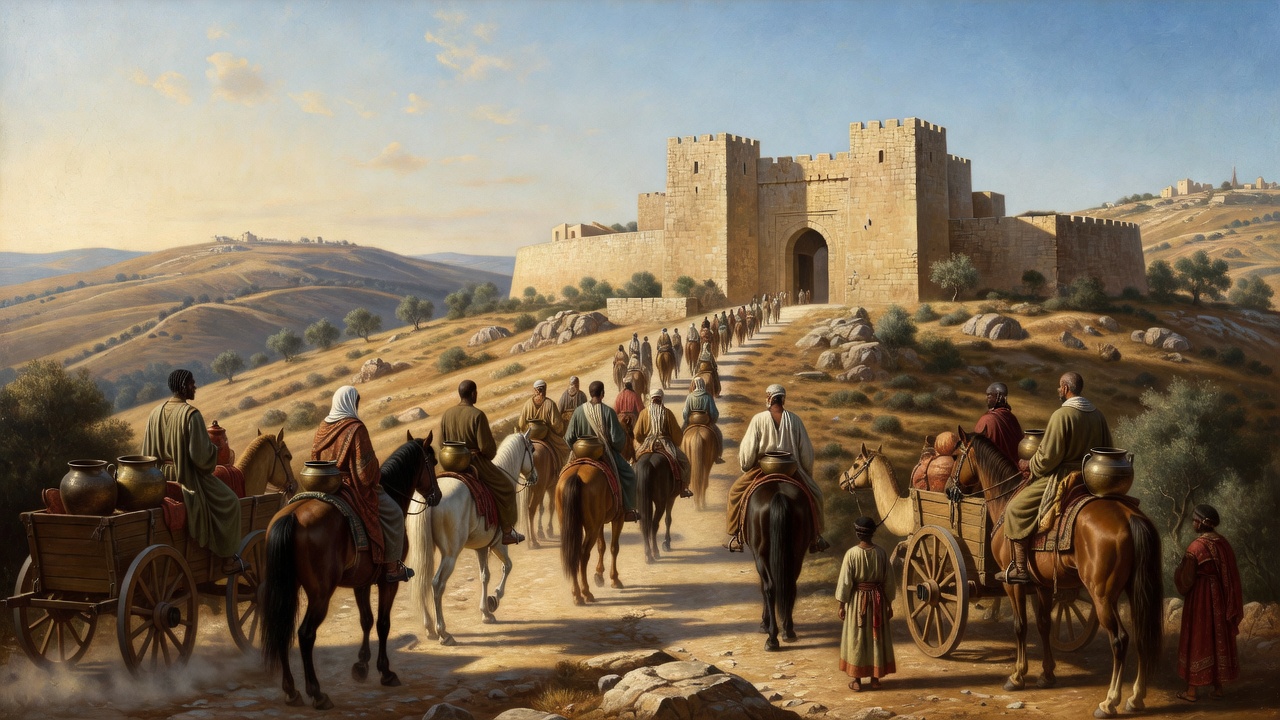
- The prophetic vision mentions messengers sent to far-flung regions, including Tarshish, the archers of Lud, Tubal, and Javan, which was the generic Hebrew designation for the Greek world. People from these distant coastlands and nations are depicted journeying to Jerusalem to witness God's glory.Sources: the Bible text itself · Tarshish · Lud · Javan
- The closing section describes enduring new heavens and a new earth where all humanity comes to worship regularly from one Sabbath and New Moon to the next. In an unexpected development, God announces that He will select some from among these gathered nations to serve as priests and Levites.Sources: the Bible text itself
Notes written with AI assistance from open sources (Theographic Bible Metadata, CC BY-SA 4.0; Easton’s Bible Dictionary, public domain) and reviewed before publishing.
Places in this chapter
- Jerusalem · 31.777, 35.234 · verses 7, 10, 12, 13, 20
- Zion · Today: Jerusalem · 31.777, 35.234 · verse 8
- Javan · Today: Ionia · 38.200, 27.500 · verse 19
- Lud · Today: Lydia · 38.488, 28.040 · verse 19
- Meshech · Today: about 200 km around Gordion · 39.655, 31.994 · verse 19
- Tubal · Today: Tabal · 37.296, 36.254 · verse 19
Only places identified with high confidence are shown (90% or more according to the scholarly sources compiled by OpenBible). Period map: DARE (Digital Atlas of the Roman Empire), CC BY 4.0; modern map: © OpenStreetMap contributors; places: OpenBible.info (CC BY 4.0).
Credits and license for this translation
Baibal Olcim
The Holy Bible in the Matupi Chin language of Mynmar with Strong's numbers
Public Domain
Language: Matupi Chin (Chin, Matu)
Published in Mynmar, which is not a signatory to international copyright treaties. Copyright may apply locally in Mynmar.
2026-07-16
Source: http://ebible.org/hlt/ · eBible.org