Isaiah 60
Baibal Olcim · Tap a verse to see its cross-references.
Zion kah A Boeimang Tah Yahweh Ni
1Thoo laeh, vang laeh. Nang kah vangnah ha pawk coeng tih BOEIPA thangpomnah tah nang soah sae coeng. 2Hmaisuep loh diklai, yinnah loh namtu a dah coeng ke. Tedae nang soah BOEIPA ha thoeng coeng tih a thangpomnah khaw nang soah tueng coeng. 3Na vangnah dongah namtom rhoek loh, namah kah pangtong khosae ah manghai rhoek loh pongpa uh ni. 4Na mik te huel lamtah a kaepvai kah amih boeih ke so lah. Kho hla lamkah na ca rhoek te coi uh thae tih nang taengla ha pawk uh. Ha pawk uh vaengah na canu rhoek te a laengpang ah a poeh uh. 5Te vaengah na hmuh vetih na hlampan bitni. Anih te birhih vetih na thinko hang ka sak ni. Tuitunli kah a hlangping te nang taengla ha buung vetih namtom kah khuehtawn te nang taengla ha pawk ni. 6Kalauk cako loh nang ng'et ni. Midian neh Ephah kalauk ca rhoek khaw a pum la Sheba lamkah sui hang khuen uh vetih hmueihtui ham phueih uh ni. Te vaengah BOEIPA koehnah a phong uh ni. 7Kedar boiva boeih khaw nang taengla tingtun uh vetih Nebaioth tutal rhoek loh nang n'khut ni. Ka hmueihtuk kah kolonah la luei uh vetih ka boeimang im te ka cam ni. 8Khomai bangla ding uh tih vahui bangla amamih kahbangbuet la aka cet te u rhoek nim? 9Sanglak rhoek loh kai he ni n'lamtawn uh ngawn. Tarshish sangpho loh khohla lamkah na ca rhoek te amamih kah ngun neh sui neh lamhma la ham pawk puei ni. BOEIPA na Pathen ming ham neh Israel kah a cim ham te nang n'cam coeng. 10Na vongtung tah kholong ca rhoek loh hang khoeng uh vetih a manghai rhoek loh nang n'khut ni. Ka thinhul ah nang kan taam cakhaw ka kolonah dongah nang kan haidam ni. 11Namtom kah khuehtawn te nang taengla aka pawk puei ham na vongka loh ong uh taitu vetih khoyin khothaih khai uh mahpawh. Te vaengah a manghai rhoek te hmaithawn uh ni. 12Nang taengah tho aka thueng pawh namtom neh ram tah milh uh vetih namtom rhoek khaw rhae la rhae uh ni. 13Ka rhokso hmuen cam hamla Lebanon kah thangpomnah hmaical, kungkang neh ta-aw thing khaw nang taengla tun ha pawk vetih ka kho kung kah a hmuen ah ka thangpom ni. 14Nang aka phaep rhoek kah a ca rhoek te nang taengah aka ngawm sut la ha pawk uh ni. Nang yah aka bai rhoek boeih na kho kah khopha taengah bakop uh ni. BOEIPA kah khopuei Zion nang te Israel kah a cim la a khue uh ni. 15A hnoo sut neh a hmuhuet la na om tih aka pongpa om pawh. Tedae nang te kumhal kah hoemdamnah neh cadilcahma phoeikah cadilcahma ham omthennah la kang khueh ni. 16Namtom kah suktui te na yawn vetih manghai rhoek kah rhangsuk te khaw na yawn ni. Te vaengah kai BOEIPA tah nang aka khang neh nang aka tlan Jakob kah samrhang la na ming ni. 17Rhohum yueng la sui kang khuen vetih thi yueng la ngun, thing yueng la rhohum, lungto yueng la thi kang khuen ni. Nang aka cawhkung te rhoepnah neh, nang aka tueihno te duengnah neh ka khueh ni. 18Na khohmuen ah kuthlahnah, na khorhi khuiah rhoelrhanah neh pocinah te ya voel mahpawh. Tedae na vongtung te khangnah la, na vongka te koehnah la na khue ni. 19Nang ham tah khothaih khosae la khomik khaw kuek voel pawt vetih hla kah a aa loh nang soah ha sae mahpawh. Tedae BOEIPA tah nang ham kumhal khosae neh na Pathen te na boeimang la om ni. 20Na khomik te khum voel pawt vetih na hla khaw yaem voel mahpawh. BOEIPA tah nang ham kumhal khosae la om vetih na nguekcoinah khohnin khaw khum ni. 21Amih na pilnam aka dueng boeih loh khohmuen kumhal duela a pang uh ni. A thingling pae he ka thingling neh ka kut kah bibi neh a cam ham om. 22A dikhnawn te thawngkhat la, canoi khaw namtu pilnu la om ni. Kai BOEIPA tah amah tue vaengah amah la ka tawn uh ni.
Did you know?
The Glorious Restoration of Zion
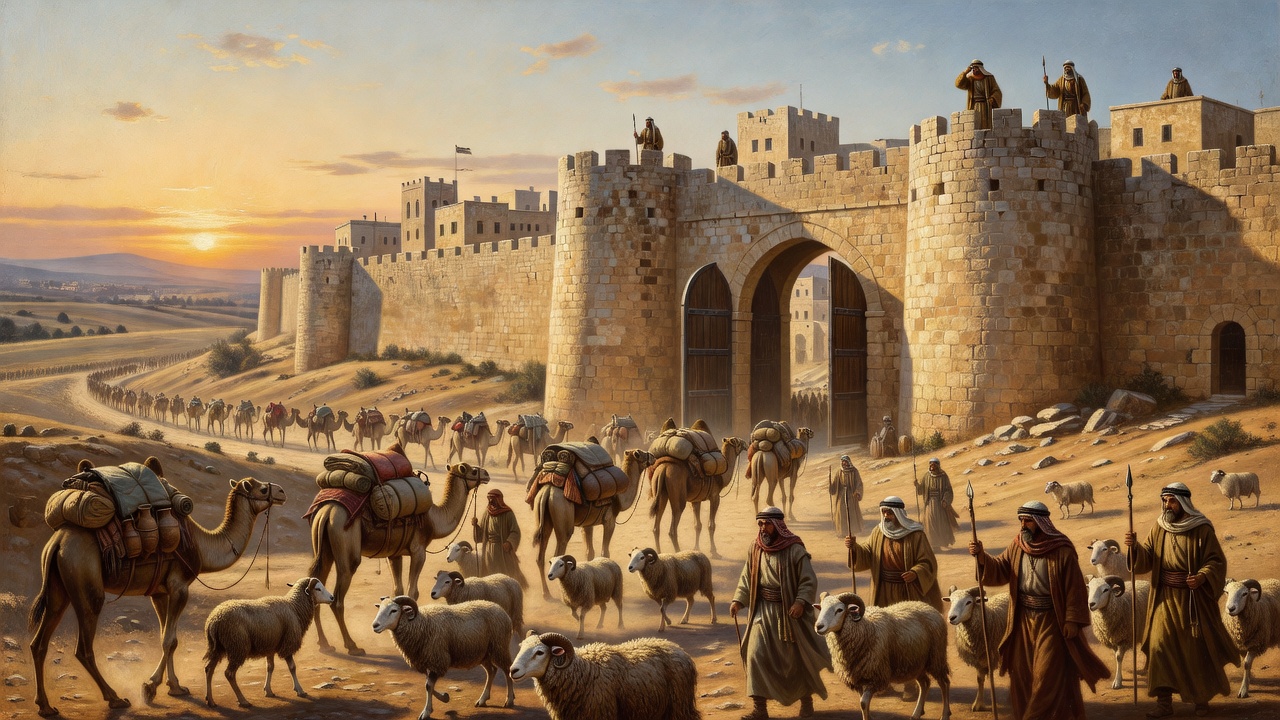
- Sheba was a kingdom in southern Arabia renowned for its ancient trade in gold and spices, while Midian was a nomadic Arabian tribe long engaged in desert commerce. Isaiah 60 envisions these distant peoples arriving on vast camel caravans, bearing gold and frankincense to praise the Lord.Sources: Sheba · Midian · the Bible text itself
- Kedar and Nebaioth trace back in biblical genealogies to the sons of Ishmael, with Kedar designating pastoral nomadic tribes of northwestern Arabia known for their large flocks and black tents. In this prophetic vision, their sheep and rams are brought to Jerusalem to be accepted as offerings upon the altar.Sources: Kedar · Nebajoth · Kedar · the Bible text itself
Notes written with AI assistance from open sources (Theographic Bible Metadata, CC BY-SA 4.0; Easton’s Bible Dictionary, public domain) and reviewed before publishing.
Places in this chapter
- Jerusalem · 31.777, 35.234 · verses 1, 14
- Ephah · Today: Midian · 28.495, 35.012 · verse 6
- Midian · 28.495, 35.012 · verse 6
- Sheba · 15.348, 44.206 · verse 6
- Kedar · 29.811, 39.868 · verse 7
- Lebanon · 33.540, 35.584 · verse 13
- Zion · Today: Jerusalem · 31.777, 35.234 · verse 14
Only places identified with high confidence are shown (90% or more according to the scholarly sources compiled by OpenBible). Period map: DARE (Digital Atlas of the Roman Empire), CC BY 4.0; modern map: © OpenStreetMap contributors; places: OpenBible.info (CC BY 4.0).
Credits and license for this translation
Baibal Olcim
The Holy Bible in the Matupi Chin language of Mynmar with Strong's numbers
Public Domain
Language: Matupi Chin (Chin, Matu)
Published in Mynmar, which is not a signatory to international copyright treaties. Copyright may apply locally in Mynmar.
2026-07-16
Source: http://ebible.org/hlt/ · eBible.org