Hosea 3
Baibal Olcim · Tap a verse to see its cross-references.
Thoh Hamla A Rhing
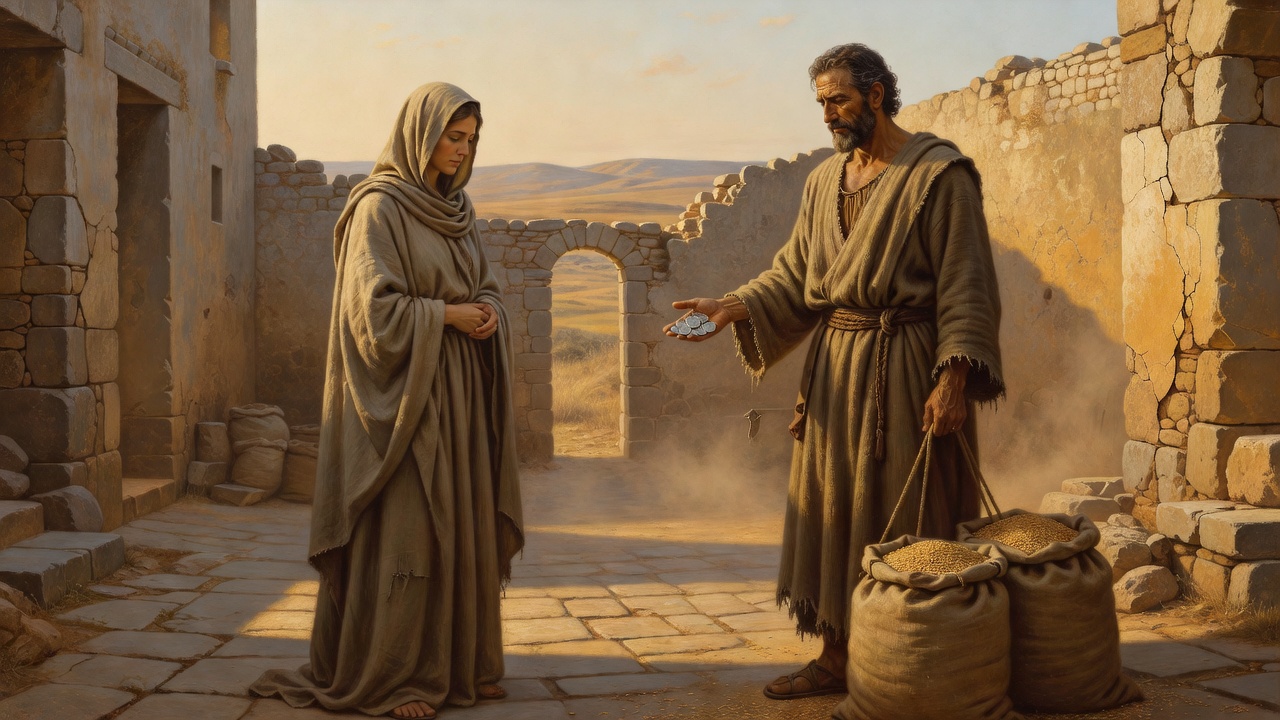
1BOEIPA loh kai taengah, “Amih loh pathen tloe taengla mael tih misur yukhap lungnah sitoe cakhaw, BOEIPA loh Israel ca a lungnah bangla a hui a lungnah tih aka samphaih nu te koep paan lamtah lungnah,” a ti. 2Te dongah anih te kamah hamla tangka hlai nga, cangtun am at phoeiah khosai neh ka lai. 3Te vaengah anih te, “Kamah taengah a tue a yet khosa lamtah cukhalh voel boeh. Hlang neh om boel lamtah kai khaw nang taengah ka om ni. 4Israel ca rhoek te kum a sen kho a sak uh suidae manghai khaw tal vetih mangpa khaw tal ni. Hmueih khaw tal vetih kaam khaw tal ni. Te phoeiah hnisui neh sithui khaw tal ni. 5A hnuk ah Israel ca rhoek te mael uh vetih a Pathen BOEIPA neh a manghai David te a tlap uh ni. Te vaengah BOEIPA taengah birhih uh vetih khohnin hnukkhueng ah a thennah la om ni.
Did you know?
A Symbolic Redemption
- In Hosea 3, the prophet is commanded to buy back his unfaithful wife, paying fifteen shekels of silver along with a homer and a lethech of barley. This personal act serves as a living illustration of God's enduring love for Israel despite the nation's unfaithfulness and devotion to other gods.Sources: the Bible text itself
- The chapter foretells a long period during which the Israelites would live without king, prince, sacrifice, sacred pillar, ephod, or idol. Afterward, they are prophesied to return in reverence to seek the LORD and David their king in the last days.Sources: the Bible text itself
Notes written with AI assistance from open sources (Theographic Bible Metadata, CC BY-SA 4.0; Easton’s Bible Dictionary, public domain) and reviewed before publishing.
Credits and license for this translation
Baibal Olcim
The Holy Bible in the Matupi Chin language of Mynmar with Strong's numbers
Public Domain
Language: Matupi Chin (Chin, Matu)
Published in Mynmar, which is not a signatory to international copyright treaties. Copyright may apply locally in Mynmar.
2026-07-16
Source: http://ebible.org/hlt/ · eBible.org