Deuteronomy 33
Baibal Olcim · Tap a verse to see its cross-references.
Moses kah Yoethen Paek
1Pathen kah hlang Moses loh a duek hlanah tahae kah yoethennah he Israel ca rhoek taengah yoethen la a paek .
2“BOEIPA tah Sinai lamloh halo tih Seir lamloh thoeng. Amih ham Paran tlang lamloh a sae pah tih a bantang lamloh hlangcim a thawngsang neh thoeng. Amih ham olkhan hmai a khuen. 3Na kut dongkah a hlangcim boeih loh pilnam a lungnah tih, na oluennah aka duen loh na kho taengah ngolhlung uh. 4Jakob vangpum kah khoh la olkhueng he, Moses loh mamih taengah ng'uen coeng. 5Jeshurun ah manghai la a om vaengah pilnam kah a lu rhoek loh Israel koca rhoek taengla tingtun uh. 6Reuben tah hing mai saeh lamtah duek boel saeh. Anih te hlang sii la om boel saeh.
7Judah kawng dongah he khaw, “Aw BOEIPA Judah ol he hnatun lamtah a pilnam taengla thak lah. Amah pum te a kut neh a huul vaengah a rhal khui lamkah khaw bomkung la nang om pah lah,” a ti.
8Levi kawng dongah khaw, “Na Thummim neh na Urim he, Massah ah na noemcai tih, Meribah tui taengah na oelh tangtae, na hlang cim hut coeng ni,” a ti.
9“A manu neh a napa ka phoe pawh,” a ti tih, a manuca khaw a hmat mueh la a ca kah a ca due ming voel pawh. Tedae na olthui te a ngaithuen uh tih na paipi te a kueinah uh. 10Nang kah laitloeknah te Jakob ham neh, na olkhueng te Israel ham a thuinuet pa uh. Na hmai ah hmueihul neh, na hmueihtuk ah boeih a khueh uh. 11Aw BOEIPA anih kah a thadueng te yoethen pae lamtah, a kut dongkah a bisai khaw uum pah. Anih aka thoh thil kah a cinghen te phop pah lamtah, a lunguet rhoek khaw thoo uh boel saeh.
12Benjamin kawng dongah, “BOEIPA kah lungnah tah, anih pum dongah ngaikhuek la rhaehrhong saeh. Hnin takuem ah anih te muekdah saeh lamtah, a laengpang laklo ah cu saeh,” a ti.
13Joseph khawng dongah, “A khohmuen te BOEIPA loh vaan cangtham, buemtui, tuidung laedil kah aka kol, 14khomik dongkah cangvuei cangtham, hla dongkah hicil cangtham, 15hlamat kah tlang som, kumhal som kah cangtham nen khaw, 16diklai cangtham a soeprhaep nen khaw yoethen a paek. Te dongah tangpuem khuikah aka om kolonah te, Joseph lu neh a manuca hlangcoelh rhoek kah a luki ah na cuuk sak. 17A rhuepomnah vaito cacuek neh a cung ki loh pilnam neh Ephraim a thawng a sang, Manasseh a thawng a sang te, diklai khobawt duela a thoeh rhenten ni,” a ti.
18Zebulun kawng dongah khaw, “Zebulun nang na coe tih na dap khuiah Issakhar a om te na kohoe sak lah. 19Tlang kah pilnam rhoek te khue uh pahoi lamtah, duengnah hmueih nawn uh saeh. Te vaengah tuitunli khuehtawn neh laivin khuiah a thuh tih, a tung te cop uh saeh,” a ti.
20Gad kawng dongah khaw, “Sathuengnu bangla phuel uh tih, aka om Gad loh a yoethen tih, a lu pataeng a ban neh a phuet. 21A tanglue te amah ham a sawt tih, pilnam kah a lu rhoek halo uh vaengah, khamyai aka taem te sul a bung thil. BOEIPA kah duengnah neh Israel taengah, laitloeknah a saii,” a ti. 22Dan kawng khaw, “Dan he sathueng ca bangla, Bashan lamloh cungpet,” a ti.
23Naphtali kawng dongah, “Naphtali nang tah, BOEIPA kah kolonah neh yoethennah te, ngaikhuek la a baetawt dongah, tuitunli neh tuithim khaw na pang,” a ti.
24Asher kawng dongah khaw, “Asher koca rhoek loh a yoethen. A manuca rhoek taengah a kolo om saeh lamtah a kho te situi khuiah nuem saeh,” a ti.
25Thicung neh rhohum he na thohkalh la om lamtah, na khohnin bangla na thaa om saeh. 26Vaan ke a ngol thil tih, nang ham bomkung la om. Te dongah a hoemnah neh khomong dongah aka om, Jeshurun kah Pathen bang he a om moenih. 27Hlamat Pathen kah a khuisaek neh, kumhal bantha hmuiah ah tah, thunkha khaw na mikhmuh lamkah a haek vetih, mitmoeng sak a ti bitni. 28Te vaengah Jakob kah a mik Israel bueng ni, cangpai neh misur thai kho ah ngaikhuek kho a sak vetih, vaan buemtui long khaw a tlan thil eh. 29Israel nang tah na yoethen pai. Nang kah bomkung photling neh na hoemnah cunghang, BOEIPA loh nang bangla u bang pilnam nim a khang coeng. Te dongah na thunkha loh nang hmaiah mai a tum uh vetih amih kah hmuensang soah na cangdoek bitni.
Did you know?
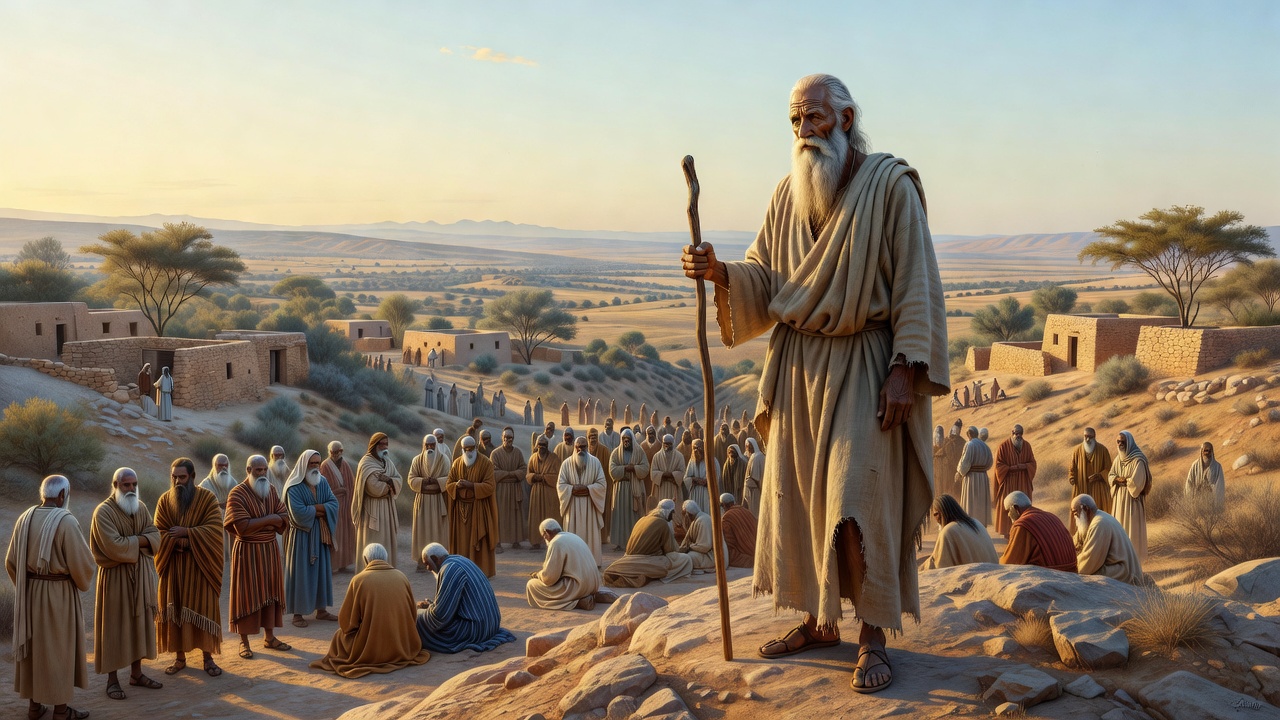
Moses’ Final Blessing on the Tribes
- The poem opens with a vivid description of God appearing from the southern wilderness, explicitly naming Sinai, Seir, and Mount Paran to portray the Lord dawning like the sun over his gathered people.Sources: the Bible text itself · Sinai · Seir · Mount Paran
- The blessing for the tribe of Levi emphasizes their sacred duties: consulting the Urim and Thummim, offering incense and burnt offerings at the altar, and teaching God’s ordinances and laws to the assembly of Israel.Sources: the Bible text itself · Massah · Meribah (of Horeb)
- Joseph’s blessing anticipates great fertility and military strength, specifically mentioning both Ephraim and Manasseh, the two tribal lineages descended from Joseph’s sons born in Egypt.Sources: the Bible text itself · Joseph (son of Jacob) · Ephraim · Manasseh (son of Joseph)
Notes written with AI assistance from open sources (Theographic Bible Metadata, CC BY-SA 4.0; Easton’s Bible Dictionary, public domain) and reviewed before publishing.
Places in this chapter
- Meribah · Today: Ain el Qudeirat · 30.648, 34.422 · verse 2
- Meribah · Today: within 500 m of Wadi Rufaiyil · 28.623, 33.880 · verse 8
- Bashan · 32.781, 35.935 · verse 22
Only places identified with high confidence are shown (90% or more according to the scholarly sources compiled by OpenBible). Period map: DARE (Digital Atlas of the Roman Empire), CC BY 4.0; modern map: © OpenStreetMap contributors; places: OpenBible.info (CC BY 4.0).
Credits and license for this translation
Baibal Olcim
The Holy Bible in the Matupi Chin language of Mynmar with Strong's numbers
Public Domain
Language: Matupi Chin (Chin, Matu)
Published in Mynmar, which is not a signatory to international copyright treaties. Copyright may apply locally in Mynmar.
2026-07-16
Source: http://ebible.org/hlt/ · eBible.org