Daniel 8
Baibal Olcim · Tap a verse to see its cross-references.
Tu neh Maae
1Manghai Belshazzar ram kah a kum thum dongah tah mangthui te kai Daniel kamah taengah phoe tih lamhma kah te ni kai taengah koep a phoe. 2Mangthui neh ka hmuh bangla a om vaengah ka sawt hatah kamah tah Elam paeng kah Shushan rhalmah im kana om. Mangthui ah koep ka hmuh bal vaengah tah kai he Ulai tuilong ah ka om bal. 3Ka mik te ka huel tih ka sawt vaengah tuilong dan ah tutal pakhat tarha pai. Te te ki panit om tih a ki te bok sen. Pakhat te a pabae lakah sen tih a sen te a hnuk ah thoeng. 4Tutal te ka hmuh vaengah khotlak la, tlangpuei la, tuithim la a thoeh tih mulhing boeih loh a mikhmuh ah pai thai pawh. Anih kut lamloh aka huul khaw a om pawt dongah a kolonah bangla a saii tih rhoeng. 5Kai khaw ka om na kungah ka yakming vaengah khotlak lamkah maae tal tarha ha thoeng. Te long te diklai hmai boeih a poe tih diklai khaw ben pawh. Maae tal te a mik laklo ah mingphanah ki om. 6Te vaengah ki boei tutal taengla cet tih tuilong hmai ah a pai te ka hmuh. Te phoeiah a taengla a thadueng kosi neh yong. 7Te phoeiah tutal taengla a ben tih tutal te a phaep. Tutal te a thoeh tih a ki rhoi te tlawt. Tutal te anih hmai ah pai hamla a khuiah thadueng khueh pawt tih diklai la a voeih. Tutal te a suntlae tih anih kut lamloh aka huul om pawh. 8Maae tal bahoeng rhoeng tih a thaom dae a ki len tah tlawt. Te phoeiah a yueng pali te mingphanah la cawn tih vaan khohli pali taengla hoi uh.
Ki Noe
9Te rhoek khuiah pakhat dong lamloh a ki noe pakhat cawn dae tuithim la, khocuk la, kirhang taengla muep rhoeng. 10Vaan caempuei taengla rhoeng tih caempuei taeng lamloh, aisi taeng lamloh diklai la cungku tih amih te a suntlae. 11Te phoeiah caempuei mangpa la a pomsang dae anih lamkah sainoek te a kuel a kuel tih a rhokso hmuen te a voeih pah. 12Boekoeknah he caempuei neh sainoek yueng la a khueh. Te vaengah oltak te diklai la a voeih tih a saii daengah thaihtak. 13Te phoeiah hlangcim pakhat loh a thui te ka yaak tih, “Hlangcim pakhat loh pakhat taengah, 'Sainoek kah mangthui khaw me hil nim a thui ve? Boekoeknah loh hmuencim te dingrhak la khueh ham neh caempuei kah cawtkoi ham khaw,” a ti. 14Te vaengah kai taengah, “Hlaem mincang thawng hnih ya thum duela om vetih hmuencim te a ciim ni,” a ti.
Mangthui kah Thuingaihnah
15Kai Daniel kamah khaw mangthui ka hmuh vaengah yakmingnah ka tlap. Te vaengah hlang kah mueimae bangla kamah hmai ah tarha pai. 16Ulai lamkah hlang ol ka yaak vaengah pang tih, “Gabriel, a hmuethma he n'yakming sak lah,” a ti. 17Te dongah ka paihmuen la ha thoeih tih anih ham pha vaengah ka let. Ka maelhmai dongah ka bakop dae kai te, “Hlang capa aw, mangthui a bawtnah tue te yakming laeh,” a ti. 18Kai ham a thui vaengah ka maelhmai neh diklai la ka ip coeng. Tedae kai te n'taek tih ka paihmuen la kai n'thoh. 19Te phoeiah, “A bawtnah khoning vaengkah kosi bawtnah dongah aka om ham te nang taengah kan ming sak ne,” a ti. 20Tutal ki boei na hmuh te Madai neh Persia manghai ne. 21Maae tal tah Greek manghai tih a mik laklo kah ki a len tah lamhma kah manghai ni. 22Te te a tlawt phoeiah a yueng pali a cawn he namtom lamkah ram pali pai suidae a thadueng neh om mahpawh. 23Hmailong ah amih ram khaw boekoek cung vetih maelhmai aka tlung neh olkael aka yakming manghai phoe ni. 24Te vaengah a thadueng rhoeng suidae a thadueng neh om mahpawh. Khobaerhambae khaw a phae vetih thaihtak ni. Te phoeiah a saii vetih pilnu neh pilnam cim khaw a phae ni. 25A lungmingnah nen khaw, a kut dongkah thailatnah nen khaw thaihtak vetih a thinko ah pomsang ni. Ommongnah dongah khaw muep paci vetih mangpa rhoek kah mangpa taengah pai bal ni. Tedae hlang kut mueh nen ni a bawt eh. 26Hlaem neh mincang kah a hmuethma loh oltak amah te a thui coeng. Tedae namah kum a sen ham la mangthui te khoem laeh. 27Kai Daniel khaw ka om dae khohnin loh nue coeng. Ka thoh neh manghai kah bitat te ka saii. Te dongah a hmuethma nen khaw ka pong tih ka yakming voel pawh.
Did you know?
The Vision of the Ram and the Goat
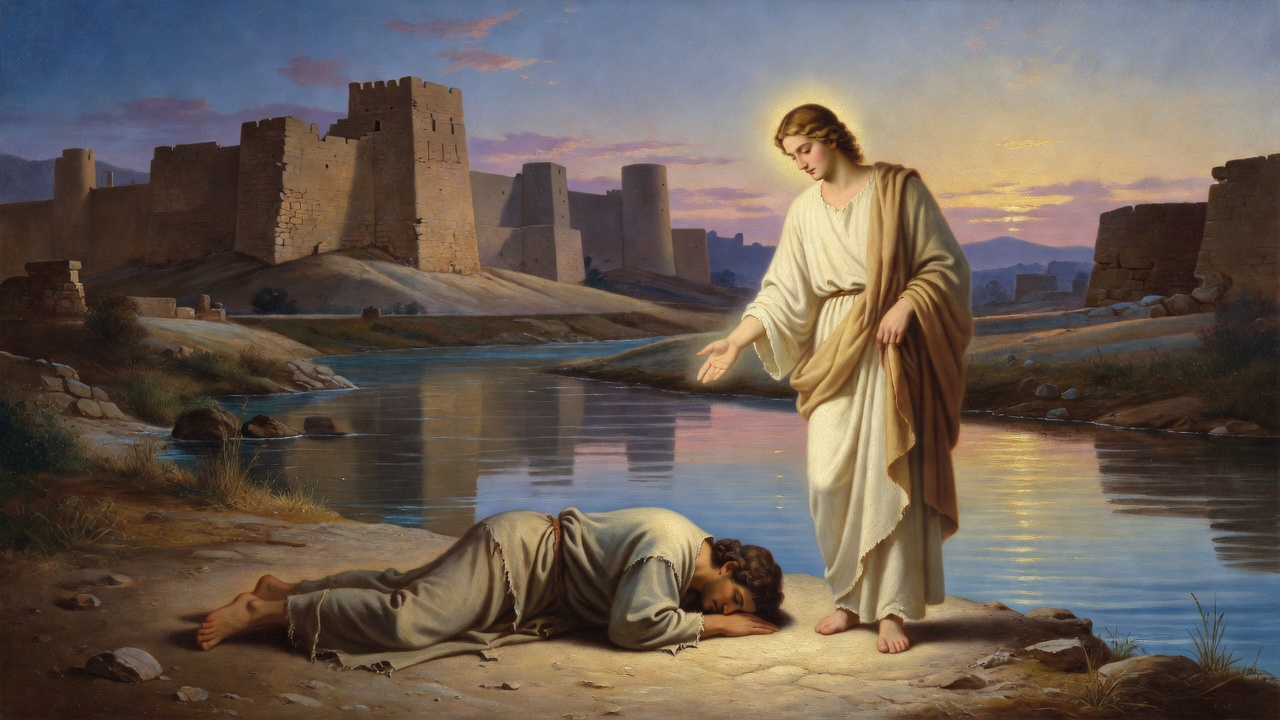
- In his vision, Daniel sees himself in the citadel of Susa in the province of Elam, standing by the Ulai Canal. Susa was the ancient capital of Elam, and the Ulai, known to the Greeks as the Eulaus, was a river that divided into two branches near the city.Sources: the Bible text itself · Susa · Ulai · Elam
- This passage contains the first biblical appearance of the angel Gabriel by name. Gabriel is commanded to explain the prophetic vision to Daniel, who collapses in fear before being lifted to his feet.Sources: the Bible text itself · Gabriel
- The vision provides explicit geopolitical identifications: the two-horned ram represents the kings of Media and Persia, while the shaggy goat represents the king of Greece.Sources: the Bible text itself · Media · Persia · Greece
Notes written with AI assistance from open sources (Theographic Bible Metadata, CC BY-SA 4.0; Easton’s Bible Dictionary, public domain) and reviewed before publishing.
Places in this chapter
- Elam · 32.189, 48.258 · verse 2
- Susa · Today: Shush · 32.189, 48.258 · verse 2
- Canaan · 32.767, 35.333 · verse 9
- Media · 34.806, 48.516 · verse 20
- Persia · 34.806, 48.516 · verse 20
- Greece · 37.972, 23.727 · verse 21
Only places identified with high confidence are shown (90% or more according to the scholarly sources compiled by OpenBible). Period map: DARE (Digital Atlas of the Roman Empire), CC BY 4.0; modern map: © OpenStreetMap contributors; places: OpenBible.info (CC BY 4.0).
Credits and license for this translation
Baibal Olcim
The Holy Bible in the Matupi Chin language of Mynmar with Strong's numbers
Public Domain
Language: Matupi Chin (Chin, Matu)
Published in Mynmar, which is not a signatory to international copyright treaties. Copyright may apply locally in Mynmar.
2026-07-16
Source: http://ebible.org/hlt/ · eBible.org