Acts 15
Baibal Olcim · Tap a verse to see its cross-references.
Antiok kah Olpungnah
1Judea lamkah aka suntla hlangvang loh, “Moses kah khosing bangla yahvin na rhet pawt atah khang la na om thai mahpawh, “tila manuca rhoek te a thuituen uh. 2Te dongah olpungnah om tih Paul, Barnabas neh amih laklo kah oelhtaihnah te a yool mai moenih. Te oldawtnah dongah Jerusalem kah caeltueih rhoek neh a ham rhoek taengah Paul, Barnabas neh amih lamkah hlangtloe khat khat te caeh sak ham a mop uh. 3Hlangboel loh a thak uh tih Phoiniki neh Samaria ah a caeh uh vaengah namtom rhoek kah thovaelnah te a saep uh. Te vaengah manuca boeih tah omngaihnah muep a cuen pah.
4Jerusalem a pha uh vaengah hlangboel, caeltueih neh a ham rhoek loh a doe uh tih, amih taengah Pathen loh a saii pah te a puen pa uh. 5Tedae Pharisee buhlaelh lamkah hlangvang aka pai rhoek long khaw a tangnah tih, “Namtom te yahvin rhet sak tih Moses kah olkhueng tuem sak ham uen a kuek,” a ti uh.
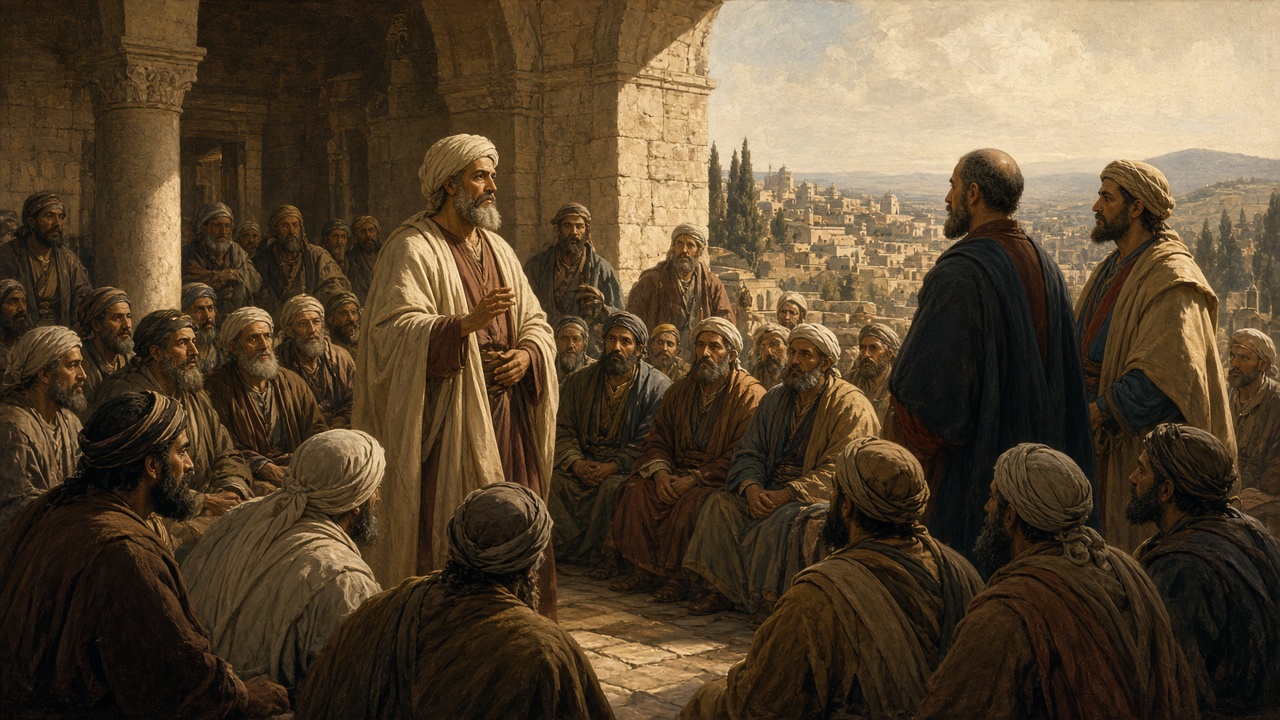
Jerusalem Tunpuei
6Te dongah hekah olka kawng ming hamla caeltueih rhoek neh a ham rhoek tah tingtun uh. 7Oelhtaihnah muep a om dongah Peter loh pai hang tih amih te, “Hlang rhoek manuca rhoek, 'Ka ka lamkah olthangthen ol he namtom a yaak sak tih a tangnah ham khosuen tue lamkah ni Pathen loh nangmih khuikah a tuek te, 'na hmat uh. 8Mamih taengkah bangla amih taengah khaw lungming Pathen loh a phong pah tih Mueihla Cim a paek coeng. 9Te dongah mamih neh amih laklo ah a boelhkhoeh moenih. Amih kah thinko he tangnah neh a ciim coeng. 10A pa rhoek long khaw, mamih long khaw phueih hamla aka coeng pawh hnamkun te hnukbang rhoek kah rhawn ah tloeng pah ham, balae tih Pathen ke na noemcai uh. 11Khang la om ham he Boeipa Jesuh kah lungvatnah lamloh n'tangnah vanbangla amih long khaw a longim bangla om van,” a ti nah.
12Rhaengpuei boeih loh kam a khuem. Te vaengah amih rhoi lamloh namtom taengah Pathen loh miknoek neh khobae rhambae a saii pah te Barnabas neh Paul loh a thui rhoi tih a hnatun uh. 13Amih rhoi te kam a khuem vaengah James loh a doo tih, “Ka manuca rhoek, ka hlang rhoek kai ol hnatun uh lah. 14A ming ham tah namtom pilnam khuikah khaw loh hamla Pathen loh a hip lamhma te Simeon loh a thui coeng. 15A daek bangla tonghma rhoek kah ol nen khaw tekah te tluep coeng. 16Te phoeiah bal vetih David kah dap aka bung te koep ka sak ni. A palet tangtae te khaw koep ka sak vetih ka duel ni. 17Te daengah ni aka cul rhoek loh Boeipa kah hlang te a tlap vetih, amih te namtom boeih loh ka ming a phoei thil eh. 18'Boeipa loh a saii he khosuen lamkah ni a hmat coeng,’ a ti. 19Te dongah Pathen taengla aka bal namtom rhoek te toeh pawt ham ni kai tah ka cai. 20Tedae mueirhol kah a tihnai, Cukhalnah, rhawnkhak sa neh thii te rhael ham amih taengah ca ka pat. 21Moses cabu te khosuen rhuirhong lamkah khopuei takuem ah a thui uh. Te te tunim ah om tih Sabbath takuem ah a tae coeng,” a ti nah..
Namtom Ham Capat
22Te vaengah caeltueih rhoek, patong rhoek neh hlangboel boeih loh, manuca rhoek khuiah hlang aka mawt Barasabbas la a khue Judas neh Silas te amih lamkah hlang la a tuek tih, Paul neh Barnabas taengah Antiok la tueih ham ol a tloek. 23Amamih kut neh, “Caeltueih rhoek, patong rhoek neh manuca rhoek loh Antiok, Syria neh Kilikia tom kah manuca namtom rhoek te ka uem uh. 24Hlangvang tah mamih taeng lamkah nong coeng tila ka yaak uh. Nangmih kah hinglu aka toeh olka dongah na hinghuen uh. Amih te ol ka paek uh dae moenih. 25Te dongah tun ka hui uh tih, “Nangmih taeng neh mamih kah thintlo Barnabas neh Paul taengah hlang tueih ham tuek sih,” a ti uh. 26Amih tah Jesuh Khrih, mamih kah Boeipa ming ham a hinglu aka voei hlang rhoek ni. 27Te dongah Judas neh Silas te ka tueih uh. Ahmih rhoi khaw amah hmuen la olka neh ha puen rhoi. 28Te te kuek mai cakhaw thinrhih neh nangmih muep nan pawt ham, kaimih ham khaw Mueihla Cim neh ka poek uh. 29Tedae mueirhol buh, thii, rhawnkhak neh Cukhalnah tah rhael mai. Te khui lamloh namamih na cue uh te hnothen ni na saii eh?, sading la ne, “tila a daek pah.
Jerusalem Oltloek
30Te dongah amih tah phih uh tih Antiok la suntla uh. Te phoeiah rhaengpuei te a coi tih capat te a paek uh. 31Thaphohnah te a tae uh vaengah omngaih uh. 32Judas neh Silas amamih rhoi khaw tonghma la bok a om rhoi dongah manuca rhoek te olka neh muep a hloep rhoi tih a thoh rhoi. 33A tue a hnonah rhoi phoeiah ngaimong la phih uh tih manuca rhoek te amih aka tueih rhoek taengla bal uh. 34Tedae Paul neh Barnabas tah Antiok ah om rhoi pueng dongah, 35hlangtloe taengah khaw Boeipa kah olka te muep a thuituen tih a phong rhoi.
Paul neh Barnabas Paek Uh Rhoi
36Khohnin bet a di phoeiah Barnabas te Paul loh, “Bal sih lamtah Boeipa olka n'doek nah kho takuem kah manuca rhoek te metla a om uh khaw hip lah sih,” a ti nah.
37Te vaengah Marku la a khue Johan te khaw Barnabas loh khuen la cai. 38Tedae anih te Pamphylia lamloh amih rhoi te a nong tak coeng dongah anih te amih rhoi neh puei uh pawt tih bibi la khuen pawt ham te Paul loh a thuem sak. 39Te dongah amih rhoi te umyanah om tih khat neh khat paek uh rhoi. Te dongah Barnabas tah Kupros la kat ham Marku te a khuen. 40Paul long khaw manuca rhoek loh Boeipa kah lungvatnah dongah a tloeng tangtae Silas te a khue tih cet van. 41Te phoeiah Syria neh Kilikia te a hil tih hlangboel rhoek te a thoh.
Did you know?
The Council on Gentile Believers
- The dispute began in Antioch, on the Orontes about three hundred miles north of Jerusalem, then ranked third among the cities of the Roman empire, after Rome and Alexandria. On the way to the council, Paul and Barnabas passed through Phoenicia, a coastal strip about one hundred twenty miles long, and through Samaria. A chronological note dates the Jerusalem Council to AD 46.Sources: Antioch (Syria) · Phenicia · the Bible text itself · Jerusalem Council
- Easton's Bible Dictionary (1897) says that James, whom it calls the brother or near kinsman of Jesus, headed the church in Jerusalem and presided at the council on the Gentiles. The letter that followed was addressed to Gentile believers in Antioch, Syria, and Cilicia. Cilicia, Paul's home province and a maritime Roman province in the southeast of Asia Minor since 67 BC, included his native city of Tarsus.Sources: James (Brother of Jesus) · the Bible text itself · Cilicia · Paul
- Judas, called Barsabbas, and Silas, also known as Silvanus, were prophets and leading men of the Jerusalem church, sent to confirm the council's decision in person. A later sharp disagreement over John Mark, cousin of Barnabas, separated the two missionaries: Barnabas took Mark and sailed for Cyprus, while Paul chose Silas. A chronological note dates that parting to AD 47.Sources: the Bible text itself · Silas · John Mark · Paul and Barnabas part ways
Notes written with AI assistance from open sources (Theographic Bible Metadata, CC BY-SA 4.0; Easton’s Bible Dictionary, public domain) and reviewed before publishing.
Places in this chapter
- Antioch · Today: Antioch on the Orontes · 36.227, 36.172 · verses 1, 22, 23, 30, 35
- Judea · Today: Judea 1 · 31.777, 35.234 · verse 1
- Jerusalem · 31.777, 35.234 · verses 2, 3, 4, 22, 23, 33
- Phoenicia · 33.271, 35.196 · verse 3
- Samaria · Today: Samaria 2 · 32.276, 35.195 · verse 3
- Cilicia · 36.913, 34.892 · verses 23, 41
- Syria · Today: Syria 2 · 33.511, 36.306 · verses 23, 41
- Pamphylia · 37.000, 31.000 · verse 38
- Cyprus · 35.000, 33.000 · verse 39
Only places identified with high confidence are shown (90% or more according to the scholarly sources compiled by OpenBible). Period map: DARE (Digital Atlas of the Roman Empire), CC BY 4.0; modern map: © OpenStreetMap contributors; places: OpenBible.info (CC BY 4.0).
Credits and license for this translation
Baibal Olcim
The Holy Bible in the Matupi Chin language of Mynmar with Strong's numbers
Public Domain
Language: Matupi Chin (Chin, Matu)
Published in Mynmar, which is not a signatory to international copyright treaties. Copyright may apply locally in Mynmar.
2026-07-16
Source: http://ebible.org/hlt/ · eBible.org