1 Kings 19
Baibal Olcim · Tap a verse to see its cross-references.
Elijah Horeb La Cet
1Elijah kah a saii boeih, tonghma boeih cunghang neh a pum la a ngawn te khaw Ahab loh Jezebel taengah a puen pah. 2Jezebel loh Elijah taengla puencawn a tueih tih, “Pathen rhoek loh saii uh van saeh lamtah koei uh van saeh, thangvuen khohnin ah amih pakhat kah hinglu bangla na hinglu te ka saii vaengah,” a ti nah.
3A rhih dongah thoo tih a hinglu hamla yong. Judah kah Beersheba a pha vaengah a tueihyoeih te pahoi a om tak. 4Anih te khosoek la cet tih hnin at longcaeh a pha. Te vaengah hlingcet hmui ah ngol tih a hinglu a duek ham a bih. Te dongah, “Temah laeh saeh, BOEIPA aw ka hinglu he lo laeh, kai he a pa rhoek lakah ka then moenih,” a ti nah.
5Yalh tih hlingcet hmui ah a ih vaengah puencawn loh anih te tarha a taek tih, “Thoo lamtah Ca laeh,” a ti nah.
6A paelki hatah a lu ah cangrhoh buh neh tui um lawt a om pah. Te dongah a caak a ok tih koep yalh. 7BOEIPA kah puencawn a pabae la mael tih anih te a taek. Te phoeiah, “Nang hamla longpuei puh pueng, thoo lamtah ca dae,” a ti nah.
8Te dongah thoo tih uh a caak, tui a ok. Te phoeiah caak ok kah thadueng neh Pathen kah tlang Horeb hil khoyin sawmli, khothaih sawmli cet.
Elijah neh BOEIPA Hum Uh
Lungko khuila pahoi kun tih a rhaeh vaengah BOEIPA ol anih taengla pak a pawk pah. Te vaengah anih te, “Elijah heah nang ham balae aka om he,” a ti nah.
10Te dongah, “Caempuei Pathen BOEIPA ham ka thatlai la ka thatlai coeng. Na paipi te Israel ca loh a toeng tih na hmueihtuk a koengloeng uh, na tonghma rhoek te cunghang neh a ngawn uh, kai kamah bueng ka sueng dae ka hinglu loh ham a mae uh,” a ti nah.
11Te vaengah, “Cet lamtah tlang sokah BOEIPA mikhmuh ah pai,” a ti nah.
BOEIPA tarha pah tih khohli a tloh vaengah tlang rhoek te phuk a va. BOEIPA mikhmuh ah thaelpang khaw rhek. Tedae BOEIPA he khohli khuiah om pawh. Khohli phoeiah lingluei tho dae lingluei khuiah BOEIPA a om moenih. 12Lingluei hnukah hmai om dae hmai khuiah BOEIPA a om moenih. Hmai hnuk ah tah bidip ol dingsuek la om. 13Elijah loh a yaak vaengah a himbai neh a maelhmai a cun. Te phoeiah cet tih lungko thohka ah pai.
Te vaengah anih taengla ol hlawt a caeh pah tih, “Elijah heah nang ham balae aka om?” a ti nah.
14Te dongah, “Caempuei Pathen BOEIPA ham ka thatlai la ka thatlai coeng. Na paipi te Israel ca loh a toeng tih na hmueihtuk a koengloeng uh, na tonghma rhoek te cunghang neh a ngawn uh, kai kamah bueng ka sueng dae ka hinglu he loh ham a mae uh,” a ti nah.
15BOEIPA loh anih te, “Cet lamtah na longpuei te khosoek la hoi laeh. Damasku na pha vaengah Hazael te Aram kah manghai la koelh. 16Nimshi capa Jehu te Israel kah manghai la koelh laeh. Abelmeholath lamkah Shaphat capa Elisha te namah yueng tonghma la koelh. 17Hazael cunghang lamkah aka loeih te Jehu loh a duek sak vetih Jehu cunghang lamkah aka loeih te Elisha loh a duek sak ni. 18Baal taengah khuklu aka cungkueng pawt boeih, anih te a ka neh aka mok pawt boeih he Israel khuikah thawng rhih ka hlun pueng,” a ti nah.
Elisha A Tuek
19Te lamloh a caeh vaengah Shaphat capa Elisha te a hmuh. Te vaengah a mikhmuh ah rhoi hlai nit ana balak. Amah tah a hlai nit nah dongah balak. Elijah loh anih te a paan tih a taengah a himbai a voeih pah. 20Vaito te pak a hlak tih Elijah hnukah yong. Te vaengah Elijah te, “A pa neh a nu tah ka mok mai eh. Te phoeiah nang hnukah ka lo bitni,” a ti nah.
Te dongah anih te, “Cet ngawn lamtah nang taengah mebang khaw ka saii dongah koep ha mael,” a ti nah.
21Te dongah Elijah hnuk lamloh mael tih vaito rhoi at te a loh. Te te a ngawn tih maeh te vaito mah kah hnopai neh a thoong. Te phoeiah pilnam te a paek tih a caak uh. Te phoeiah thoo tih Elijah hnukah cet tih thotat.
Did you know?
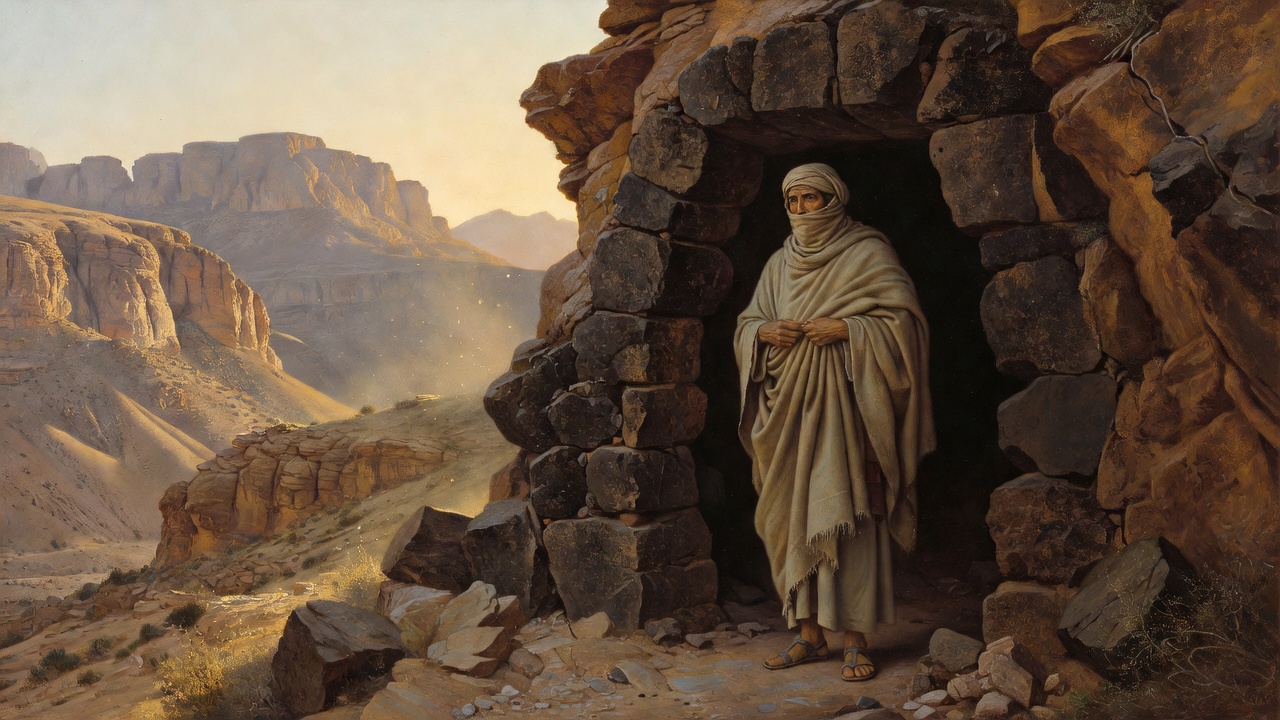
Elijah at Mount Horeb and the Call of Elisha
- Mount Horeb, also identified in biblical tradition with Mount Sinai, was the mountain range where Israel had received the covenant and the law. Elijah's forty-day journey south to Horeb places his encounter with God in the exact setting of Moses' earlier revelations.Sources: the Bible text itself · Horeb
- When God commands Elijah to anoint Hazael as king of Syria and Jehu as king of Israel, the narrative connects prophetic authority to geopolitical succession in both nations, while assuring Elijah that seven thousand faithful Israelites remained.Sources: the Bible text itself · Hazael · Jehu
- Casting a cloak over Elisha's shoulders while he plowed with twelve yoke of oxen at Abel-meholah was a symbolic act that marked Elisha as Elijah's disciple, adoptive heir, and prophetic successor.Sources: the Bible text itself · Elisha · Abel-meholah
Notes written with AI assistance from open sources (Theographic Bible Metadata, CC BY-SA 4.0; Easton’s Bible Dictionary, public domain) and reviewed before publishing.
Places in this chapter
- Mount Horeb · Today: Jebel Musa · 28.540, 33.973 · verse 8
- Damascus · 33.511, 36.306 · verse 15
- Syria · Today: Aram · 33.511, 36.306 · verse 15
Only places identified with high confidence are shown (90% or more according to the scholarly sources compiled by OpenBible). Period map: DARE (Digital Atlas of the Roman Empire), CC BY 4.0; modern map: © OpenStreetMap contributors; places: OpenBible.info (CC BY 4.0).
Credits and license for this translation
Baibal Olcim
The Holy Bible in the Matupi Chin language of Mynmar with Strong's numbers
Public Domain
Language: Matupi Chin (Chin, Matu)
Published in Mynmar, which is not a signatory to international copyright treaties. Copyright may apply locally in Mynmar.
2026-07-16
Source: http://ebible.org/hlt/ · eBible.org