John 6
U BULUNGANA U NIGA · Tap a verse to see its cross-references.
E Iesu e hanour u 5000 tara katun
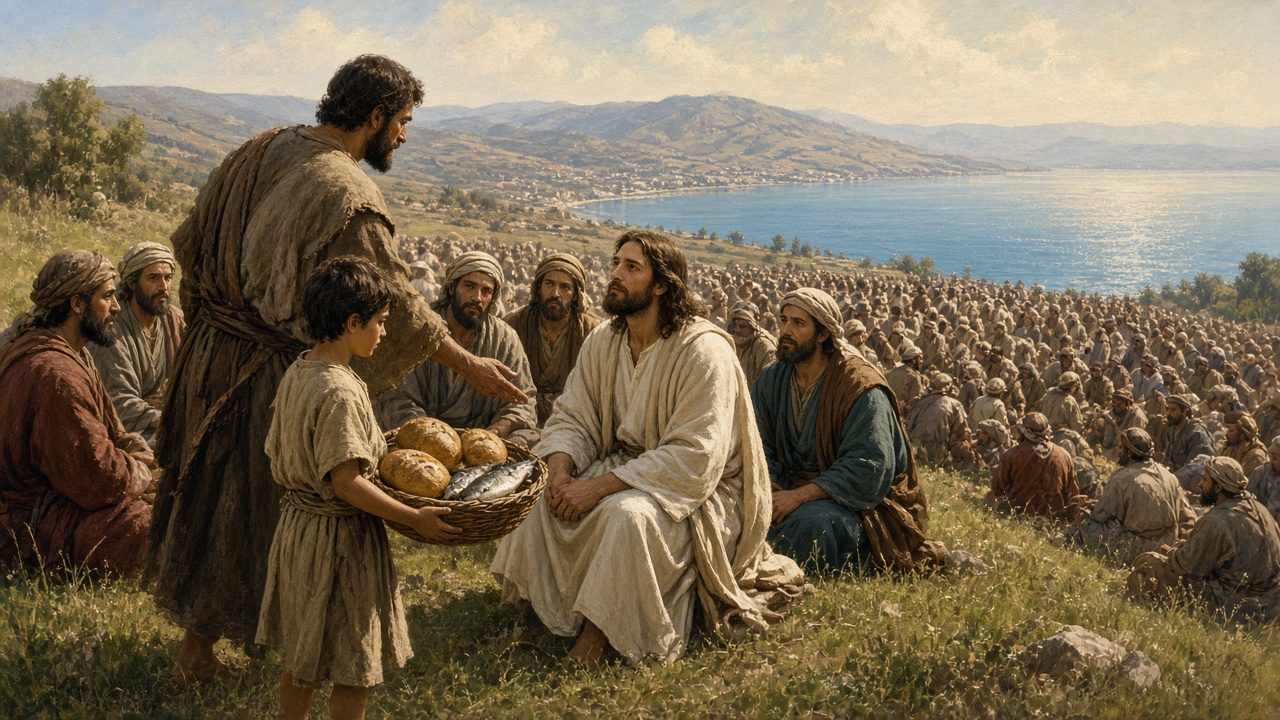
1I murinen be Iesu e la pouts uato i hapalana Ramun a Perperere i Galili, te ngö haseri i Taibirias. 2U katun u para koru i kukutie ien, taraha nori i tara hakapa a man mirakul te katoe ien turu katun ti ka mei a nimate. 3Be Iesu e gamon la seina tara tsi pokus me gum gono merena u katunun tsitsilo i tanen. 4Na kannouna turu Paska turu Jiu e sukusuku. 5Be Iesu e hula tarana me tara sabiena a pal barebana u para koru ti la uama i tanen, ba nonei e poiena tere Pilip, “Ime te hole roa ra ta beret te gi hanouri u barebana hoboto teka?” 6Nonei e mar ranga u teka te ga torohana menien e Pilip. Nonei e atei sil mami a ka te ga kate ien. 7Be Pilip e ranga palise nen me poiena, “Te gi holeia ra a beret te antunana turu 200 denarius moni ba te ma antuna has nei turu barebana te gi lu menien a ma tsitabubu.” 8Na toa katunun tsitsilo i tanen e Endru e toulane Saimon Pita e poei i tanen, “A toa pien tson e kana teka te ka mena a tolima bali beret na huol a iena. Kaba e ma antuna nei turu pal barebana u para koru teka.” 10Be Iesu e poiena, “Hagum raiam u barebana.” U garas u para te kana tara makum teka. Bu barebana e gumur, a pal tson na tohaliou has. Na hihase tara pal tson e antunaia tara 5000. 11Be Iesu e luena u beret me haniga uana tere Sunahan me molamola rane ien u barebana ti gum. Te kato has uen turu iena. E hala has menien i taren, me antunana turu ngil i taren. 12Ba nori e nou hantuna hakapar, ba nonei e ranga merena u katunun tsitsilo i tanen me poiena, “Alimiu go gone iam u nouba te ka noana. E moa te gi kato baba menien.” 13Ba nori e gone ier u nouba me ongo hasaputer a 12 a kalobaka te saputsi a ma tsi makumun bali beret ti nou ba nen. 14Ba barebana e tarer a mirakul teka te kate ien ba nori e poier, “U mana koru, nonei teka a propet te ga la uama tara han i puta.” 15E Iesu e atei sil nori e mi katsin pile kap naren ba te katoe rien a king i taren, ba nonei a toa pepeisa e la lel uana i gusuna a ma tsi pokus.
E Iesu e tatalaia i ieluna a ramun
16Te butuia a lahilahi, bu katunun tsitsilo tere Iesu e gala uar tara Ramun Perperere i Galili. 17Nori i tuku hakapaia i kotolana me osa ria tara tsi tolala te gi la uen i hapalana ramun tara taun i Kapeneam. Ba ke bong talana be Iesu te tia noa nama. Ba nori e la talar. 18Ba lomolomo e takei talana bu ramun e posana. 19Ba nori e sua hantuna ria tara tolima kilomita tsi a tönomo ba nori e tarer e Iesu te tatalama i ieluna a ramun ba te la uanama tara tolala. Nori i ma marei ien ba nori e matoutur. 20Ba nonei e poiena i taren, “Alia ba! Alimiu go ma matoutmi.” 21Poata ti hengo marei ien a runguna e Iesu ba nori e sasala talar me hose rien i iahana tolala. Ba i teka puku ba tolala e na butuna tara han ti ngilin la uen.
A barebana i sake e Iesu
22Bu hamahö ba barebana te la ba rema e Iesu te ka noa has ria i hapalana ramun. Ba nori e poier, “Ara i tarei a tsi toa puku a tsi tolala te ka i nolaha, ne Iesu e ma osai i tanen. U katunun tsitsilo i tanen toum i sua pepeisa ba nela a han teka.” 23Kaba palaina ma tsi tolalana i Taibirias i ka hasia i rehina makum te hanigeia a Tsunono a tsi kannou ba nori te toan nouer a beret. 24Ba poata ti atei sileia a barebana e Iesu nu katunun tsitsilo i tanen i ma ka talai, ba nori e toan osa ria tara ma tsi tolala teka me sakie rima e Iesu i Kapeneam.
E Iesu a kannouna tara nitoatoa
25A barebana i aroho hakapama tara ramun me mi sabier e Iesu. Ba nori e poier i tanen, “Tson Hihatuts, i hangisa tu tukuia lö i han teka?” 26Be Iesu e poieto i taren, “Alia e hatei hamana koru rago limiu, alimiu e ma sake sil memu mei lia tu tara mena mei limiu a man mirakul i tar. E moa. Alimiu e sake sil memu mei lia tu hanou hamasul mera mei lia alimiu. 27Alimiu go ma kui sil lasemi a ka te tatei putakana. E moa. Alimiu go kui sile iam a ka te niga nitoana, a ka te hala nena a nitoatoa te ka nitoana. Alia tu butun katunuma e hala ragoi limiu a ka teka, taraha e Tamar e Sunahan e hanige nolia.” 28Ba nori e poier i tanen, “Ime te mar kato mena moi lam nonei a mar toukui teka te ngilena e Sunahan?” 29Be Iesu e ranga palis uana i taren me poiena, “Nonei a toukui teka te ngilena e Sunahan te go kate iam limiu: alimiu go hamana uam i tar, taraha e Sunahan te haleie mou lia.” 30Ba nori e poier i tanen, “Saha mirakul te katoe mou lö te haruto nanou te go hamana u lam i tamulö? Alö go haruto rilam a toukui pan i tamulö. 31U tuburara i noui a ka ti ngöei u mena,* tara poata ti ka ien tara latu pinopino te moaia ta kannou. U Buk u Goagono e poe hasena, ‘Nonei e hala rien a kannou te lama i Kolö.’” 32Be Iesu e poiena i taren, “U mana koru alia e hatei rago limiu, e Moses e ma halani a kannou te lama i Kolö turu tubumilimiu. E moa. E Tamar te hala nen. Na nonei e ngilin hala has rana mei limiu a tana kannou a niga i Kolö. 33Nonei a kannou a niga teka tere Sunahan e lama i Kolö ne hala nena a nitoatoa tara barebana i puta.” 34Ba nori e poier, “A tsi tsunono, alö go hala nitoa ramei lam a kannou teka.” 35Be Iesu e poiena i taren, “Alia nonei a kannou te hala nena a nitoatoa. A katun te la uanama i tar ba te hamana uana i tar e sasala nitoa menou a nitoatoa te ka nitoana. E kato uana tara katun te mamala bes nei ne mamala maka has nei.” 36Be Iesu e ranga noana me poiena, “E kato uana tu hatei meri lia alimiu, alimiu u tara hakape molia, kaba limiu e ma hamanami. 37U katun hoboto te hala mera namei romana e Tamar i tar e la uarima romana i tar. Ne moa koru te go hakopis ba meni lia ta katun te ga la uama i tar. E moa. 38Alia u ma la sile mei i Kolö te go mi kato meni u ngil peisa i tar. E moa. Alia u la silema te go mi kato meni lia u ngil tere Sunahan te haleie molia. 39Na nonei a ka teka te ngilena e Sunahan: nonei e ngilena te go ma taia u ta toa ta katun te hale meien lia. Na nonei e ngil hasena te go hatakei pouts merien romana lia tara tou mate tara kapakapana poata. 40Ne Tamar e ngil hasena u katun hoboto te tare rio lia na te hamana uar i tar, nori gi ka meiou a nitoatoa te ka nitoana. Na lia e hatakei pouts ragoen romana tara tou mate tara kapakapana poata.” 41Ba pal kapan turu Jiu e hihirangatsi ner e Iesu te poe menien, “Alia a kannou tu lama i Kolö.” 42Ba nori e poier, “Nonei banei lasi e Iesu a pien tere Josep. Ara e atei silera e tamanen ne tsinanen. Ime te kato halona uanen ba nonei te poiena, ‘Alia u lama i Kolö’?” 43Be Iesu e poieto i taren, “Hapolase iam u ranga. 44A katun e ma antunan la peisa uana mei i tar te ma las mena name ien e Tamar. E moa. Kaba katun te la uanama i tar, alia e hatakei poutse goen romana tara tou mate tara kapakapana poata. 45A propet tere Sunahan e koloto nia turu Buk u Goagono i manasa me poiena, ‘E Sunahan e hatuts ranoen romana, nori hoboto.’ Nu katun hoboto te hengo hanige ier u hihatuts tere Tamar e la uarima romana i tar. 46E moa ta toa ta katun te antunan tara nena e Tamar. E moa. Alia pepeisa tu tarema e Tamar e Sunahan, taraha alia u lama i tanen.” 47Be Iesu e ranga noana me poiena, “U mana koru alia e hatei rago limiu, a katun te hamanana e ka menou a nitoatoa te ka nitoana. 48Alia a kannou te hala nena a nitoatoa. 49U tubumilimiu i noui a ka ti ngöei u mena tara latu pinopino te moaia ta kannou. Kaba nori i ma toatoa nitoai. Nori i mate noa has. 50Alia e ranga negu a kannou te lama i Kolö, na katun te noue nen e ma mate noi. 51Alia nonei a kannou te hala nena a nitoatoa na te lama i Kolö. Te hamana uana a katun i tar, nonei e toatoa nitoa nou. Na kannou te hala negu lia ba te hala nena a nitoatoa tara barebana i puta, nonei a tuanreir.” 52Bu pal kapan turu Jiu e toan hiararangar me poier, “Ime te kato halona uanou a katun teka ba te hala ranoi ra a tuanreinen ba ra te noue ren?” 53Be Iesu e ranga palis ranen me poiena, “Te ma nou nei a katun na te ma ua has neien, nonei e ma antunan toatoa nei. Na lia e hatei hamana koru rago limiu, e kato has uana i iesana tara katun te hahamanana i tar. Alimiu go lu mena milia i torimilimiu, alia tu butun katunuma. Te moa nen, ba limiu te ma antunan ka memi a nitoatoa te ka nitoana. 54A katun te nouena a tuanreir na te ue iena u rahatsing i tar e ka menou a nitoatoa te ka nitoana. Na lia e hatakei poutse goen romana tara tou mate tara kapakapana poata. 55Taraha, a tuanreir nonei a kannou hamana nu rahatsing i tar nonei u ramunun ua hamana. 56A katun te nouena a tuanreir na te ue iena u rahatsing i tar e ka nitoana i tar, na lia e ka nitoa has gia i tanen. 57E Tamar te toatoa nitoana e haleie molia. Na lia e toatoa nitoa has megu e Tamar e halei lia a nitoatoa teka. Ne kato has uana i iesana tara katun te noue nolia. Nonei has te toatoa nitoa nou, taraha alia e hale gien a nitoatoa teka. 58Nonei a kannou teka te ranga nagu lalia te lama i Kolö. E ma kato uanei nonei tara kannou ti nou u tubumilimiu kaba i mate noa has. E moa. A katun te nouena a kannou teka e toatoa nitoa nou.” 59E Iesu e kateia u ranga teka te hihatuts ien i iahana luman lotu tara taun i Kapeneam.
U rangana tara nitoatoa te ka nitoana
60A katun a para tere Iesu i hengo u ranga teka me poier, “U ranga teka e kato hatutu koru rano ra. Ara e ma tatei hengoe reien!” 61E Iesu e atei sil peiseir u katun ti lala gono meien i hihirangatsin u ranga te katoe ien, ba nonei e poiena, “Alimiu e raman hengoemiu u ranga teka? 62Na limiu e mar hakats uamou ime te tara mena moi limiu alia te la pouts uagou lia i Kolö tu lama lia, alia tu butun katunuma? 63U Namnamei i tar te hala nena a nitoatoa teka. A tuanreir e moa. U ranga te hatei ragu lei lia alimiu nonei u rangana turu namnamei, na nonei te hala ranei limiu a nitoatoa. 64Kaba palair u katun i gusumilimiu e hahamana noar.” E Iesu e mar ranga u teka, taraha nonei e atei mamir u katun ti hahamana nen, na nonei e atei mam hasin esi nonei a katun te ga haruto nen turu katun ti korupakö nen. 65Ba nonei e poiena, “Nonei te hatei bera gulei lia alimiu e moa ta katun te go la uama i tar te ga ma haniga uai e Tamar.” 66E kato uana teka bu katun u para ti lala gono meien e toan la ba neren, na nori i ma hula la gono lel meien. 67Be Iesu e rangata rena a 12 a katunun tsitsilo i tanen me poiena, “Ga limiu has te la ba nemo lia?” 68Be Saimon Pita e ranga palise ten me poiena, “Alam go la u teresi? E moa tala. Taraha, alö peisa te ka mem u rangana tara nitoatoa te ka nitoana. 69Na lam e hamanem u ranga i tamulö, na lam e atei sil hasem alö a Pien a Goagono tere Sunahan.” 70Be Iesu e poiena i taren, “Alia tu hopu kap rio limiu a 12 a katun. Kaba toa i tamilimiu noa has e katun uana tere Satan.” 71Nonei e rangein e Judas a pien tere Saimon Iskeriot. E manana, nonei a toa tara 12 a katunun tsitsilo tere Iesu, kaba nonei te na harutoen e Iesu turu katun ti korupakö nen.
Did you know?
The Bread of Life
- In this chapter John calls the lake both the Sea of Galilee and the Sea of Tiberias. Easton's Bible Dictionary describes it as twelve and a half miles long and from four to seven and a half miles wide, with its surface 682 feet below the Mediterranean. Tiberias, on the western shore, is said to have been founded by Herod Antipas in A.D. 16 and named for the emperor Tiberius; some boats from that city landed near the place where the people had eaten the bread.Sources: the Bible text itself · Sea of Galilee · Tiberias
- That evening the disciples set out by boat for Capernaum, and the next day the crowd crossed and found Jesus there. He delivered the teaching about the bread of life in the synagogue at Capernaum. Easton's Bible Dictionary notes that the city, not mentioned in the Old Testament, became Jesus' own city after his expulsion from Nazareth and was the scene of many episodes in his ministry.Sources: the Bible text itself · Capernaum
- As the crowd drew near, Jesus asked Philip where they could buy bread, a question the narrative says was meant to test him, for Jesus already knew what he would do. Philip, like Andrew and Peter, was from Bethsaida; he answered that two hundred denarii would not buy enough for each person to have a small piece. Andrew, Peter's brother, then pointed out a boy with five barley loaves and two small fish, and Easton's Bible Dictionary, citing this exchange among other passages, says Philip seems to have held a prominent place among the apostles.Sources: the Bible text itself · Phillip the Apostle · Andrew · Simon Peter
Notes written with AI assistance from open sources (Theographic Bible Metadata, CC BY-SA 4.0; Easton’s Bible Dictionary, public domain) and reviewed before publishing.
Places in this chapter
Only places identified with high confidence are shown (90% or more according to the scholarly sources compiled by OpenBible). Period map: DARE (Digital Atlas of the Roman Empire), CC BY 4.0; modern map: © OpenStreetMap contributors; places: OpenBible.info (CC BY 4.0).
Credits and license for this translation
U BULUNGANA U NIGA
The New Testament in the Halia Language of Papua New Guinea
Nupela Testamen long tokples Halia long Niugini
copyright © 2020 Wycliffe Bible Translators, Inc.
Language: Halia
Translation by: Wycliffe Bible Translators
This translation is made available to you under the terms of the
Creative Commons Attribution-Noncommercial-No Derivatives license 4.0.
You may share and redistribute this Bible translation or extracts from it in any format, provided that:
You include the above copyright and source information.
You do not sell this work for a profit.
You do not change any of the words or punctuation of the Scriptures.
Pictures included with Scriptures and other documents on this site are licensed just for use with those Scriptures and documents.
For other uses, please contact the respective copyright owners.
2022-06-08
Source: http://png.bible/hla/ · eBible.org