1 Timothy 2
Khoryenkom Karyehtanà · Tap a verse to see its cross-references.
Khoryenkom yakoro kàrwonàmtoho kom hoko hananàhno yeryetxhàrà on ha.
1Wahoro htxero onà wyaro àkehe, àton kom hoko. Khoryenkom yakoro hak nàrwonàmtxowà, anar kom hoko, omeroron kom hoko. Apa y, noro hoko ryhe kàrwonaha, ayakoro, katxow haka. Apa y, noro akoronomako nyhe, katxow haka. Apa y, noro txko ryhe mewakryeko. Ohxe xaxa manaha, katxow haka. Àro wyaro hak nàrwonàmtxowà, àton komo, anaro rha toto kom hoko, 2anaro rha owto yoh kom hoko xarha, anaro rha ehonomnà kom hoko xarha. Nyamoro hoko tàrwonàmporye tehxatxhe, Khoryenkom yakoro, wahahnà ro me toto komo yesnàr horà, teryehorye roro kesnàr kom horà, Khoryenkom hokono ro me kesnàr kom horà, takàhsomà ro me rma haxa kesnàr kom horà.
3Àro wyaro Khoryenkom yakoro kàrwonàmtoho komo ryhe, ohxe naha, noro wya, konyhoryeny komo wya. Kàrwonàmrà komo rma yonytxehe, noro ha. 4Toto komo yonyhoryenàr xe rma haxa naha. Omeroron komo yonyhoryenàr xe rma haxa naha. Àwyanye yaworon xaxa hutwanàr xe rma haxa naha, noro ha.
5Àsok tawro hana. Towenyxa ryhe nay hamà, Khoryenkomo. Towenyxa rma rha naha, konyhoryeny komo, Khoryenkomo nàhnàn me harha keny komo. Kryestu Txesusu ryhe noro ha. Noro ryhe, toto me naha, kàwyaronye rma rha. 6Tano me ro rma wayehye, konyhoryenàr kom horà, omeroron komo yonyhoryenàr horà. Kanhàn komo hyaye kowtoho komo yehemaye, twayehrà ke.
Àro wyaro noro wya konyhoryetxho komo ryhe, ekarymahnà me rma hak nehxakonà, amnyehra. Amnye rma haxa ryhe, ekarymaxah me harha naha, ekarymanàr xe harha Khoryenkom yesnàr ke mak ha. 7Ekarymanye ro me ronyakye. Kryestu nànyaketxho ryhe uro ha. Xuknewyanahnà komo hananàhnye ro me ronyakye. Yaworon xaxa enytxatxoko kanye ro me ronyakye, àwyanye. Kryestu hona harha xenytxoko kanye ro me ronyakye, àwyanye. Àro wyaro roskarymantoko, yaworo xaxa àkehe. Àtemarontahra ro mak wehxaha.
8Àro ke, onà wyaro toto komo yesnàr xe wehxaha. Kàrkomo kom hak nàrwonàmtxowà, Khoryenkom yakoro. Henta kom tehtokony hana, àto rma hak nàrwonàmtxowà, anaro rha tohsamnohtoho kom yawo rma tehtokony hamà. Enyhoru ro me hak nahtxoko, tàrwonyem komo, tatahoyotkaxem komo. Ewakàhkahpànà ro me rma haxa hak nahtxoko. Osoyhenà ro me rma haxa hak nahtxoko, nyamoro ha, Khoryenkom yakoro tàrwonyem komo.
Woràskomo komo yohtahoryetxho hoko hananàhno yeryetxhàrà on ha.
9Woràskomo komo xarha, tohtahoryetxho kom hoko, ohxe rma haxa hak nahtxoko. Takàhsom me rma hak nahtxoko. Enyhoru yawo rma hak nahtxoko. Onà wyaro kahra hak nahtxoko. Anar komo yoho rma haxa kohtahoryen hamà, ohxe rma haxa rosonyhonàr horà, kahra hak nahtxoko. Àro ke, ehetàhpenyen ke ewomumtohra hak nahtxoko. Ohxe hak notexkatxowà. Onà wyaro kahra hak nahtxoko. Anar komo yoho rma haxa kotexken hamà, ohxe tonyxem me rma haxa ryesnàr horà, kahra hak nahtxoko. Uru ryhe wehekahtyan hamà, ryemeknarà, kahra hak nahtxoko. Anaro rha tohu txko wehekahtyan hamà, rowarà, kahra hak nahtxoko. 10Owakryeno ytxoho hok haxa hak nahtxoko, tohtahoryetxho komo yoho rma haxa mak ha. Àsok tawro hana. Owakryeno ynye ro me rma haxa tehxorye natxow hamà, woràskomo komo, Khoryenkom hokon uro ha kany komo.
11Thananàhsom me hak nahtxoko, woràskomo komo. Thananàhnàtokonye rma, tatàknye hak nahtxoko. Thananàhnye komo yoyuknye ro me rma haxa hak nahtxoko. 12Onà wyaro kanye ro me wehxaha, uro, woràskomo kom hoko. Hananàhno yhera hak nahtxoko, kàrkomo komo yohon mehra hak nahtxoko, kanye ro me wehxaha, àhokonye. Àro ke, tatàknye roro rma hak nahtxoko.
13Àsok tawro hana, kàrà htxero yakàhtonàr ke, noro hona wos yakàhtonàr ke. Àro wyaro rma nehxatxkon hatà, Aknaw heno komo, Efa heno xarha. 14Kàràhnà ryhe, wos haxa ryhe, Satanasà ymo nenkuhtonàr me nehxakon hatà. Noro htxero rma, Khoryenkomo yanweknye me harha nexey hatà.
15Ohxe mak natxhe hampànà, woràskomo komo. Thokru komo yonunutoko ryhe, tukrunhosom me rma haxa natxhe hampànà. Khoryenkom hona haxa xenye ro me tehtokonye, tukrunhosom me nenuryatxhe hampànà. Toto komo xe tehtokony xarha, enyhoru ro me tehtokony xarha, takàhso tehtokony xarha, tukrunhosom me nenuryatxhe hampànà, woràskomo komo.
Did you know?
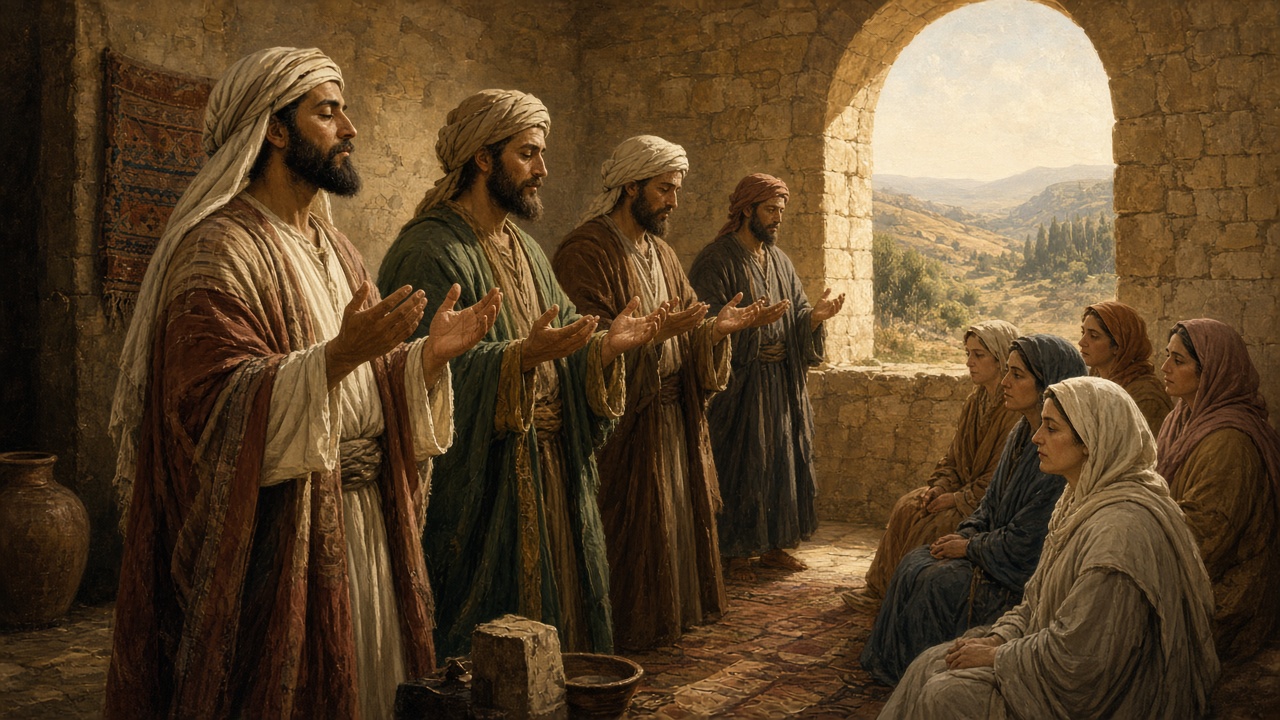
Prayer, modest worship, and Adam and Eve
- This chapter urges that petitions, prayers, intercessions, and thanksgiving be offered for everyone, including kings and all those in authority, so that believers may lead tranquil and quiet lives in all godliness and dignity. It also says there is one God and one mediator between God and men, the man Christ Jesus, who gave himself as a ransom for all.Sources: the Bible text itself
- When the letter says that Adam was formed first, and then Eve, it appeals to the first man of Genesis. Easton's Bible Dictionary (1897) explains that Adam is a Babylonian word meaning 'red,' the generic name for man, with the same meaning in Hebrew and Assyrian, and that he was formed from the dust of the earth.Sources: the Bible text itself · Adam
- The letter says it was not Adam who was deceived, but the woman, who was deceived and fell into transgression. Easton's Bible Dictionary (1897) says Eve means 'life' or 'living,' the name Adam gave his wife, and that the account of her creation is given in Genesis 2:21-22.Sources: the Bible text itself · Eve
Notes written with AI assistance from open sources (Theographic Bible Metadata, CC BY-SA 4.0; Easton’s Bible Dictionary, public domain) and reviewed before publishing.
Credits and license for this translation
Khoryenkom Karyehtanà
New Testament in Hixkaryána (BR:hix:Hixkaryána)
copyright © 2012 Wycliffe Bible Translators, Inc.
Language: Hixkaryána
Translation by: Wycliffe Bible Translators, Inc.
Hixkaryána [hix], Brazil
Copyright Information
© 2012, Wycliffe Bible Translators, Inc. All rights reserved.
This translation text is made available to you under the
terms of the Creative Commons License: Attribution-Noncommercial-No Derivative Works.
( http://creativecommons.org/licenses/by-nc-nd/3.0/ )
In addition, you have permission to port the text to different file formats, as long as you
do not change any of the text or punctuation of the Bible.
You may share, copy, distribute, transmit, and extract portions
or quotations from this work, provided that you include the above copyright
information:
You must give Attribution to the work.
You do not sell this work for a profit.
You do not make any derivative works that change any of the actual words or punctuation of the Scriptures.
Permissions beyond the scope of this license may be
available if you contact
us with your request.
The New Testament
in Hixkaryána
© 2012, Wycliffe Bible Translators, Inc. All rights reserved.
This translation is made available to you under the terms of the
Creative Commons Attribution-Noncommercial-No Derivatives license 4.0.
You may share and redistribute this Bible translation or extracts from it in any format, provided that:
You include the above copyright and source information.
You do not sell this work for a profit.
You do not change any of the words or punctuation of the Scriptures.
Pictures included with Scriptures and other documents on this site are licensed just for use with those Scriptures and documents.
For other uses, please contact the respective copyright owners.
2014-04-25
Source: http://ebible.org/hixNT/ · eBible.org