Psalms 1
Biblica® Libre Ang Pulong Sang Dios · Tap a verse to see its cross-references.
About this book
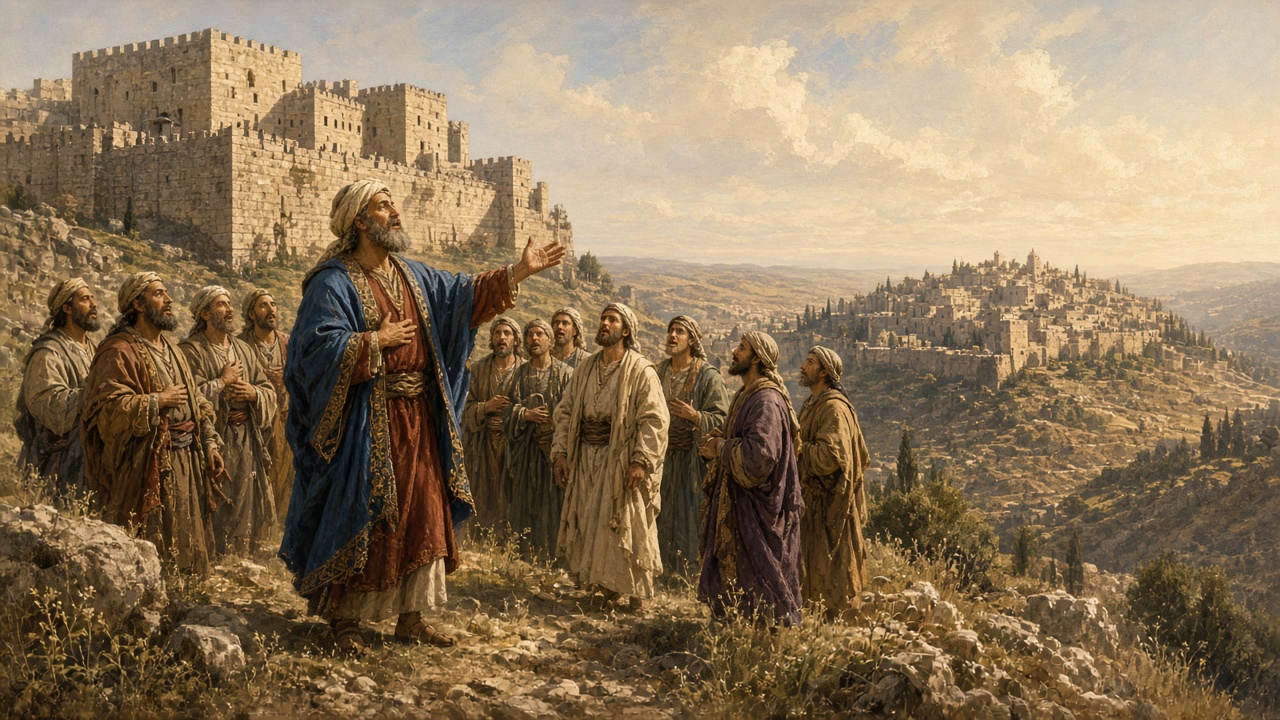
About Psalms
- Easton's Bible Dictionary (1897) presents the Psalms as the work of various authors, owed especially to David and his contemporaries, while poets of later generations added further songs. Easton remarks that, for this reason, the collection more completely reflects every phase of human emotion and circumstance than it otherwise could. The titles ascribe 73 psalms to David; Easton also notes that Peter and John (Acts 4:25) attribute the anonymous Psalm 2 to him, and that about two-thirds of the collection have been ascribed to David.Sources: Easton: Psalms
- Easton's Bible Dictionary (1897) holds that no psalm can be proved later than the time of Ezra and Nehemiah, so the collection spans about a thousand years. It records the presumption that the five smaller collections were made at times of high religious life: the first near the close of David's life, the second in the days of Solomon, the third by the singers of Jehoshaphat, the fourth by the men of Hezekiah, and the fifth in the days of Ezra.Sources: Easton: Psalms
- Like the Pentateuch, the Psalter is divided into five books, each closing with a doxology or benediction: Psalms 1-41, 42-72, 73-89, 90-106, and the remaining 44. Easton reports many ascriptions to David, to Solomon in Psalms 72 and 127, to Moses in Psalm 90, to Heman the Ezrahite in Psalm 88, and to Ethan the Ezrahite in Psalm 89, while many other psalms are anonymous.Sources: Easton: Psalms
- Some titles connect psalms with singers of worship. Psalms 50 and 73-83 are addressed to Asaph, a Levite and one of the leaders of David's choir, skilled in music and called a seer; the Asaph entry says the sons of Asaph were his descendants or, more probably, a class of poets or singers who recognized him as their master. The sons of Korah, a leading part of the Kohathite singers, were entrusted with arranging and singing Psalms 42, 44-49, 84, 85, 87, and 88, and Psalms 39, 62, and 77 are addressed to Jeduthun, to be sung after his manner or in his choir.Sources: Easton: Psalms · Asaph (Levite)
- Psalm 136 is generally called the great hallel, though the Talmud also includes Psalms 120-135. Psalms 113-118 form the hallel recited at the three great feasts, at the new moon, and on the eight days of the feast of dedication. Easton counts 116 direct quotations from the Psalter in the New Testament, and notes that in Luke 24:44 the word psalms means the Hagiographa, the holy writings, one of the sections into which the Jews divided the Old Testament.Sources: Easton: Psalms
Notes written with AI assistance from open sources (Theographic Bible Metadata, CC BY-SA 4.0; Easton’s Bible Dictionary, public domain) and reviewed before publishing.
UNA NGA LIBRO
1Bulahan ang tawo nga wala nagakabuhi sa laygay sang malain nga mga tawo,
wala nagasunod sa ginahimo sang mga makasasala,
kag wala nagaupod sa mga tawo nga nagapangyaguta.
2Sa baylo, ginakalipay niya ang pagsunod sa mga pagpanudlo
nga halin sa Ginoo,
kag adlaw-gab-i ang iya pagpamalandong sini.
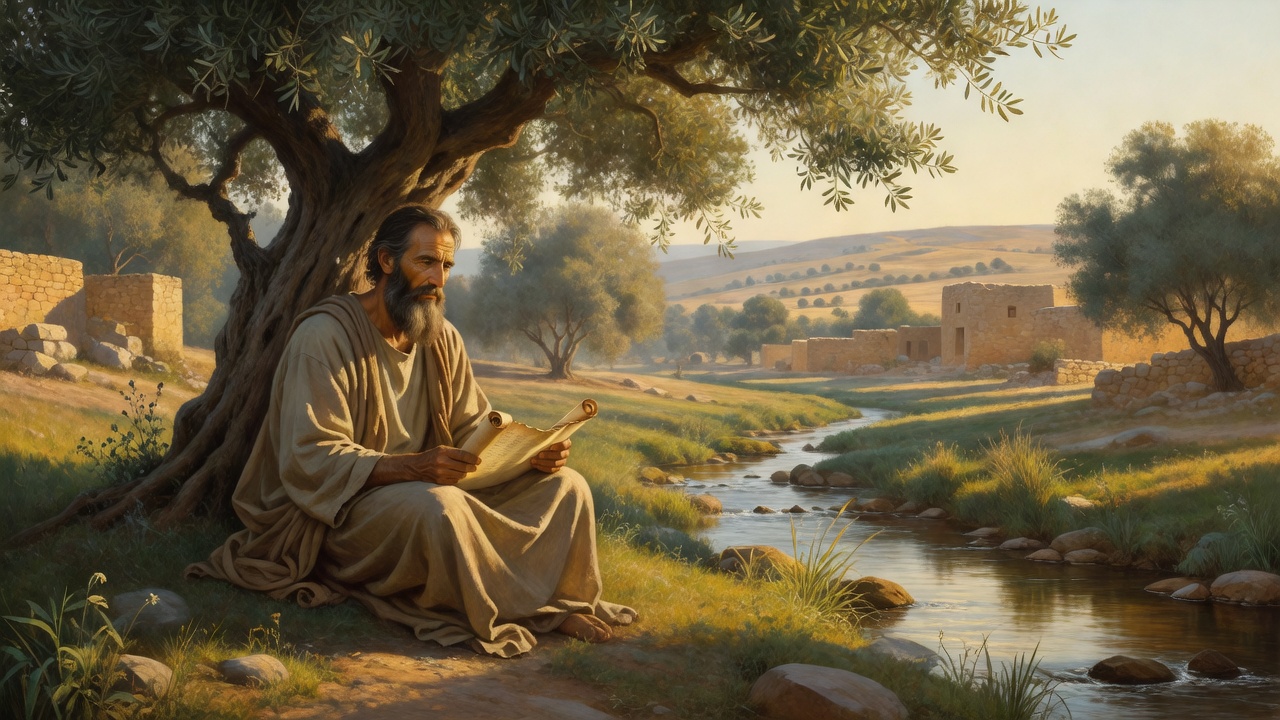
3Pareho siya sa kahoy nga gintanom sa higad sang sapa
nga nagapamunga kon panahon sang tigbulunga,
kag wala nagakalaya ang iya mga dahon.
Ang tawo nga pareho sini magauswag sa iya mga ginahimo.
4Pero indi subong sini ang malain nga mga tawo.
Sila ya wala sing pulos,
pareho sa upa nga ginapalid lang sang hangin.
5Gani sa adlaw sang paghukom, silutan sila sang Dios
kag indi sila pag-isimpon sa komunidad sang mga matarong.
6Kay ginatuytuyan sang Ginoo ang mga matarong,
pero ang pagkabuhi sang mga malain nagadala sa ila sa kalaglagan.
Did you know?
The Two Paths
- Psalm 1 contrasts two ways of living through vivid agricultural imagery: the righteous person is compared to a fruitful tree nourished beside streams of water, while the wicked are likened to light chaff easily blown away by the wind.Sources: the Bible text itself
- The opening verses describe a clear progression away from evil—refusing to walk in the counsel of the wicked, stand in the path of sinners, or sit among mockers—and turning instead to constant meditation on the Law of the LORD.Sources: the Bible text itself
Notes written with AI assistance from open sources (Theographic Bible Metadata, CC BY-SA 4.0; Easton’s Bible Dictionary, public domain) and reviewed before publishing.
Credits and license for this translation
Biblica® Libre Ang Pulong Sang Dios
Hiligaynon: Biblica® Libre Ang Pulong Sang Dios (Bible) for the Philippines
copyright © 1996, 2006, 2011, 2022 Biblica, Inc.
Language: Ilonggo
Contributor: Biblica, Inc.
Biblica® Libre Ang Pulong Sang Dios™
Copyright © 1996, 2006, 2011, 2022 sang Biblica, Inc.
Biblica® Open Hiligaynon Contemporary Bible™
Copyright © 1996, 2006, 2011, 2022 by Biblica, Inc.
Ang “Biblica”, kag ang Biblica logo mga trademark nga ginrehistro sang Biblica, Inc sa United States Patent and Trademark Office. Gin-gamit nga may permiso.
“Biblica” is a trademark registered in the United States Patent and Trademark Office by Biblica, Inc. Used with permission.
Creative Commons License
Magamit sang tanan ini nga obra/translation paagi sa Creative Commons Attribution-ShareAlike 4.0 International License (CC BY-SA). Agod makita ang kopya sang ini nga license, bisitahi ang http://creativecommons.org/licenses/by-sa/4.0 ukon magpadala sang sulat sa Creative Commons, PO Box 1866, Mountain View, CA 94042, USA.
Ang Biblica® amo ang trademark nga rehistrado para sa Biblica, Inc., ang paggamit sang sini (Biblica®) nga trademark ginakinahanglan sang permiso halin sa Biblica, Inc. Suno sa polisiya nga ginbutyag didto sa CC BY-SA license, mahimo nga kopyahon kag idistribute ining orihinal nga obra/translation basta nga ipabilin ang trademark nga Biblica® suno sa orihinal sini nga pagkasulat. Kon yara ikaw nga ginbag-o ukon ginhimo nga modipikasyon sa sini nga kopya, kinahanglan ipahibalo kon ano ini kag butangan sang sini nga impormasyon: “Ang orihinal nga obra/translation iya sang Biblica Inc. magamit ini nga wala sing bayad, bisitahi lang ang www.biblica.com kag ang open.bible .”
Ang impormasyon bahin sa copyright kinahanglan makita sa Title ukon copyright page sang obra/translaion. Amo ini ang dapat masulat:
Biblica® Libre Ang Pulong Sang Dios™
Copyright © 1996, 2006, 2011, 2022 sang Biblica, Inc.
Biblica® Open Hiligaynon Contemporary Bible™
Copyright © 1996, 2006, 2011, 2022 by Biblica, Inc.
Ang “Biblica”, kag ang Biblica logo mga trademark nga ginrehistro sang Biblica, Inc sa United States Patent and Trademark Office. Gin-gamit nga may permiso.
“Biblica” is a trademark registered in the United States Patent and Trademark Office by Biblica, Inc. Used with permission.
Kon may yara ikaw nga ginbag-o sa kopya, kinahanglan nga mahibal-an ini paagi sa paggamit sang pareho gihapon nga license (CC BY-SA).
Kon kinahanglan nga ipahibalo mo sa Biblica Inc., ang imo ginhimo nga pagbag-o ukon modipikasyon sa sini nga kopya, palihog bisitahi kami sa https://open.bible/#feedback .
This work is made available under the Creative Commons Attribution-ShareAlike 4.0 International License (CC BY-SA). To view a copy of this license, visit http://creativecommons.org/licenses/by-sa/4.0 or send a letter to Creative Commons, PO Box 1866, Mountain View, CA 94042, USA.
Biblica® is a trademark registered by Biblica, Inc., and use of the Biblica® trademark requires the written permission of Biblica, Inc. Under the terms of the CC BY-SA license, you may copy and redistribute this unmodified work as long as you keep the Biblica® trademark intact. If you modify a copy or translate this work, thereby creating a derivative work, you must remove the Biblica® trademark. On the derivative work, you must indicate what changes you have made and attribute the work as follows: “The original work by Biblica, Inc. is available for free at www.biblica.com and open.bible .”
Notice of copyright must appear on the title or copyright page of the work as follows:
Biblica® Libre Ang Pulong Sang Dios™
Copyright © 1996, 2006, 2011, 2022 sang Biblica, Inc.
Biblica® Open Hiligaynon Contemporary Bible™
Copyright © 1996, 2006, 2011, 2022 by Biblica, Inc.
Ang “Biblica”, kag ang Biblica logo mga trademark nga ginrehistro sang Biblica, Inc sa United States Patent and Trademark Office. Gin-gamit nga may permiso.
“Biblica” is a trademark registered in the United States Patent and Trademark Office by Biblica, Inc. Used with permission.
You must also make your derivative work available under the same license (CC BY-SA).
If you would like to notify Biblica, Inc. regarding your translation of this work, please contact us at https://open.bible/#feedback .
This translation is made available to you under the terms of the
Creative Commons Attribution Share-Alike license 4.0.
You have permission to share and redistribute this Bible translation in any format and to make reasonable revisions and adaptations of this translation, provided that:
You include the above copyright and source information.
If you make any changes to the text, you must indicate that you did so in a way that makes it clear that the original licensor is not necessarily endorsing your changes.
If you redistribute this text, you must distribute your contributions under the same license as the original.
Pictures included with Scriptures and other documents on this site are licensed just for use with those Scriptures and documents.
For other uses, please contact the respective copyright owners.
Note that in addition to the rules above, revising and adapting God's Word involves a great responsibility to be true to God's Word. See Revelation 22:18-19.
2025-05-03
Source: http://ebible.org/hil/ · eBible.org