Genesis 8
Buk Niu In Hida Balu nol Dehet deng Apan-kloma ki in Dadi ka · Tap a verse to see its cross-references.
Ui la in miti ka
1Mo Ama Lamtua Allah nadidingun Noh nol totoang hmukit in se kapal la daleng ngas lo. Kon Un bel angin le huu ui tene na halin miti. 2Un tung totoang ui mata in se dale-dapang ngias, nol Un tao ulan na le teen in nahu. 3Kon ui la niu buit-buit. Hidi lelo ngatus buk lim kon, ui la lihu isi lo son. 4Tom nol bulan itu la, kuhit nal lelo hngul itu kon, kapal la sel se leten lapa mes dapa, ngala Ararat. 5Ui la niu napiut lako pes leol mesa, bulan hngulu la lam, leten nas tula ngas ngat tanas nol langa son.
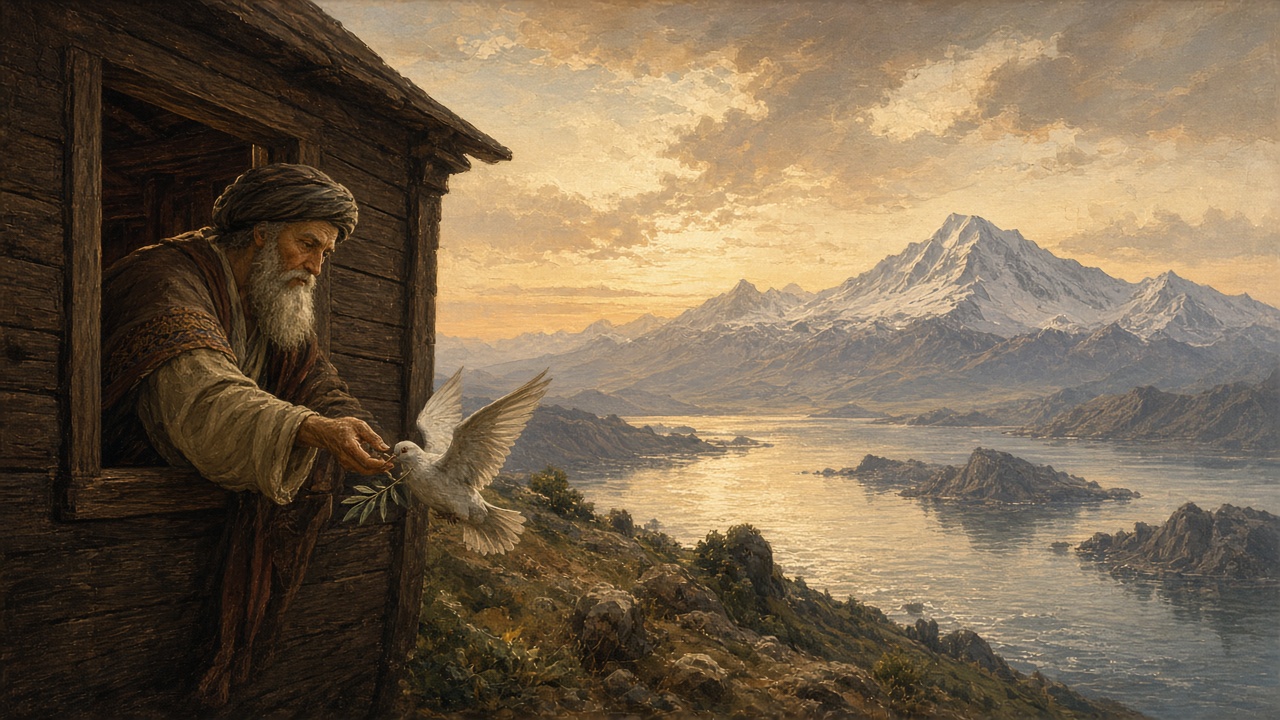
6Kaliut nal lelo buk aat kon, Noh sai jendela kapal las mesa. 7Kon un sao kakalo mesa. Kakaol na hong lako-pait didiin ui tene na miti baktetebes. Mo un hong pait lako kapal la lo. 8Kon Noh sao tiul-tuan mes lolen, le halin taan noan ui la niu baktebes son tam lo bii ka. 9Mo undeng ui la bua papmes apan-kloma ki nabale, tiata tilu na haup maan in dada lo. Kon un hong pait lako kapal la. Ti Noh doong un ima ka le daek tamang tiul-tuan na pait lako kapal la dalen.
10Noh natang lelo iut pait, halas-sam un sao tiul-tuan na pait. 11Lelo-maun kon, tilu ka pait maa se Noh, un kil nol kai saitun klehen mesa, man halas-sam un lukut hidi. Kon nam Noh taan haup noan, ui la niu baktebes son. 12Un natang lelo iut pait kon, un sao tiul-tuan na pait lako. Mo pait na lam, tiul-tuan na pait lo son.
13Dedeng Noh umur taun 601, tom nol leol mesa bulan mesa, ui la miti baktetebes son. Kon Noh sai kapal la jendela las, hidim un ngat pukiu lam dale ka tuu son. 14Lius bulan dua la, leol buk dua beas itu ka lam, dale ka tuu baktetebes son.
15Hidi kon Ama Lamtua Allah tek Noh noan, 16“Noh! Mi bisa nium totoang deng kapal ni tia. 17Sao puting totoang hmukit in moang, hmukit huin, hmukit in lolo, nol tilu-kee kas tia! Nang le oen totoang taplaeng mamo le halin tao inu apan-kloma kia.”
18Hidi kon Noh nol un sapa ka, un anan nas, nol un nalen nas totoang, putis deng kapal la. Hmukit tas totoang kon putis, mesa-mesam nonool un tapans, le piut lakos.
Noh bel in todan le nodan mamo se Ama Lamtua
20Hidi kon Noh babail batu, le daid maan in todan taung AMA LAMTUA. Deng hmukit man boel pake le daid hmukit in todan nas, Noh kat nal mesa-mesa. Hidim un keos le tunus se mija na dapa, le daid in todan bel AMA LAMTUA. 21Nikit AMA LAMTUA hodo net in tunu-dadung nas in bui bingis sa kon, Un dalen kolo isi. Un nangan noan,
“Kilan deng dedeng nia, Auk tao didaan apan-kloma ki undeng atuli li in daat ta lo ka. Oen nangan dadaat deng anan bii ku kon no, Auk tao didaan totoang in nuli ngias banansila el Auk tao son ni lo ka. 22Se dedeng apan-kloma ki muik nabale lam, oras sas laok napiut, el in biasa ka. Nas: oras in soko-hai, nol oras in nui-nole, oras blingin nol oras otot, oras ehe nol oras ulan, lelo nol duman.”
Did you know?
The Waters Recede
- The ark came to rest on the mountains of Ararat, a name meaning “sacred land” or “high land” for a country on whose mountains the ark settled after the flood. Easton's Bible Dictionary (1897) suggests those mountains were probably the Kurdish range of southern Armenia, though the name is also commonly applied to a high, almost inaccessible peak rising from the plain of the Araxes. In 2 Kings 19:37 and Isaiah 37:38 the Authorized Version renders the name “Armenia” and the Revised Version “land of Ararat,” while Jeremiah 51:27 uses it for central or southern Armenia.Sources: Ararat · the Bible text itself
- Noah’s Hebrew name means “rest,” and in this chapter the ark itself comes to rest as the waters go down. He was the son of Lamech and the grandson of Methuselah, and the father of Shem, Ham, and Japheth. Easton's Bible Dictionary describes him as the connecting link between the old world and the new, and as a second great progenitor of the human family.Sources: Noah · the Bible text itself
- Chronological notes place the Great Flood in 2347 BC, lasting one year; the subsiding of the waters in 2346 BC, over 220 days; and the leaving of the ark in 2346 BC, as a single day. In the chapter itself, the waters have gone down after 150 days and the ark rests on the seventeenth day of the seventh month; on the first day of the first month of Noah’s six hundred and first year the waters have dried up, and by the twenty-seventh day of the second month the earth is fully dry.Sources: The Great Flood · The flood subsides · Leaving the Ark · the Bible text itself
Notes written with AI assistance from open sources (Theographic Bible Metadata, CC BY-SA 4.0; Easton’s Bible Dictionary, public domain) and reviewed before publishing.
Places in this chapter
- Ararat · Today: Urartu · 39.703, 44.300 · verse 4
Only places identified with high confidence are shown (90% or more according to the scholarly sources compiled by OpenBible). Period map: DARE (Digital Atlas of the Roman Empire), CC BY 4.0; modern map: © OpenStreetMap contributors; places: OpenBible.info (CC BY 4.0).
Credits and license for this translation
Buk Niu In Hida Balu nol Dehet deng Apan-kloma ki in Dadi ka
Genesis and the New Testament in Helong
Kejadian dan Perjanjian Baru dalam bahasa Helong
copyright © 2011 Unit Bahasa dan Budaya
Language: Helong
Translation by: Wycliffe Bible Translators, Inc.
This translation is made available to you under the terms of the
Creative Commons Attribution-No Derivatives license 4.0.
You may share and redistribute this Bible translation or extracts from it in any format, provided that:
You include the above copyright and source information.
You do not make any derivative works that change any of the actual words or punctuation of the Scriptures.
Pictures included with Scriptures and other documents on this site are licensed just for use with those Scriptures and documents.
For other uses, please contact the respective copyright owners.
2022-03-11
Source: http://ebible.org/hegNTpo/ · eBible.org