Genesis 45
Buk Niu In Hida Balu nol Dehet deng Apan-kloma ki in Dadi ka · Tap a verse to see its cross-references.
Yusuf tek balang un apa ka, nol nodan un ama ka le oen maas daad seda se Mesir
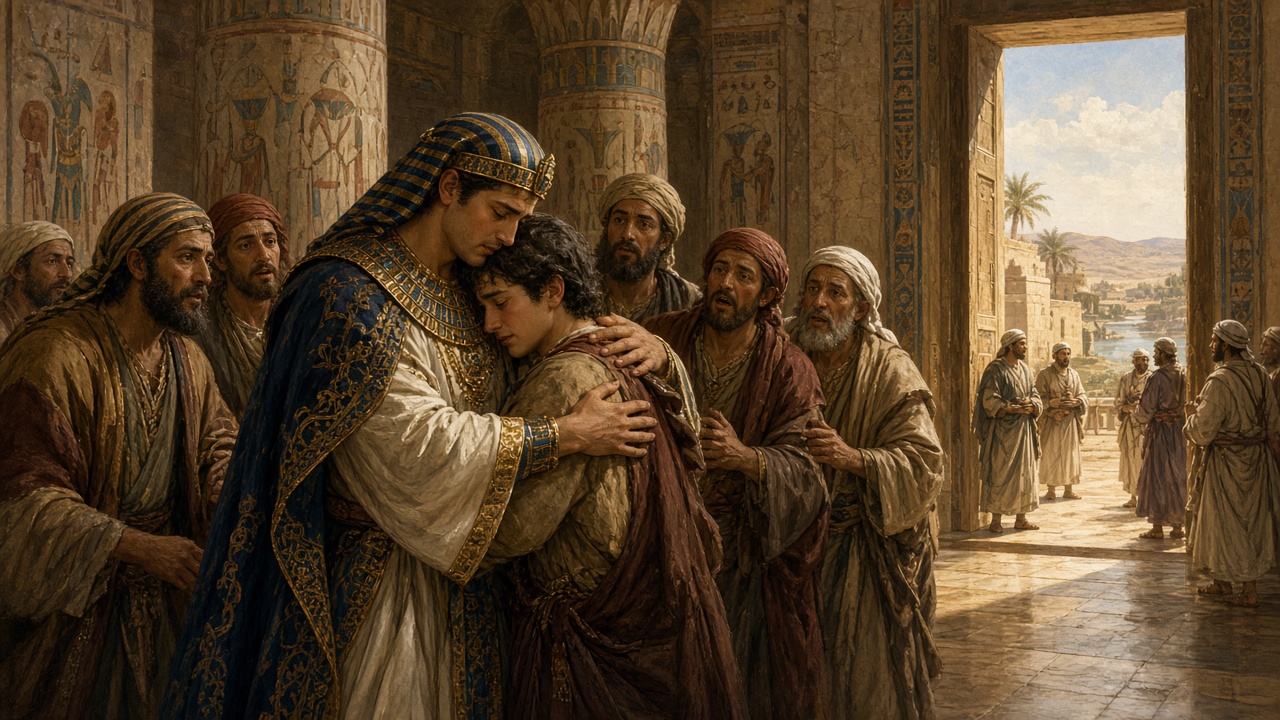
1Ming ela kon, Yusuf dalen na nahi, didiin un tahang nal se un atulin in dake ngas silan lo son. Tiata un tadu oen le putis, halin nam un sii nol un kaka-palin nas. Nini ela lam, un tek puting nal apa ka noan, un na mo asii la. 2Tukun nam atuil in dakeng nas totoang putis, kon Yusuf lilu mumuun. Didiin atuil Mesir in se kamar ra likun na ngas kon ming haup un in lilu ka. Nol atuli-atuil in se lahing nga uma la ka kon, ming haup un in lilu ka.
3Hidi kon, Yusuf aa langa-langa nol un pali-kakan nas noan, “Kaka-paling me! Auk niam Yusuf, mi pail-kakan na! Paap meman nuli baktebes nabale, ta lo?”
Ming ela kon, un kaak-palin nas lii isi, didiin oen aa nal saa pait lo.
4Yusuf laeh oen le tekas noan, “Kaka-pali me! Mi maam dadani se ni le.”
Kon oen lakos dadani nol Yusuf. Un tek oen pait noan, “Auk niam Yusuf, man lelon na mi hee soleng bel atuil Mesir ras. 5Meman mi hee soleng auk son. Mo mi lii deken, nol sua sala apa bakun na. Ta Ama Lamtua Allah esa man kil nol auk maang muna se nia. Nol ela, Un pake auk le bel boa-blingin atuli hut mamo. Le halin nam oen mates undeng hmatu deken.
6Oras lubu ki halas-sam laok taun dua. Ta nate taun lim pait bii nabale. Se dedeng na lam, atuli li bali dale lo, soko-hai lo, nol haup in nui-nole lo. 7Nini lalan man kit in taan lo nia, Ama Lamtua Allah kil nol auk maang muna deng mia. Le halin nam mi nol mi ana-upun nas haup boa-blingin.
8Tiata in toma ka, mi man in tao le auk maang se ni lo, molam Ama Lamtua Allah in tao. Un man tao auk le daid lahi nga ima kanan, se Mesir nia. Kon auk daid tulu in mana-koet se lahi nga um lahi la. Se ia lam, muik atuil didang pait man lapa dui deng auk lo.
9Tiata mi pait lakom nol lalaba tia, le tek auk in aang nias bel papa, noan: ‘Paap ana Yusuf fa, nuli nabale! Un daid atuil tene son ne dale Mesir. Un kon nodan paap le lalaba lako Mesir. 10Mam paap boel daad se dale Gosen, man dadani nol una. Maan na banan, hidim bluang. Tiata paap haup maan le moang paap lae-blai las, laen nas, nol aus-sapi las totoang se lua. Hidim un kon nodan, le paap lako nol ana-upu nias totoang, uma isin nias, nol pusakan nas totoang, le daad se luas. 11Eta paap se Gosen nam, un bisa papa-paiduil paap se lua. Ta oras lubu ki nate taun lim pait bii. Tiata mam un ator, le paap nol paap nenan nias, nol hmukit tas totoang muik tahan in dabun saa lo.’”
12Yusuf tekas hidi ela kon, un aa pait noan, “Halas-sam mi net nol matan esan son, ta lo? Adi Benyamin, auk niam baktebes Yusuf. 13Tiata lako lam tek kit papa noan, auk in kil kuasa ne Mesir ri tene isi. Nol dehet totoang asa man mi in net son nas bel papa. Hidi na lam, mi kil nol paap lalaba maa se lia tia.”
14Hidim un neok un palin Benyamin, le oen duas lilu. 15Un kon neok un kakan nas totoang, le un likis mesa-mesa. Hidi na, halas-sam oen dehet nol una.
Lahing Mesir ra sium Yusuf kaka-palin nas
16Dedeng lahing nga nol un atulin in dake ngas ming haup noan, atuil in maang nas, Yusuf kaka-palin nas, kon oen totoang dalen kolo. 17Hidim lahing nga tek Yusuf noan, “Yusuf! Tek ku pali-kakam mas, le oen sakeng ael laok se oen keledai las, le kil nolas lakos Kanaꞌan. 18Hidim tadu oen le kil nol ku amam ma nol un nenan nas totoang, le oen maas daad seda se lias tia. Mam auk bel oen dale in banan dui se Mesir, le oen bisa nulis se las, nol oen kaa dale na in hapu ngas. 19Tek oen kon, le kil kereta deeh meman deng ias, halin taung in sakeng tana-anang blutu kas, nol ku amam ma. 20Nangan pusaak man oen kil nal maa se ni lo ngas deken, ta totoang man in banan dui se Mesir rias mam oen palas.”
21Ming ela kon, Yusuf bel oen kereta dehe, nol in kaa se lalan muid lahing nga in prenta ka. Nol un pali-kakan nas mana-koet oen sa-saa las, le pait lakos muding lahing nga in leka ka. 22Yusuf kon bel oen at mesam kaod balu apa mesa. Mo un bel Benyamin duit muti ngatus tilu, nol kaod balu apa lima. 23Un kon tunang bel un ama ka sa-saa man in banan dui se Mesir, le sakeng se keledai ta-hngulu hngulu. Hidim un bel taplaeng ale, ruti, nol in kaa bili-ngala se keledai heteng hngul kisa pait, le daid in kaa taung oen in pait maas se Mesir. 24Hidi nam, un sao oen le pait nol in hida noan, “Mi boel kaen apa se lalan deken!”
Yakob ming haup noan Yusuf nuli nabale
25Hidi kon oen pait lakos oen aman sa, se dale Kanaꞌan. 26Lakos lius se luas kon, oen tekan noan, “Papa! Paap ana Yusuf nuli nabale. Un daid atuil tene, le kil bandu ne Mesir!”
Yakob ming haup ela kon, un langan tukun, nol parsai oen in dehet na lo. 27Mo nikit oen tek hidi belen Yusuf in hida ngas, nol net kereta man Yusuf in tunang, le halin taung in sakeng nol un lako Mesir ra, halas-sam un parsai. 28Kon un tek noan, “Idaah! Auk anang nga nuli nabale lia! Eta ela halas-sam auk daleng ngi kolo! Auk musti laok net un le, halas-sam auk mateng nol babanan.”
Did you know?
Joseph Reveals Himself to His Brothers
- Goshen, the district where Joseph tells his brothers to settle near him with their children, grandchildren, flocks, and herds, lay east of the Nile and apparently not far from the royal residence. Easton's Bible Dictionary (1897) notes that it is first mentioned in Joseph's message to his father, and that it was also called the land of Rameses, because the towns of Pithom and Rameses lay within its borders.Sources: Goshen · the Bible text itself
- Joseph weeps so loudly that the Egyptians hear him, and Pharaoh's household soon hears of it; Pharaoh and his servants are pleased when they learn the brothers have come, and he offers them the best of the land of Egypt. Easton's Bible Dictionary (1897) says the Pharaoh of Joseph's days was probably Apopi, or Apopis, the last of the Hyksos kings. It adds that Hyksos kings welcomed Asiatic shepherds, whereas older native Egyptians regarded shepherds as an abomination, though some argue that Joseph came to Egypt in the reign of Thothmes III, long after the Hyksos were expelled.Sources: Pharaoh (of Joseph) · the Bible text itself
- Benjamin was the younger son of Jacob by Rachel, and Joseph the elder of her two sons; their mother died giving birth to Benjamin at Ephrath and named him Ben-oni, meaning son of my pain, a name his father changed to Benjamin. At the reunion Joseph embraces Benjamin and weeps, giving him three hundred shekels of silver and five sets of clothes, while each of the other brothers receives a new garment.Sources: Benjamin (patriarch) · Joseph (son of Jacob) · the Bible text itself
Notes written with AI assistance from open sources (Theographic Bible Metadata, CC BY-SA 4.0; Easton’s Bible Dictionary, public domain) and reviewed before publishing.
Places in this chapter
- Egypt · 30.129, 31.308 · verses 4, 8, 9, 13, 18, 19, 20, 23, 25, 26
- Goshen · Today: Goshen 1 · 30.799, 31.834 · verse 10
- Canaan · 32.767, 35.333 · verses 17, 25
Only places identified with high confidence are shown (90% or more according to the scholarly sources compiled by OpenBible). Period map: DARE (Digital Atlas of the Roman Empire), CC BY 4.0; modern map: © OpenStreetMap contributors; places: OpenBible.info (CC BY 4.0).
Credits and license for this translation
Buk Niu In Hida Balu nol Dehet deng Apan-kloma ki in Dadi ka
Genesis and the New Testament in Helong
Kejadian dan Perjanjian Baru dalam bahasa Helong
copyright © 2011 Unit Bahasa dan Budaya
Language: Helong
Translation by: Wycliffe Bible Translators, Inc.
This translation is made available to you under the terms of the
Creative Commons Attribution-No Derivatives license 4.0.
You may share and redistribute this Bible translation or extracts from it in any format, provided that:
You include the above copyright and source information.
You do not make any derivative works that change any of the actual words or punctuation of the Scriptures.
Pictures included with Scriptures and other documents on this site are licensed just for use with those Scriptures and documents.
For other uses, please contact the respective copyright owners.
2022-03-11
Source: http://ebible.org/hegNTpo/ · eBible.org