Genesis 26
Buk Niu In Hida Balu nol Dehet deng Apan-kloma ki in Dadi ka · Tap a verse to see its cross-references.
Isak nole laih Abimelek
1Oe mesan na, muik oras lubu tuan se dale na, banansila el oras lubu se dedeng Abraham in nuli nabale ka. Tiata Isak laok nodan mana se Abimelek, atuil Filistin nas lahin na, le un boel daad se Gerar. 2Un nodan ela, undeng AMA LAMTUA tulu-balang apa ka bel un son, le tekan noan, “Isak! Ku boel lako Mesir deken. Ta mam Auk tulu bel ku maan didang. 3Eta ku daad tahang tuun se maan na lam, mam Auk leo-leo nol ku, nol bel ku hangun bili-ngala. Mam Auk bel ku in hua-koet tas le taplaeng mamo, banansila el duun in ne apan-dapa kua ngas. Nol Auk bel ku, nol ku in hua-koet tas nusa nia, nol un ingu-mana las totoang. Deng ku in hua-koet tas, mam totoang bangsa in se apan-kloma ki ngias haup hangun. Nini ela lam, Auk in hid nol ku amam Abraham ma, Auk taon dadi. 5Auk daek nias totoang, undeng ku amam ma muid Auk in koma ka, Auk in leka ka, nol Auk in tadu ka son.” 6Tiata Isak daad tahang se Gerar.
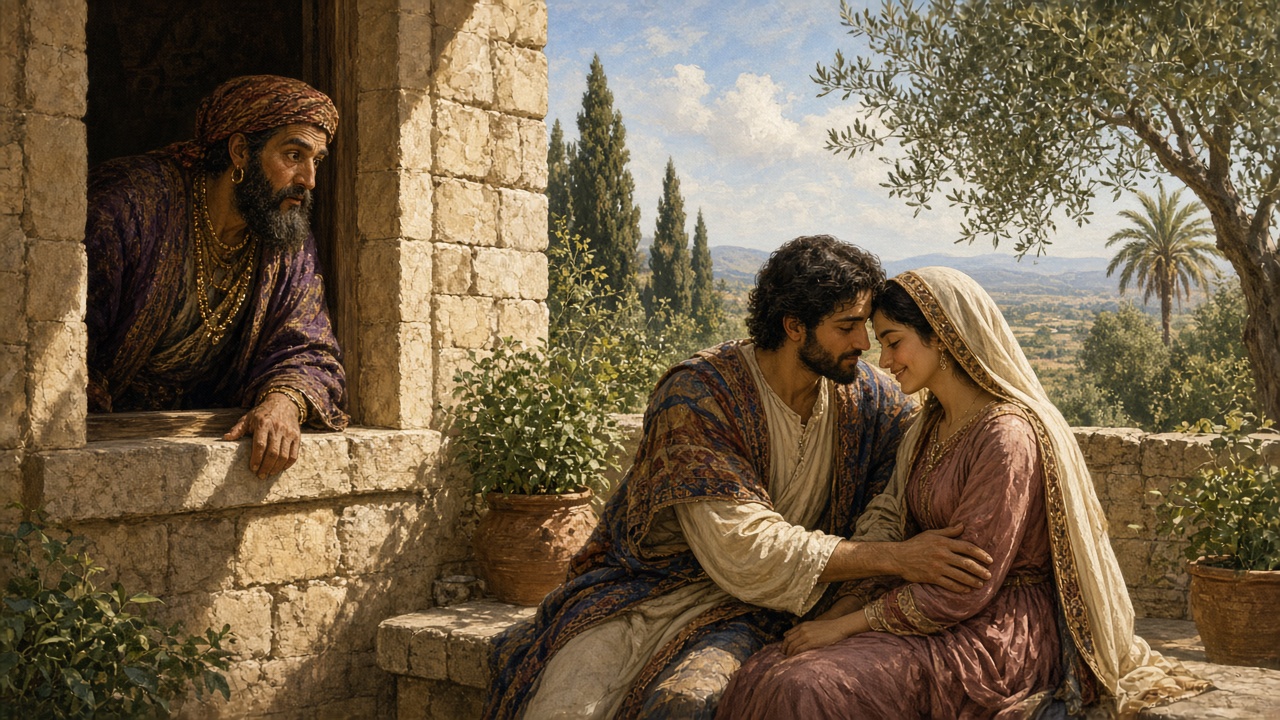
7Ribka na mo leok isi. Tiata atuli-atuil in se na ngas net un kon, oen ketan apa deng una. Mo Isak siut noan, “Ribka na mo auk paling.” Un lii, tamlom mo un hao noan un sapa kam, atuli las keo tele una le oen kat lai-niin Ribka la. 8Isak daad nesang se lua kon, oe mesan na lahing nga sai un jendela la lam, un ngat net Isak nol Ribka neko-lik apa. 9Kon un lok atuli haman Isak le un kaing, tekan noan, “Isak! Auk tanan son, noan bihatang na ku sapam! Mo tasao le ku tek noan, un na mo ku palim mia?”
Kon Isak siut noan, “Elia ama! Eta auk tek noan un na mo auk sapang ngam, auk lii! Ta tamlom mo mam atuli las keo tele au la.”
10Kon nam lahing nga siut noan, “Eta muik atuli se ni niin nol ku sapam ma lam, taon elola ko ku bel kula kami! Tasao le ku tao ela nol kami lia?”
11Hidi nam, Abimelek kaing un hutun nas nol muun noan, “Mi totoang nangan babanan! Asii barain le tao saa nol atuling nia, tamlom mo un sapa kia lam, mam auk hukung tele.”
Isak atulin nas nol atuil Filistin nas kaen apa nol ui in kali
12Dedeng na, Isak soko-hai se nusa na. Kon un haup pait isin lalis ngatus, undeng AMA LAMTUA belen hangun. 13Un in muki ka taplaeng keko lako, didiin un muik talalun. 14Un aus-sapi, laen nol lae-blai las taplaeng mamo. Un atulin nas kon mamo. Tiata atuil Filistin nas idus una.
15Hmunan nua, Isak ama Abraham kali ui mamo. Mo halas ni, atuil Filistin nas laok bua tele ui in kaling nas nini dale.
16Kon lahing Abimelek aa nol Isak noan, “Isak! Banan dui ka ku bok lako nang soleng dale ni tia. Ta ku in kuasa ka dui deng kaim son.”
17Kon nam, Isak nol un nenan nas hoen deng maan na, le pait lakos daad se hnono Gerar. 18Ti un ata kas kali pait ui in kali man atuil Filistin nas in bua son nas. Hidim un ngali ui in kaling nas muid ngala-ngalan man un ama ka in ngali son nas.
19Isak ata kas kali ui se hnono Gerar kon, oen kali tom ui mata in bobon puti mesa. 20Mo atuli-atuil in lolo-poa hmukit Gerar ras kaen apa nol Isak atuil in lolo-poa ngas, undeng ui na. Oen tek noan, “Ui ni kaim nena!” Undeng na le Isak ngali ui in kali na, ngala Esek, man nahin na noan, ‘kaen apa’.
21Kon Isak atulin nas kali ui mes pait. Mo oen kaen apa pait undeng ui in kali na. Tiata Isak ngali ui in kali na ngala Sitna, man nahin na noan, ‘labang apa’.
22Hidi nam, un nang maan na, kon un ata kas kali tapnaeng ui mes pait. Pait niam oen kaen apa lo son. Tiata Isak ngali ui in kali na Rehobot, man nahin na noan, ‘maan in bluang-bleha’. Nol un tek noan, “Halas ni Ama Lamtua bel kit daad se dale in bluang-bleha nia. Se nia, halas-sam kit taplaeng mamo.”
23Deng na, kon Isak noan le bok pait lakos daad se Beer Syeba. 24Duman na kon, AMA LAMTUA tulu-balang Apa ka bel una, le tekan noan, “Isak! Auk niam mo ku amam Abraham Lamtuan Allah. Tiata ku lii deken, ta Auk doh ku. Mam Auk bel hangun se ku. Nol ku in hua-koet tas mamo taplaeng. Auk daek elia, undeng Auk in hid hidi son nol ku amam ma ka.”
25Hidi kon Isak babail batu, le daid maan in tunu-dadung taung in todan-lahing se na. Kon un nodan mamo se AMA LAMTUA se maan na. Un daad se la, kon un atulin nas kali ui pait, se na.
Lahing Abimelek nol Isak nikit in hida
26Dedeng na, laih Abimelek maa deng Gerar. Un maa leo-leo nol un tapa Ahusat, nol Fikol, un meo in hote-dati ka, maas le tutnaal Isak. 27Kon Isak ketan noan, “Ama lahi! Hmunan nu mi nulut puting kaim son, tiata mi le maa tao saa pait nia?”
28Kon oen siut noan, “Elia! Kaim taan son noan, Ama Lamtua doha-tinang ku. Undeng na le, kaim nangan-nangan nam, banan dui ka kit duat tao in sumpa mes elia. Ku sumpa noan, 29mi tao dadaat saol kaim lo, ela kon kaim tao dadaat saol mi lo. Meman kaim dalen nias banan nol mia. Undeng na le, lelon na mi putim nol boa-blingin deng kaim dale ka. Kaim tanan baktetebes son, le AMA LAMTUA man bel mi hangun.”
30Hidi na kon Isak tao fesat bel one, kon oen kaa-niun leo-leo. 31Ola oskaong nga kon oen nikit sumpa. Hidim Isak sao one, le pait nol dalen in titu-tema.
32Leol na, Isak atulin in dake ngas maas lapur Isak deng ui man oen in kali ka, noan, “Ama! Kaim haup ui la son.” 33Kon nam, Isak ngali ui in kali na Syeba, man nahin na noan ‘sumpa’. Tiata oen ngali kota na ngala Beer Syeba, maa pes leol neot nia.
Esau saap bihata at dua deng ngaal didang
34Dedeng Esau umur taun buk aat, kon un saap nol tana-bihata at dua deng ngaal Het. Mesan na Beeri ana ka, ngala Yudit. Nol mesan na pait, Elon ana ka, ngala Basmat. 35Bihaat at dua nas tao Isak nol Ribka dalen iil isi.
Did you know?
Isaac in Gerar
- During a famine, Isaac sought refuge with Abimelech, king of Gerar, an ancient town and district on the southern border of Palestine. Easton's Bible Dictionary (1897) notes that Isaac acted toward his wife Rebekah much as his father Abraham had acted toward Sarah there: he said she was his sister. Abimelech later rebuked him when the deception was discovered.Sources: Abimelech (King of Gerar) · Gerar · the Bible text itself
- The names of wells in the Valley of Gerar recall the disputes over them. Esek means “quarrel,” because the herdsmen of Gerar claimed the water, and Sitnah means “strife.” Isaac also reopened wells that his father Abraham’s servants had dug and that the Philistines had stopped up, and he gave them the same names his father had given them.Sources: Esek · Sitnah · the Bible text itself
- Beersheba means “well of the oath” or “well of seven.” According to Easton's Bible Dictionary (1897), Abraham dug a well there and named it after a compact with Abimelech, and Isaac gave it the same name when he reopened it. The dictionary also identifies Phicol—“great”—as chief captain of Abimelech’s army, and says he took part in Abraham’s alliance over that well.Sources: Beersheba · Phichol · the Bible text itself
Notes written with AI assistance from open sources (Theographic Bible Metadata, CC BY-SA 4.0; Easton’s Bible Dictionary, public domain) and reviewed before publishing.
Places in this chapter
- Egypt · 30.129, 31.308 · verse 2
- Valley of Gerar · Today: about 3 km around Tel Haror · 31.382, 34.606 · verses 17, 19
Only places identified with high confidence are shown (90% or more according to the scholarly sources compiled by OpenBible). Period map: DARE (Digital Atlas of the Roman Empire), CC BY 4.0; modern map: © OpenStreetMap contributors; places: OpenBible.info (CC BY 4.0).
Credits and license for this translation
Buk Niu In Hida Balu nol Dehet deng Apan-kloma ki in Dadi ka
Genesis and the New Testament in Helong
Kejadian dan Perjanjian Baru dalam bahasa Helong
copyright © 2011 Unit Bahasa dan Budaya
Language: Helong
Translation by: Wycliffe Bible Translators, Inc.
This translation is made available to you under the terms of the
Creative Commons Attribution-No Derivatives license 4.0.
You may share and redistribute this Bible translation or extracts from it in any format, provided that:
You include the above copyright and source information.
You do not make any derivative works that change any of the actual words or punctuation of the Scriptures.
Pictures included with Scriptures and other documents on this site are licensed just for use with those Scriptures and documents.
For other uses, please contact the respective copyright owners.
2022-03-11
Source: http://ebible.org/hegNTpo/ · eBible.org