Genesis 10
Buk Niu In Hida Balu nol Dehet deng Apan-kloma ki in Dadi ka · Tap a verse to see its cross-references.
Noh nol Yafet in hua-koet tas
1Hidi deng ui tene ka kon nam, Noh anan nas: Sem, Yafet nol Ham haup in hua-koet.
2Yafet in hua ngas, Gomer, Magog, Madai, Yawan, Tubal, Mesek nol Tiras. Mesa-mesam nonool un dasi-dehet esa, ngala esa, nol oen dale esa.
Gomer in hua-koet tas, Askenas, Rifat nol Togarma.
Yawan in hua-koet tas, Elisa, Tarsis, atuli-atuil Kitim mas, nol atuil Dodanim man in daad lo-lool tasi suut ta ngas.
Ham in hua-koet tas
6Ham in hua-koet tas, Kus, Misraim, Put nol Kanaꞌan.
7Kus in hua-koet tas, Seba, Hawila, Sabta, Raema nol Sabteka.
Raema in hua-koet tas, Syeba nol Dedan.
8Kus ana biklobe la, mo Nimrod. Un nam mo meo in hote-dati man muun isi. 9Un in muun isi ka maa deng AMA LAMTUA. Un kon daid atuil in lono-poa hmukit man muun isi. Undeng na le taom atulis aa noan, “Nang le ku daid atuil in lono-poa hmukit man muun isi banansila el Nimrod, man haup un in muun-tes sa deng AMA LAMTUA.” 10Hmunan nu un dale ka mulai deng Babel, Erek Akad, nol Kalne. Nias totoang muik ne Sinear. 11Deng na, un kuasa taplaeng Asyur. Hidi kon un bangun-pii kota Niniwe, Rehobot-Ir, Kala, 12nol Resen, man in ne Niniwe nol Kala hlala ka ka. Totoang kota nias, kota-kota tene.
13Misraim in hua-koet tas, atuli-atuil Ludim, Anamim, Lehabim, Naftuhim, 14Patrusim, Kasluhim nol Kaftorim. Atuil Kasluhim mas, atuil Filistin nas upu kia-kaons.
15Kanaꞌan ana hmunan na, mo Sidon. Kanaꞌan kon daid upu kia-kaons deng atuli-atuil Het, 16Yebusi, Amori, Girgasi, 17Hiwi, Arki, Sini, 18Arwadi, Semari nol Hamati las.
Kanaꞌan in hitu-hoen nas his-hoeng lakos kata-katang, 19didiin oen dale kas toon na, mulai deng Sidon lako Gerar, napiut lako pes se Gasa. Deng na napiut lako Sodom, Gomora, Adma, nol Seboim, le pes se Lasa.
20Oen totoang nam mo, Ham in hua-koet. Mesa-mesam nonool oen dasi-dehet esan, oen ngalan esan, nol oen dale esan.
Sem in hua-koet tas
21Yafet kaka Sem daid atuil Eber ras upu kia-kaons.
22Sem in hua-koet tas, mo Elam, Asyur, Arpaksad, Lud nol Aram.
23Aram in hua-koet tas, mo atuli-atuil Us, Hul, Geter nol Mas sas.
24Arpaksad ana ka Sela. Sela ana ka Eber.
25Eber haup ana biklobe at dua. Hmunan na un ngali ngala Pelek, (man nahin na noan, bakisa-bakisan), undeng dedeng na, atuli li bakisan nol apa se apan-kloma kia. Un palin na, ngala Yoktan.
26Yoktan in hua-koet tas, mo Almodad, Selef, Hasar-Mawet, Yera, 27Hadoram, Usal, Dikla, 28Obal, Abimael, Syeba, 29Ofir, Hawila nol Yobab. Oen totoang niam, Yoktan in hua-koet sii.
30Oen maan in dada ka, kilan deng Mesa napiut lako lius se Sefar, man nas leten-leten ne suu halin leol-saken.
31Oen totoang nam, Sem in hua-koet. Mesa-mesam nonool un dasi-dehet, ngala, nol dale esan.
32Nas totoang Noh in hua-koet, mesa-mesam nonool un ngala esa. Nikit ui in baa tene ka kuhit kon nam, oen nias man holhising le inu apan-kloma kia.
Did you know?
The Nations after the Flood
- Genesis 10 follows the families of Noah’s three sons, Shem, Ham, and Japheth, and says that after the flood the nations of the earth spread out from them, grouped by clans, languages, lands, and nations. Japheth’s line is linked with peoples of eastern Europe and northern Asia: Gomer is generally regarded as an ancestor of the Celts and the Cimmerians, who in early times settled north of the Black Sea, and Javan became the Hebrew name that the peoples of the East used for the Greeks, especially those of Ionia.Sources: the Bible text itself · Japheth · Gomer (son of Japheth) · Javan
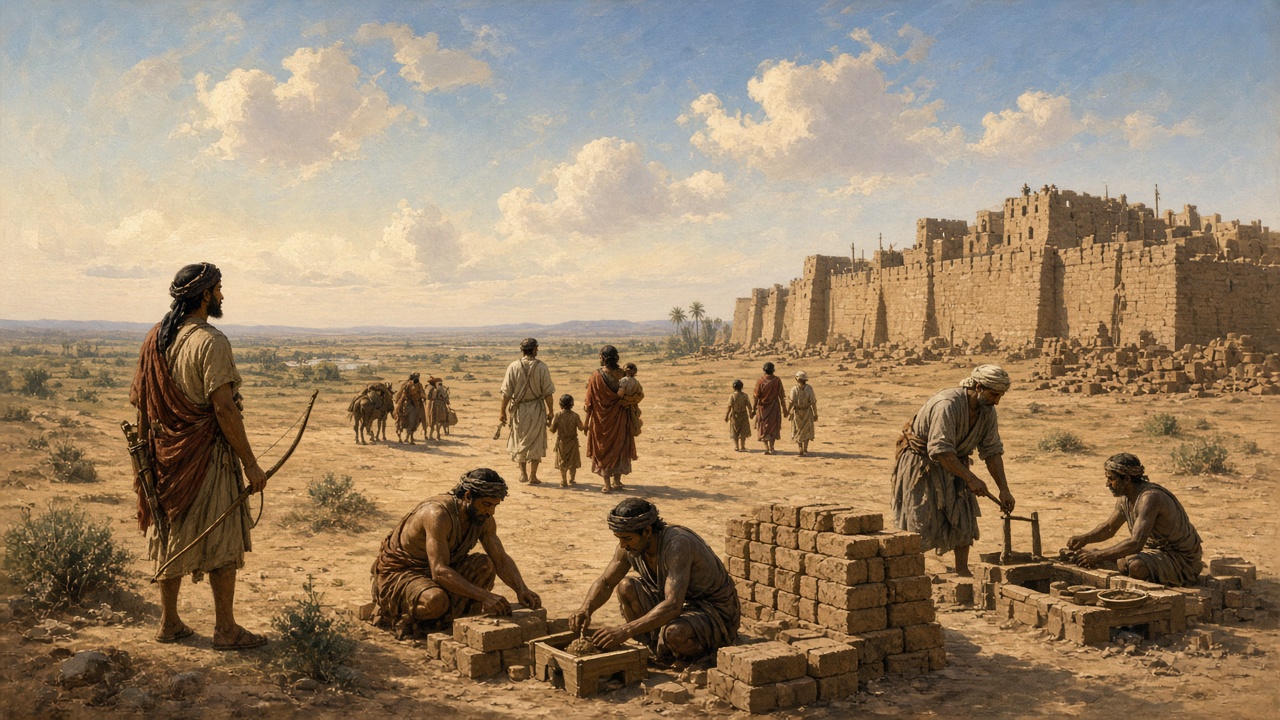
- Cush, a son of Ham, was the father of Nimrod, remembered as a mighty hunter before the Lord, whose kingdom began at Babylon, Erech, Accad, and Calneh in the land of Shinar, probably Babylonia or southern Mesopotamia. From that land he went into Assyria and built Nineveh, Rehoboth-Ir, Calah, and Resen; Calah’s site is probably the Nimrud ruins on the left bank of the Tigris.Sources: the Bible text itself · Shinar · Nineveh · Calah
- Mizraim, the dual form of a Hebrew word for a mound or fortress, may point to Upper and Lower Egypt and is the name the Hebrews usually gave that country; Arabic still calls it Muzr. Shem is called the older brother of Japheth and the forefather of all the sons of Eber, regarded as the founder of the Hebrew people, while an Arab tradition remembers Eber’s son Joktan, Kahtan in Arabic, as the ancestor of tribes of central and southern Arabia.Sources: the Bible text itself · Mizraim · Eber (Heber) · Joktan
Notes written with AI assistance from open sources (Theographic Bible Metadata, CC BY-SA 4.0; Easton’s Bible Dictionary, public domain) and reviewed before publishing.
Places in this chapter
- Erech · Today: Uruk · 31.322, 45.636 · verse 10
- Shinar · Today: Babylonia · 32.543, 44.422 · verse 10
- Assyria · 36.359, 43.153 · verse 11
- Calah · Today: Nimrud · 36.098, 43.329 · verses 11, 12
- Nineveh · 36.359, 43.153 · verses 11, 12
- Canaan · 32.767, 35.333 · verse 19
- Gaza · Today: Tell Harube · 31.504, 34.464 · verse 19
- Sidon · Today: Sandikli archaeological site in Sidon · 33.561, 35.372 · verse 19
Only places identified with high confidence are shown (90% or more according to the scholarly sources compiled by OpenBible). Period map: DARE (Digital Atlas of the Roman Empire), CC BY 4.0; modern map: © OpenStreetMap contributors; places: OpenBible.info (CC BY 4.0).
Credits and license for this translation
Buk Niu In Hida Balu nol Dehet deng Apan-kloma ki in Dadi ka
Genesis and the New Testament in Helong
Kejadian dan Perjanjian Baru dalam bahasa Helong
copyright © 2011 Unit Bahasa dan Budaya
Language: Helong
Translation by: Wycliffe Bible Translators, Inc.
This translation is made available to you under the terms of the
Creative Commons Attribution-No Derivatives license 4.0.
You may share and redistribute this Bible translation or extracts from it in any format, provided that:
You include the above copyright and source information.
You do not make any derivative works that change any of the actual words or punctuation of the Scriptures.
Pictures included with Scriptures and other documents on this site are licensed just for use with those Scriptures and documents.
For other uses, please contact the respective copyright owners.
2022-03-11
Source: http://ebible.org/hegNTpo/ · eBible.org