Zechariah 12
KAKAƗYARI NIUKIEYA XAPAYARI WIXARIKAKƗ · Tap a verse to see its cross-references.
Kememɨteka'unarieni Kerutsareme memaye'unie
1'Ikɨ kemɨtiyɨni niukiyari Yawé niukieya kanihɨkɨtɨni, 'Ixaheri hepaɨtsita mieme.
Mɨpaɨ kanaineni Yawé, muyuawi munetɨa,
kwie tenariyari mukayatsaxɨ,
meta tewi tukari 'iyayari mupitɨa:
2«Kerutsareme tekɨxi nepayeitɨani puwatitarɨwaitɨani yunaime 'auriena kiekatari. Kura kiekariteyari warita kuyaxi mepayaxetɨkɨne meta Kerutsareme warita, 3meta yunaitɨ nuiwarite kwiepa memɨtama mepɨyunɨni memika'unakɨ.
»'Iya tukaritsie Kerutsareme tete mɨkayukemarinɨa nepayeitɨani yunaime teɨteri wahetsiemieme. Kemɨ'ane memikuyuitɨani mɨkɨ pɨwatipɨna.
4»'Iya tukaritsie nepɨwatimariuta yunaime kawayutsixi meta memanatei meka'u'iyarime nepɨwarayeitɨani —mɨpaɨ kanaineni Yawé—. 'Ana nepɨwa'ɨwiyani Kura kwieyaritsie kiekatari, matsi mekaheuneniereme nepɨwarayeitɨani yunaime nuiwarite wakawayutsixima. 5Hikɨ Kura kwieyaritsie kiekatari wa'ukiyarima mɨpaɨ mepɨtiyuani: “Kerutsaremetari hakewa temeyu'awietani takakaɨyari kanihɨkɨtɨni, Yawé Naimekɨmɨtɨrɨkaɨye”.
6»Mɨkɨ tukaritsie Kura kwieyaritsie kiekatari wa'ukiyarima tɨɨ yayatsame mɨta'a nekaniwarayeitɨamɨkɨ 'ɨtsi tsata, yatɨni kɨye manuta'a 'itsanari tsata. Yutserieta miemete meta yu'utata miemete mekaniwatitaiyakuni teɨteri yu'aurie kiekatari, peru Kerutsareme tawari kiepa payani. 7Yawé kuyaxi Kuratsie kiekatari wakimeri kaniwatawikweitsitɨamɨkɨ, Rawiri nuiwarimama meta Kerutsareme kiekatari mariweme memɨkahayuyeitɨwanikɨ.
8»'Iya tukaritsie ne, Yawé, Kerutsareme kiekatari wahetsie nepɨtanuani. Mana kiekame yemekɨ mɨkatɨrɨkaɨye Rawiri hepaɨ pɨtitɨrɨkaɨyeni, meta Rawiri nuiwarimama Kakaɨyari hepaɨ mepɨ'aneni, niuki tuayame Yawé hetsɨa mieme hepaɨ teɨteri muwaruwitɨxime.
Hiwerika pitsikakɨ mumierie hetsiemieme
9»'Iya tukaritsie nepuwaka'unani yunaime nuiwarite kemɨ'ane Kerutsareme memɨmietɨweni. 10Rawiri nuiwarimama wahetsie meta Kerutsareme kiekatari nepɨwapituani 'iyari mɨtiyukanenimaya meta nenewierikɨ mɨ'ayumieme, hikɨ 'ana mepɨnetsixeiya. Kemɨ'ane pitsikakɨ memutse hetsiemieme mepuyukahiwerieni, yuniwe matɨari mieme memutatɨmaiya hepaɨ mepɨteyuhiwerieka.
11»'Iya tukaritsie Kerutsareme kiekariyaritsie waɨkawa hiwerika puxuaweni, Harari-Ximuni hetsiemieme kemɨtiutitsuaritɨre hepaɨ Mekiru makuweritsie. 12Naitsarie 'ikɨ kwieyaritsie kiekatari mepuyuhiwerieka, yuxexuitɨ 'iwamarixi kememɨyukupapaɨme.
»Rawiri nuiwarimama
meta wa'ɨitama,
Natani nuiwarimama
meta wa'ɨitama,
13Rewi nuiwarimama
meta wa'ɨitama,
Tsimi nuiwarimama
meta wa'ɨitama,
14meta hipatɨ 'iwamarixi kememɨyukupapaɨme
meta yaxeikɨa wa'ɨitama.
Did you know?
Deliverance and Mourning in Jerusalem
- The reference to mourning at Hadad-rimmon in the plain of Megiddo recalls the national grief over King Josiah, who was mortally wounded near that location. Megiddo's broad valley was a strategic corridor and a frequent battlefield in ancient times.Sources: Hadad-rimmon · Megiddo · the Bible text itself
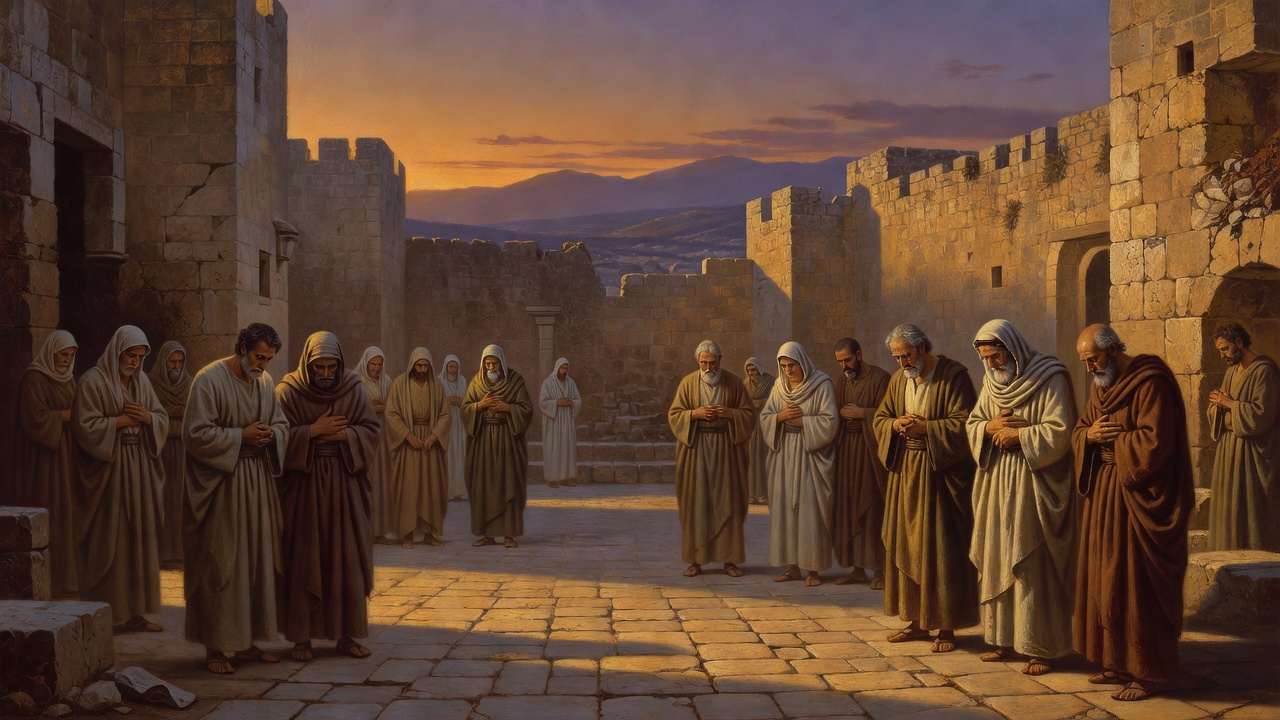
- The prophecy lists specific families in separate mourning, including the royal lineages of David and his son Nathan, as well as the priestly house of Levi. This emphasizes that profound grief and personal contemplation would encompass all strata of society, from leaders to individual households.Sources: David · Nathan · Levi (patriarch) · the Bible text itself
- Jerusalem is described through vivid imagery, such as a heavy, immovable stone that injures anyone attempting to lift it, and a cup that intoxicates attacking armies. These metaphors underscore divine defense of the city against invading nations.Sources: Jerusalem · the Bible text itself
Notes written with AI assistance from open sources (Theographic Bible Metadata, CC BY-SA 4.0; Easton’s Bible Dictionary, public domain) and reviewed before publishing.
Places in this chapter
- Jerusalem · 31.777, 35.234 · verses 2, 3, 5, 6, 7, 8, 9, 10, 11
- Megiddo · Today: Tel Megiddo · 32.585, 35.184 · verse 11
Only places identified with high confidence are shown (90% or more according to the scholarly sources compiled by OpenBible). Period map: DARE (Digital Atlas of the Roman Empire), CC BY 4.0; modern map: © OpenStreetMap contributors; places: OpenBible.info (CC BY 4.0).
Credits and license for this translation
KAKAƗYARI NIUKIEYA XAPAYARI WIXARIKAKƗ
The Holy Bible in the in Huichol language of Mexico, 2020 edition
La Santa Biblia en lengua huichol de México, edición 2020
copyright © 2020 Wycliffe Bible Translators, Inc.
Language: Huichol
Translation by: Wycliffe Bible Translators, Inc.
Huichol [hch], Mexico
Copyright Information
© 1988-2020, Wycliffe Bible Translators, Inc.
This translation text is made available to you under the
terms of the Creative Commons License: Attribution-Noncommercial-No Derivative Works.
( http://creativecommons.org/licenses/by-nc-nd/3.0/ )
In addition, you have permission to port the text to different file formats, as long as you
do not change any of the text or punctuation of the Bible.
You may share, copy, distribute, transmit, and extract portions
or quotations from this work, provided that you include the above copyright
information:
You must give Attribution to the work.
You do not sell this work for a profit.
You do not make any derivative works that change any of the actual words or punctuation of the Scriptures.
Permissions beyond the scope of this license may be
available if you contact
us with your request.
The Holy Bible
in Huichol
© 1988-2020, Wycliffe Bible Translators, Inc.
This translation is made available to you under the terms of the
Creative Commons Attribution-Noncommercial-No Derivatives license 4.0.
You may share and redistribute this Bible translation or extracts from it in any format, provided that:
You include the above copyright and source information.
You do not sell this work for a profit.
You do not change any of the words or punctuation of the Scriptures.
Pictures included with Scriptures and other documents on this site are licensed just for use with those Scriptures and documents.
For other uses, please contact the respective copyright owners.
2025-09-03
Source: http://ebible.org/hch/ · eBible.org