Song of Songs 7
KAKAƗYARI NIUKIEYA XAPAYARI WIXARIKAKƗ · Tap a verse to see its cross-references.
1'Uka ti'aitame pemunu'aya witsipemɨti'ɨimari,
witsipɨtiyuxexeiya 'a'ɨkate kakaitsie heutawetɨkaitɨ.
Witsipemanupe, nakɨtsa hepaɨ pɨ'ane
'aixɨa reutamaiwetɨ mitiwewiwa hepaɨ.
2'Axɨtemutsi tekɨxi hepaɨ pɨ'ane
winu witsi'anetɨ mɨhɨne hepaɨ pɨ'ane.
'Ahuka tɨriku hɨriyari hepaɨ pɨ'ane
waritana tuturi 'atsutsena mahane.
3'Atsitsi maxatsi tɨɨrixi yuhutatɨ wahepaɨ mepɨteyuxexeiya,
maxa 'ɨimari yuhutame yuniwema muwarayexeiya hepaɨ.
4'Akɨipi tuxiyu mutuxa mɨtse'i kanihɨkɨtɨni,
'Ahɨxite huta haixayari pɨhɨkɨ Hetsiwuni mieme,
Wati-Xawini kitenie 'aurie mɨtineniere.
'Atsuri Riwanu tuxiyuyari hepaɨ pɨ'ane,
Ramatsiku meutaniere.
5'Amu'u waɨkawa pahekɨa Kaximeru hɨriyari kɨtsie mieme hepaɨ.
Hiru mɨyɨtsikimawi hepaɨ pɨ'anene 'akɨpate,
'etsiwa tsiturawime pehewawɨtɨatɨ ti'aitame kwi pɨmatsixeiya 'aumɨ.
6Yemekɨ kwinie pepɨti'ɨimari, 'uka nemɨmatsinaki'erie,
'ukaratsi witsipemɨtiuka'iyari pepɨhɨkɨ.
7Kwinie peputewi takɨ 'amɨtɨtɨ hepaɨ,
meta 'atsitsi huta takariyarieya pɨhɨkɨ.
8Ne mɨpaɨ nepɨtiuyɨhɨawixɨ: «Nekananutimakimɨkɨ takɨ 'amutewitsie,
takariyari nepiini netinayeitɨamɨkɨ».
'Atsitsi kaxie takari hepaɨ ke'aneneni,
manitsana hepaɨ peke'ɨ'ɨaka,
9winu witsima'ane hepaɨ keha'aneni 'ateni.
Winu witsima'ane 'uki neminaki'erie hetsɨa keye'ani,
tenieyatsie ke'utayani meta tameteyatsie.
10Ne 'uki neminaki'erie hetsiemieme nepɨhɨkɨ,
kanenikuwauneni waɨkawa netsihaunaki'erietɨ.
11Niwa kenaye'a, 'uki nemɨmatsinaki'erie,
yeuta tekaniyehuni,
muwa yɨwikɨta tepeka'iyunieni tuturite yeutamieme tsata.
12Ximeri paitɨ tepeuhu kaxie haraweriyari tsata,
tepeunieriyu kaxie kareyɨyɨrari,
Xɨkari tuturiyari hetixutuweni,
xɨka 'ikwaxi mayehatsiyatɨka hexutukari.
Mana nekameneyetuiriemɨkɨ nenaki'eriya.
13Manirakura witsimu'ɨa kanitawiwiwani,
meta naitɨ takitenie katinapika
'ikwaxi witsimɨ'anene hikɨketimieme
meta 'aikɨ paitɨ timieme,
nekametini'utsirieka 'ahetsietimieme 'uki nemɨmatsinaki'erie.
Did you know?
Poetry of Love and Landscape
- The poem describes the woman's beauty using prominent landmarks of the region. Her eyes are compared to the calm pools of Heshbon near the gate of Bath-rabbim east of the Jordan, while her profile is likened to a majestic tower in the mountain range of Lebanon overlooking Damascus.Sources: the Bible text itself · Heshbon · Bath-rabbim · Lebanon
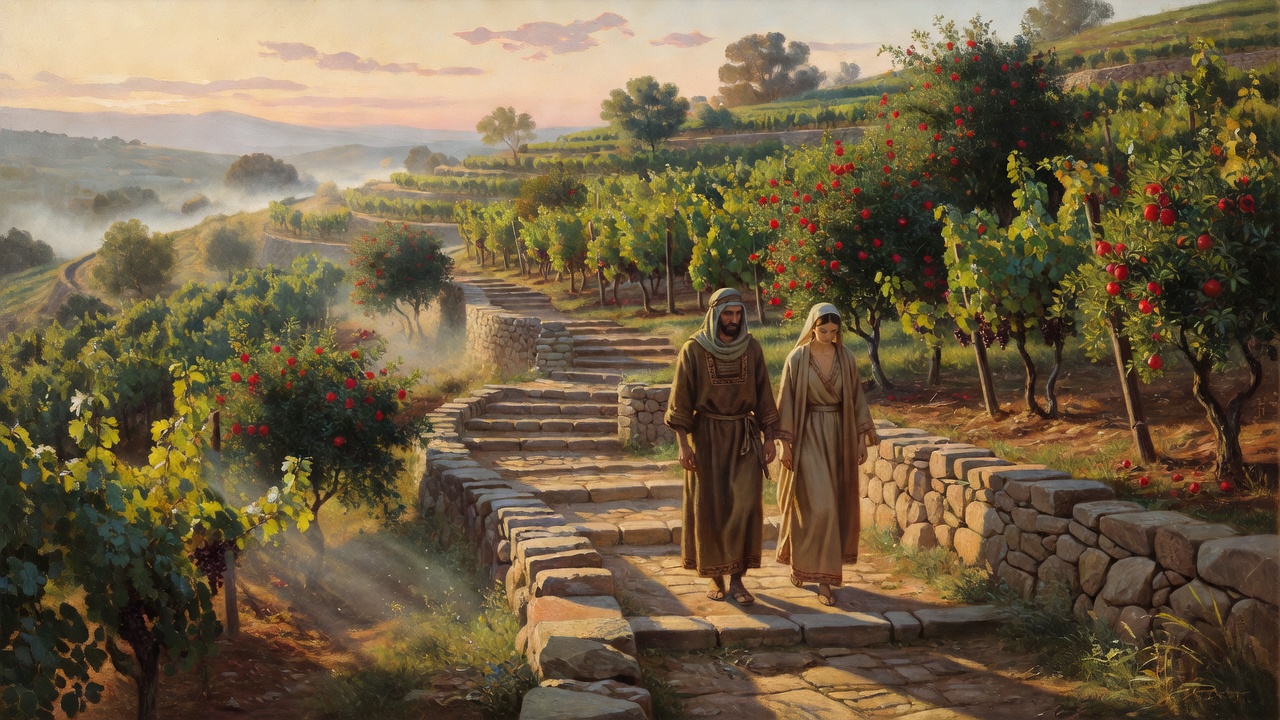
- The chapter concludes with an invitation to the countryside during the renewal of spring. The lovers seek out budding grapevines, blooming pomegranates, and fragrant mandrakes, reflecting the close connection in ancient Hebrew poetry between romantic intimacy and the vitality of the natural world.Sources: the Bible text itself
Notes written with AI assistance from open sources (Theographic Bible Metadata, CC BY-SA 4.0; Easton’s Bible Dictionary, public domain) and reviewed before publishing.
Places in this chapter
- Bath-rabbim · Today: in Tell Hesban · 31.801, 35.809 · verse 4
- Damascus · 33.511, 36.306 · verse 4
- Lebanon · 33.540, 35.584 · verse 4
- Mount Carmel · 32.672, 35.023 · verse 5
Only places identified with high confidence are shown (90% or more according to the scholarly sources compiled by OpenBible). Period map: DARE (Digital Atlas of the Roman Empire), CC BY 4.0; modern map: © OpenStreetMap contributors; places: OpenBible.info (CC BY 4.0).
Credits and license for this translation
KAKAƗYARI NIUKIEYA XAPAYARI WIXARIKAKƗ
The Holy Bible in the in Huichol language of Mexico, 2020 edition
La Santa Biblia en lengua huichol de México, edición 2020
copyright © 2020 Wycliffe Bible Translators, Inc.
Language: Huichol
Translation by: Wycliffe Bible Translators, Inc.
Huichol [hch], Mexico
Copyright Information
© 1988-2020, Wycliffe Bible Translators, Inc.
This translation text is made available to you under the
terms of the Creative Commons License: Attribution-Noncommercial-No Derivative Works.
( http://creativecommons.org/licenses/by-nc-nd/3.0/ )
In addition, you have permission to port the text to different file formats, as long as you
do not change any of the text or punctuation of the Bible.
You may share, copy, distribute, transmit, and extract portions
or quotations from this work, provided that you include the above copyright
information:
You must give Attribution to the work.
You do not sell this work for a profit.
You do not make any derivative works that change any of the actual words or punctuation of the Scriptures.
Permissions beyond the scope of this license may be
available if you contact
us with your request.
The Holy Bible
in Huichol
© 1988-2020, Wycliffe Bible Translators, Inc.
This translation is made available to you under the terms of the
Creative Commons Attribution-Noncommercial-No Derivatives license 4.0.
You may share and redistribute this Bible translation or extracts from it in any format, provided that:
You include the above copyright and source information.
You do not sell this work for a profit.
You do not change any of the words or punctuation of the Scriptures.
Pictures included with Scriptures and other documents on this site are licensed just for use with those Scriptures and documents.
For other uses, please contact the respective copyright owners.
2025-09-03
Source: http://ebible.org/hch/ · eBible.org