Song of Songs 2
KAKAƗYARI NIUKIEYA XAPAYARI WIXARIKAKƗ · Tap a verse to see its cross-references.
1Ne tuutu Tsarunitsie mayeweri mɨxuawe nekanihɨkɨtɨni,
xewitɨ tuturi texuxuri mayeweritsie mieme.
2'Uka neminaki'erie, kepauka hipame 'ukarawetsixi watsata muyeika,
tuturi texuxuri xuyatsata muwe hepaɨ katiniyuxexeiyani.
3'Uki neminaki'erie kepauka hipame 'ukitsi watsata muyeika,
xikɨti 'ɨtsitsata mɨkawe hepaɨ katiniyuxexeiyani.
Kaneninakeni hetɨana nemɨ'etɨpieka,
witsikatinakakani takariyari.
4Kanenewitɨni kiita 'ixɨarari muwatiwewiwatsie,
muwa yunaki'eriya 'inɨariyari kaniwarepitɨani.
5Kaxie takari patsaruyarikɨ keneneutatɨrɨkariya,
manitsanakɨ keneneutahuxaitɨa,
nekanimɨximeni naki'eriyakɨ.
6Mamaya 'utatana miemetsie nemu'u
mɨniuka'uxipitɨanike,
meta yutserieta miemekɨ kwimɨneniukwenike.
7Ne mɨpaɨ nepɨtixewawirie, 'ukarawetsixi Kerutsareme kiekatari,
maxatsi 'ɨimarixi yeuta memu'uwakɨ,
'uka neminaki'erie xepɨkahehɨtɨaka xepɨkahei'uximatɨaka
tsepa kepaukake yukɨmana manutanierixɨ.
Hutariekamieme Kwikari
8'Uki neminaki'erie hiwarieya.
Neuxei, 'ena kanamieni,
'utsunarɨmetɨ hɨritetsie,
'anutitsukwakatɨ hɨri 'amɨnenetsie.
9'Uki neminaki'erie maxa hepaɨ katiniyuxexeiyani,
maxa temaikɨ hepaɨ kani'aneni.
Paratsɨ xekeneuxeiya, takiiwarie warita kaniutiweni,
'awienierenetɨ maxawariyarietɨkata,
yɨkɨ'ɨwiyatɨ mayexaxawata.
10'Uki neminaki'erie mɨpaɨ kanetiniutahɨawe:
«Kenanukukexi 'uka nemɨmatsinaki'erie,
hikɨmɨ kenewaye'a, 'uka witsipemɨti'ɨimari.
11Neuxei, kananuyeyaniri xexerixa,
hamatɨanata kaniutanɨni wiyeri.
12Yeuta 'ari tuturi kanitineikani,
kwikari tukariyari kanaye'aniri.
'Ariri naitsarie kwiepa kani'eniɨriɨkɨni
kukuruxi memeɨyɨyɨxawi wakwikari.
13'Ariri piní matɨari mieme takariyari kanixuaweni,
'Ari kaxie xututɨ witsikaniukɨ'ɨareni.
Kenanukukexi, 'uka nemɨmatsinaki'erie,
nehetsɨa kenaye'a, 'uka witsipemɨti'ɨimari».
14Nekukuru pemeutuxa, 'ai mukatataritsie
pemuyu'awieta,
meta hɨri 'amɨtiumariwetsie paitɨ,
kenanieri nepɨmatsixeiya,
keneutaniu nepumatsi'enieni,
'aniuki 'aixɨa kanimayaka
meta witsipekatini'axexeiyani.
15Kauxaitsi xekeniwarutiwiya,
mɨkɨ kauxaitsi tɨɨrixi
takaxie memɨtsewixima,
takaxie haraweriyari xuturiyari.
16'Uki neminaki'erie nehetsiemieme kanihɨkɨtɨni, neta hetsiena mieme,
mɨkɨ yumuxatsima kaniwarutihɨweni tuturi texuxuritsata.
17Tau ka'akayuniwekaku 'akuxi
meta 'etɨri ka'akumaweriwekaku 'akuxi,
nehetsɨa kani'axeni, 'uki neminaki'erie.
Maxa hepaɨ katiniunanautsani,
maxa temaikɨ hepaɨ, hɨritsie paitɨ.
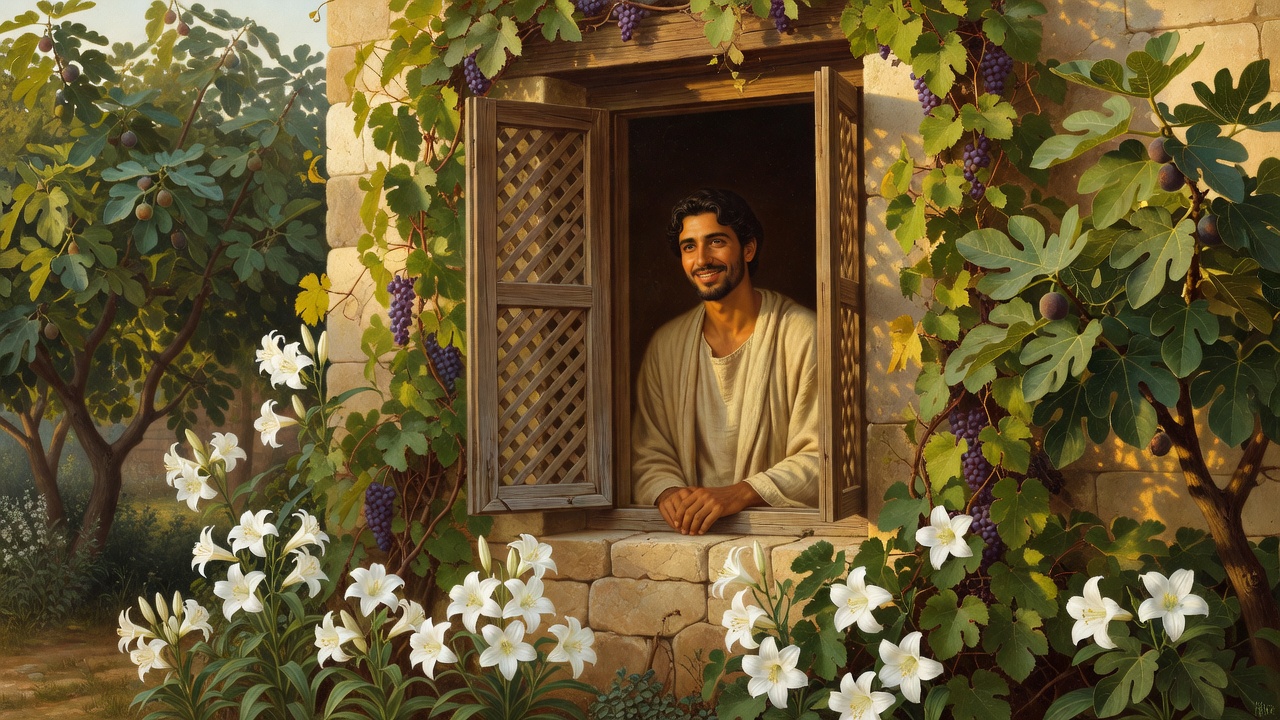
Did you know?
Springtime and Awakening Love
- Sharon was a fertile coastal plain stretching between the Mediterranean Sea and the hill country west of Jerusalem, celebrated for its beauty and vegetation, which gave rise to imagery like the rose of Sharon.Sources: Saron · the Bible text itself
- The poem marks the arrival of spring through natural changes in the countryside, such as the end of winter rains, the cooing of turtledoves, ripening fig trees, and flowering grapevines that needed protection from foraging foxes.Sources: the Bible text itself
- The speaker repeatedly appeals to the daughters of Jerusalem, framing her cautions about love around wild animals of the open hills, such as gazelles and does of the field.Sources: Jerusalem · the Bible text itself
Notes written with AI assistance from open sources (Theographic Bible Metadata, CC BY-SA 4.0; Easton’s Bible Dictionary, public domain) and reviewed before publishing.
Places in this chapter
Only places identified with high confidence are shown (90% or more according to the scholarly sources compiled by OpenBible). Period map: DARE (Digital Atlas of the Roman Empire), CC BY 4.0; modern map: © OpenStreetMap contributors; places: OpenBible.info (CC BY 4.0).
Credits and license for this translation
KAKAƗYARI NIUKIEYA XAPAYARI WIXARIKAKƗ
The Holy Bible in the in Huichol language of Mexico, 2020 edition
La Santa Biblia en lengua huichol de México, edición 2020
copyright © 2020 Wycliffe Bible Translators, Inc.
Language: Huichol
Translation by: Wycliffe Bible Translators, Inc.
Huichol [hch], Mexico
Copyright Information
© 1988-2020, Wycliffe Bible Translators, Inc.
This translation text is made available to you under the
terms of the Creative Commons License: Attribution-Noncommercial-No Derivative Works.
( http://creativecommons.org/licenses/by-nc-nd/3.0/ )
In addition, you have permission to port the text to different file formats, as long as you
do not change any of the text or punctuation of the Bible.
You may share, copy, distribute, transmit, and extract portions
or quotations from this work, provided that you include the above copyright
information:
You must give Attribution to the work.
You do not sell this work for a profit.
You do not make any derivative works that change any of the actual words or punctuation of the Scriptures.
Permissions beyond the scope of this license may be
available if you contact
us with your request.
The Holy Bible
in Huichol
© 1988-2020, Wycliffe Bible Translators, Inc.
This translation is made available to you under the terms of the
Creative Commons Attribution-Noncommercial-No Derivatives license 4.0.
You may share and redistribute this Bible translation or extracts from it in any format, provided that:
You include the above copyright and source information.
You do not sell this work for a profit.
You do not change any of the words or punctuation of the Scriptures.
Pictures included with Scriptures and other documents on this site are licensed just for use with those Scriptures and documents.
For other uses, please contact the respective copyright owners.
2025-09-03
Source: http://ebible.org/hch/ · eBible.org