Psalms 80
KAKAƗYARI NIUKIEYA XAPAYARI WIXARIKAKƗ · Tap a verse to see its cross-references.
Teyuitɨwamete wa'ukiyari. Yuariyaya xekeneuweiyani «Tuturi tɨratuyari». 'Atsahapi nɨawarieya.
1'Ixaheri hɨweme,
'ekɨ kutse pemuwitɨxime muxatsi wahepaɨ,
'ekɨ metsiteɨtamete watsata pe'atikaitɨ,
ketaneu'eni.
Keneuxawatɨxɨa 2'Epɨrahini hɨxie,
Wenikamini meta Manatsexi wahɨxie.
Keneuhekɨata 'atɨrɨkariya, kenenua ketaneutawikweitsitɨa.
3Xɨa'ui, Kakaɨyari, 'aixɨa ketaneuyuri,
'aixɨa ketatineuxeiya,
ketaneutawikweitsitɨa.
4¿Kepaukake tamɨ pepɨtihayewa peha'atɨ Yawé Kakaɨyari
Naimekɨmɨtɨrɨkaɨye, 'ateɨterima wanenewieri hepaɨtsita?
5'Ikwai petatsiminike hiwerika pepɨtatsi'upitɨa temiti'ienikɨ,
memɨte'iekai wahetsiemieme, waɨkawa wa'ukai pepɨwayetuirie memiti'ienikɨ.
6Ta'aurie kiekatari memɨtatsi'atsenikɨ
yapepɨtatsi'uyuri,
memɨtatsi'aye'unie mepɨtatsiyuriya.
7Kakaɨyari Naimekɨmɨtɨrɨkaɨye 'aixɨa ketaneuyuri,
'aixɨa ketatineuxeiya,
ketaneutawikweitsitɨa.
8'Ekipitu paitɨ xeime kaxie pepeyetui,
memɨka'ateɨterima pewarutaweiyaka, mana pepikaye.
9Kwiepa 'aixɨa pemɨrakuyuritsie,
mana kanananataxɨani hikɨ kwiepa waɨkawa kaniutaxiɨni.
10'Etɨriyaya hɨritetsie paitɨ pepuye'atɨatɨya,
kɨtsimeyari yunaime kariuxa 'amutɨtɨ pɨwara'iwakai.
11Xawarieya haramaratsie paitɨ kaneuta'axɨani,
muwatiyɨraxɨa 'Eupɨrata paitɨ kaneuta'ani.
12¿Titayari kuraruya petiuka'unaxɨ?
Yunaitɨ mana memuyekɨka 'iteɨrieya kaxie mekanika'inɨweni.
13Tuixuri yeutari mekanikumaweriyarɨmeni,
yeutari mekanikwaka.
14Xɨa'ui Kakaɨyari, Naimekɨmɨtɨrɨkaɨye tahetsɨa kenenua.
Muyuawitsie paitɨ kenakanieri
'ikɨ kaxie kene'ɨwiyani.
15'Atseriekɨ nanari pemukaye kanihɨhɨtɨni.
Mɨkɨ hekwamekɨ matiyɨraxɨ 'ahetsiemieme pɨhɨkɨ.
16'Akaxie nanayari kaniuka'unarieni, taikɨ kaniutataiyarieni,
'atierikakɨ 'ateɨterima mepɨte'uka'eniwa.
17Keneuparewi tewi pemanayexei,
'aniwe 'ahetsiemieme pemitaweriyaxɨ.
18Tame tepɨkametsiku'eirieni,
ketananutanieritɨa, 'ana tepɨmetsihahɨaweni.
19Yawé Kakaɨyari Naimekɨmɨtɨrɨkaɨye, 'aixɨa ketaneuyuri,
'aixɨa ketatineuxeiya,
ketaneutawikweitsitɨa.
Did you know?
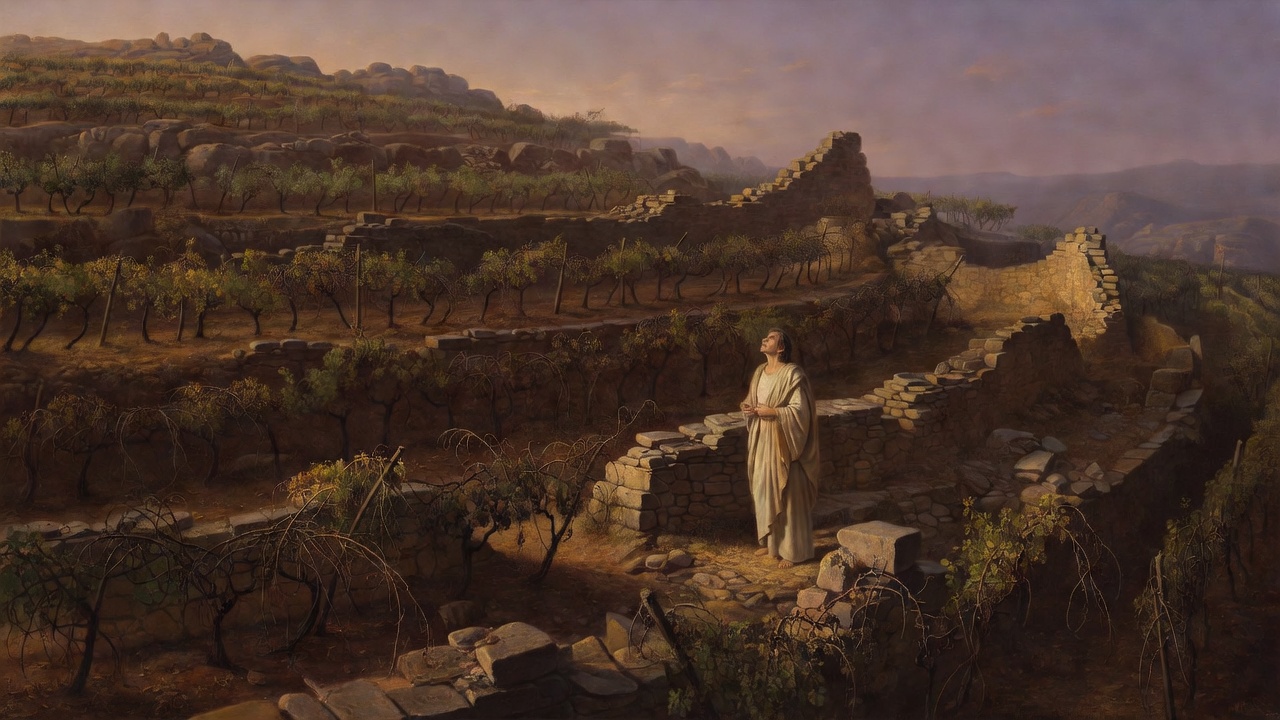
A Prayer for the Uprooted Vine
- The psalm specifically mentions Ephraim, Benjamin, and Manasseh, tribes closely linked by descent from Rachel through Joseph and Benjamin. During Israel's wilderness wanderings, these three tribes were assigned to camp and march together on the western side of the tabernacle.Sources: Benjamin (patriarch) · Manasseh (son of Joseph) · the Bible text itself
- The author uses an extended allegory comparing the nation of Israel to a grapevine brought out of Egypt and replanted in Canaan. The song laments that God had torn down the protective vineyard walls, leaving the fruitful vine exposed to wild beasts and passersby.Sources: Egypt · the Bible text itself
- This poem is part of a distinct collection spanning Psalms 73 through 83 attributed to Asaph. The biblical record describes Asaph as a leading Levite musician in the time of King David whose musical guild or descendants continued his tradition in temple worship.Sources: Asaph (Levite) · the Bible text itself
Notes written with AI assistance from open sources (Theographic Bible Metadata, CC BY-SA 4.0; Easton’s Bible Dictionary, public domain) and reviewed before publishing.
Places in this chapter
- Egypt · 30.129, 31.308 · verse 8
- Euphrates · Today: Euphrates River · 31.004, 47.442 · verse 11
- Great Sea · Today: Mediterranean Sea · 31.805, 34.170 · verse 11
Only places identified with high confidence are shown (90% or more according to the scholarly sources compiled by OpenBible). Period map: DARE (Digital Atlas of the Roman Empire), CC BY 4.0; modern map: © OpenStreetMap contributors; places: OpenBible.info (CC BY 4.0).
Credits and license for this translation
KAKAƗYARI NIUKIEYA XAPAYARI WIXARIKAKƗ
The Holy Bible in the in Huichol language of Mexico, 2020 edition
La Santa Biblia en lengua huichol de México, edición 2020
copyright © 2020 Wycliffe Bible Translators, Inc.
Language: Huichol
Translation by: Wycliffe Bible Translators, Inc.
Huichol [hch], Mexico
Copyright Information
© 1988-2020, Wycliffe Bible Translators, Inc.
This translation text is made available to you under the
terms of the Creative Commons License: Attribution-Noncommercial-No Derivative Works.
( http://creativecommons.org/licenses/by-nc-nd/3.0/ )
In addition, you have permission to port the text to different file formats, as long as you
do not change any of the text or punctuation of the Bible.
You may share, copy, distribute, transmit, and extract portions
or quotations from this work, provided that you include the above copyright
information:
You must give Attribution to the work.
You do not sell this work for a profit.
You do not make any derivative works that change any of the actual words or punctuation of the Scriptures.
Permissions beyond the scope of this license may be
available if you contact
us with your request.
The Holy Bible
in Huichol
© 1988-2020, Wycliffe Bible Translators, Inc.
This translation is made available to you under the terms of the
Creative Commons Attribution-Noncommercial-No Derivatives license 4.0.
You may share and redistribute this Bible translation or extracts from it in any format, provided that:
You include the above copyright and source information.
You do not sell this work for a profit.
You do not change any of the words or punctuation of the Scriptures.
Pictures included with Scriptures and other documents on this site are licensed just for use with those Scriptures and documents.
For other uses, please contact the respective copyright owners.
2025-09-03
Source: http://ebible.org/hch/ · eBible.org